Prepare a restaurant team for unplanned absences
A possible backup is not confirmed cover. Prepare two clear role cards, name who can change service and review what the plan still needs.
A roster is a set of decisions about who covers which work, and when. These articles cover each step: working out the shifts service needs, building and checking the draft, publishing it clearly, and handling the changes that arrive after it goes out.
Start with building a roster from required work if you are setting up a new process. If the roster already exists and keeps breaking, the articles on call-outs, swaps, conflicts and understaffing deal with those situations one at a time.
A possible backup is not confirmed cover. Prepare two clear role cards, name who can change service and review what the plan still needs.
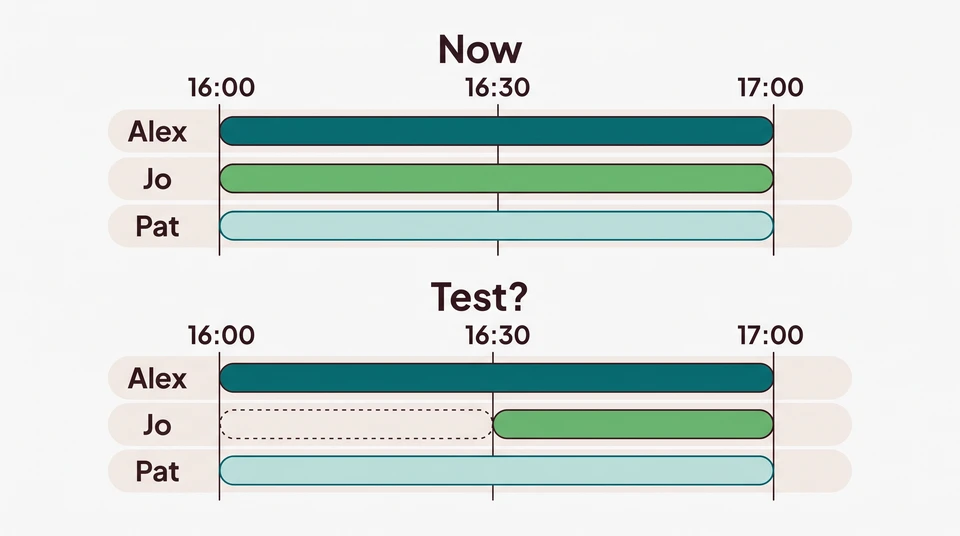
Could one dinner start move thirty minutes later? Follow the preparation, protect service backup and review what happens before repeating the change.
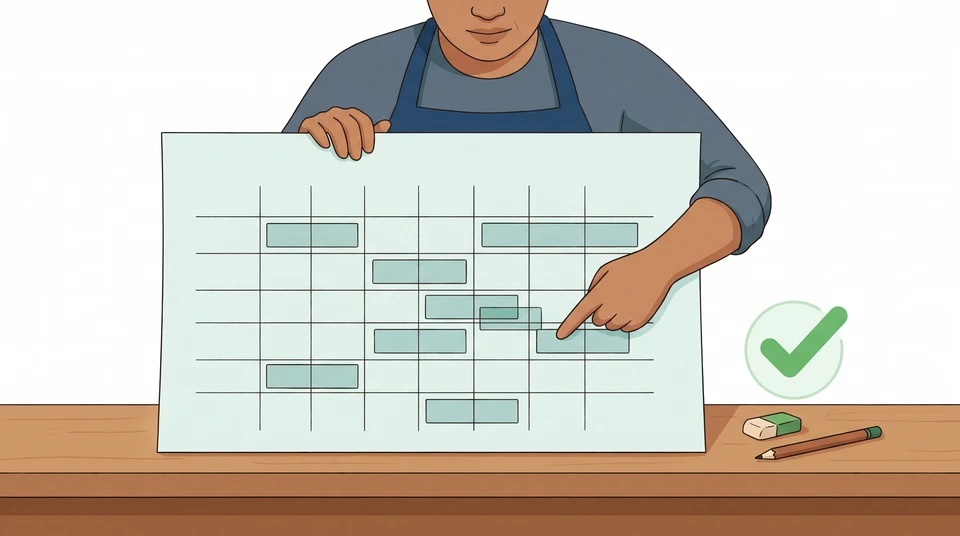
A worked six-person week shows how to enter shifts, total planned person-hours and correct a clash while keeping the work visible.
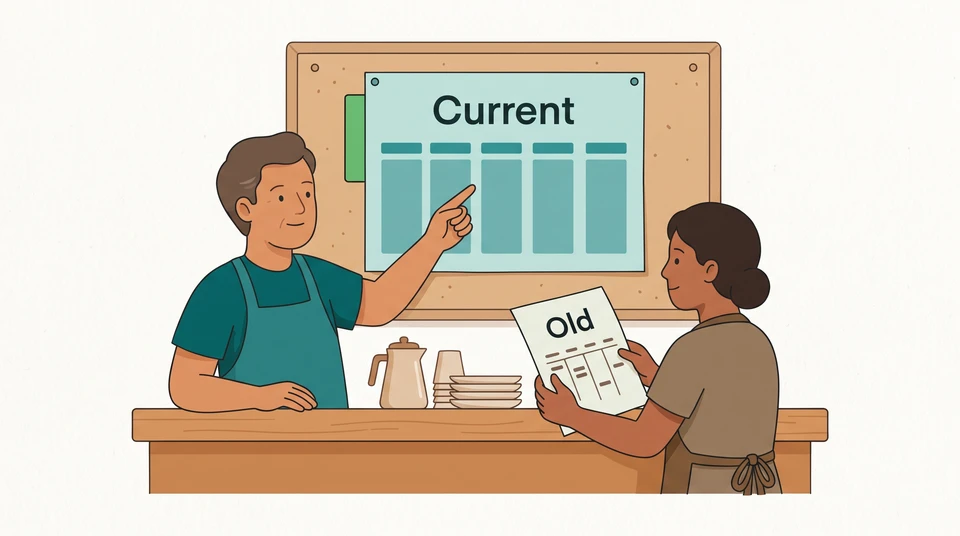
Two copies show different Friday starts. Check the published version, settle what changed and help each team member find the current schedule.
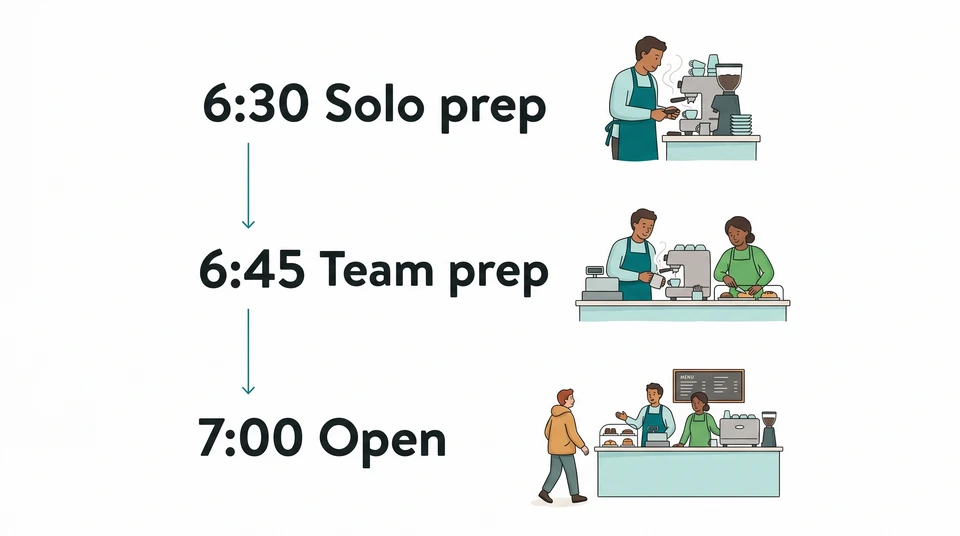
Start with the jobs that must be ready for service. Compare solo and shared preparation before trialling one change to an opener’s start.
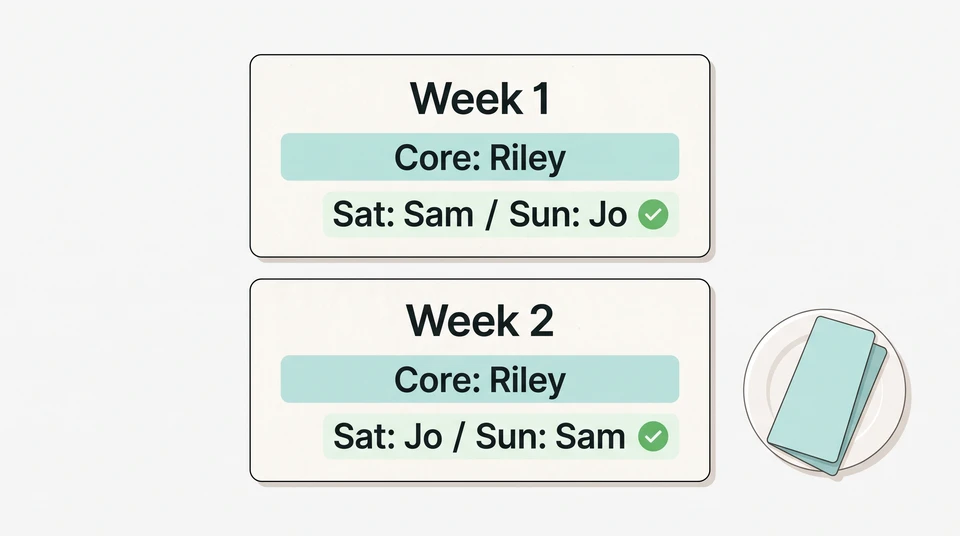
Keep a weekday core, compare two weekend patterns and ask your team what works. Includes a two-week floor-position example without changing the whole roster.
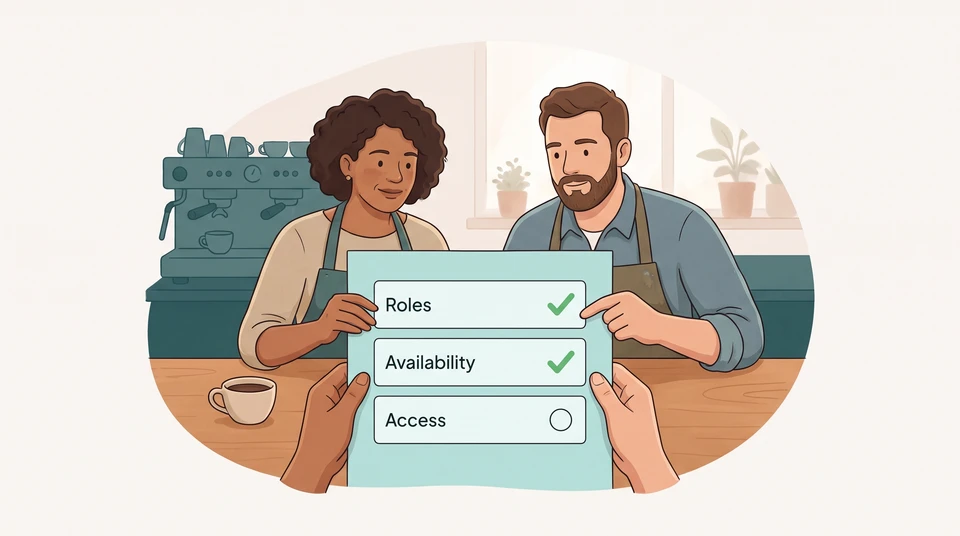
Use the same cafe week in each shortlisted tool. Keep a practical record of manager and staff tasks, workarounds and unanswered buying questions.
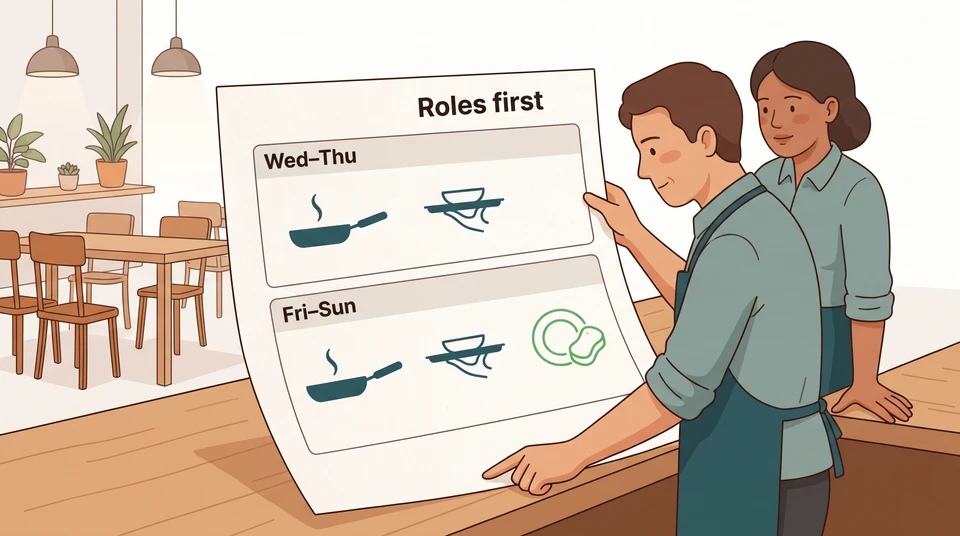
Start with required work, then add people. A small dinner-restaurant example shows the weekly role pattern, confirmed availability and a gap the manager must resolve.
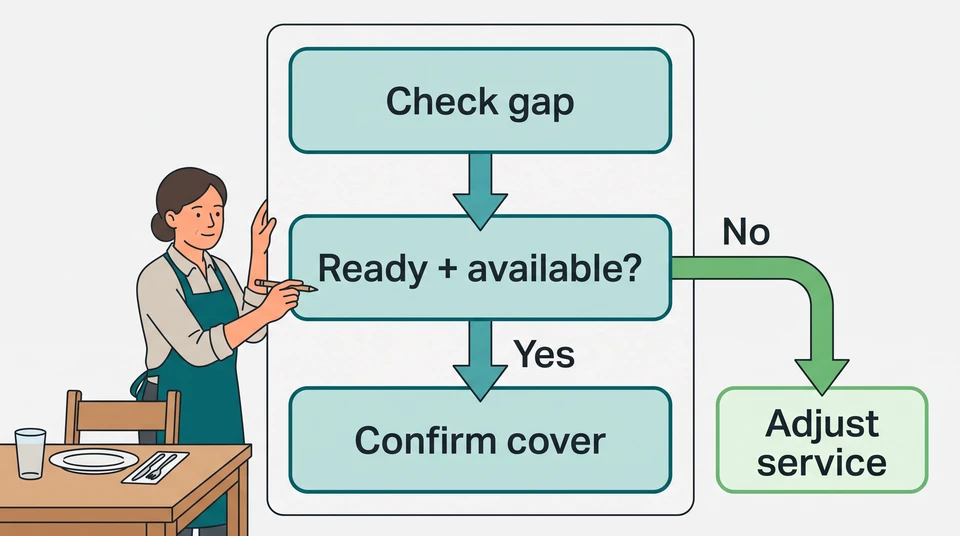
Start with the uncovered station, not a group message. Keep one manager in charge of suitable cover, confirmation and a smaller service plan if needed.
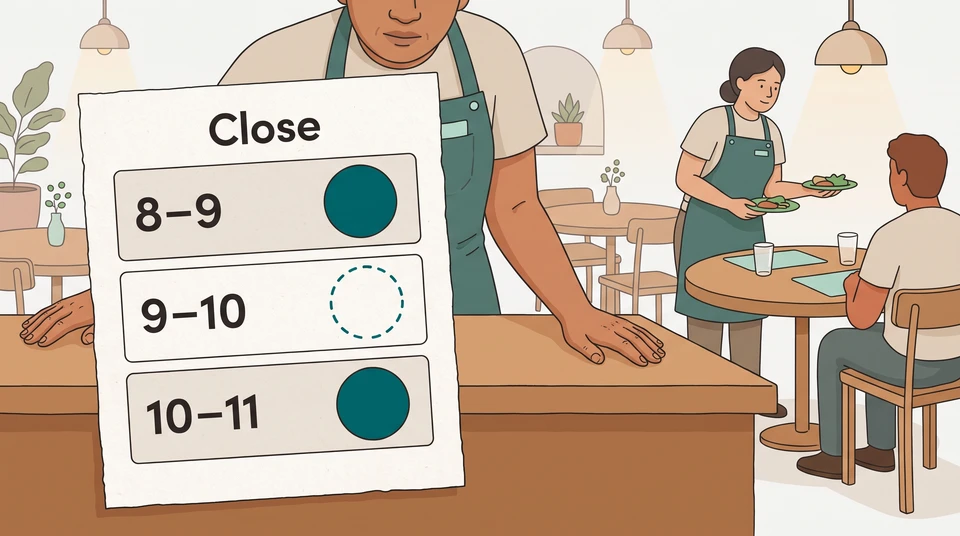
People can be on shift while one essential role is uncovered. Track the work that slips, test one practical change and review whether the gap remains.
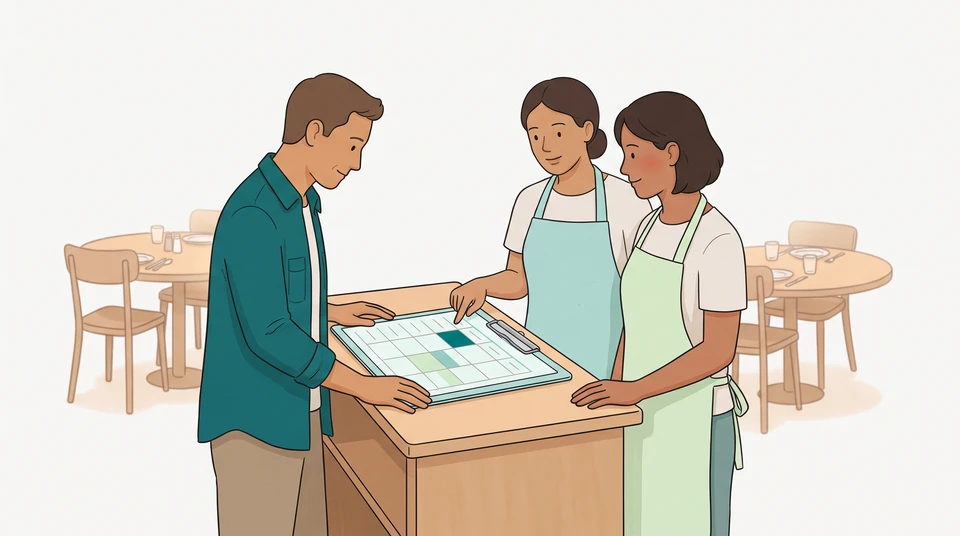
Two servers agree to trade next week’s shifts. Check availability, closing and setup duties, coverage and applicable constraints before confirming the schedule.
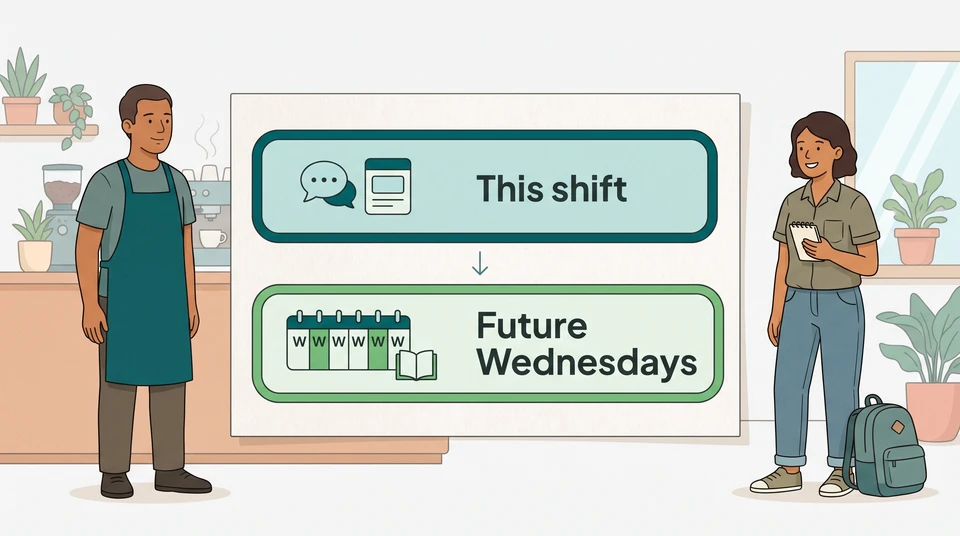
A student’s new Wednesday class needs two decisions: cover for the published shift and availability for future weeks. Work through both with a clear manager follow-up.
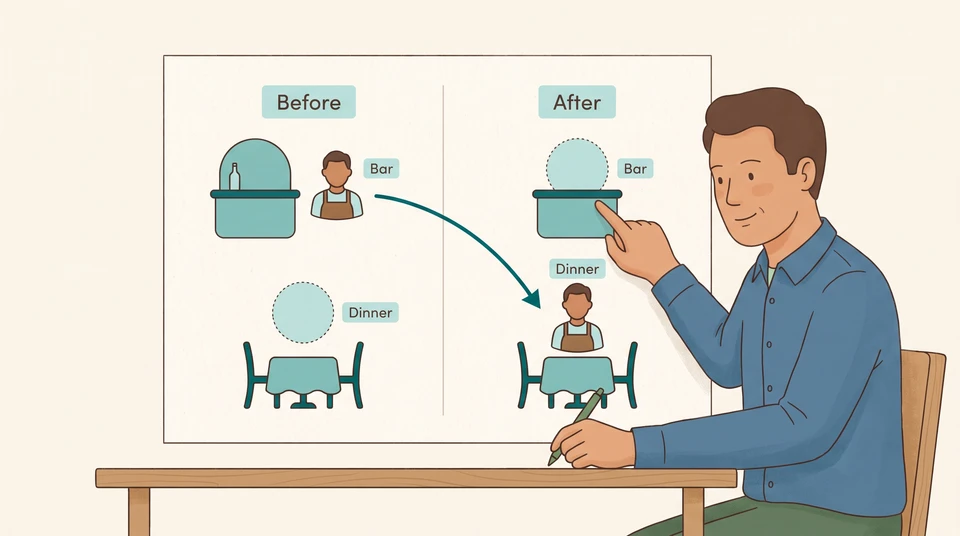
Before moving someone into dinner service, trace their existing work, compare the alternatives and keep any unresolved gap visible.
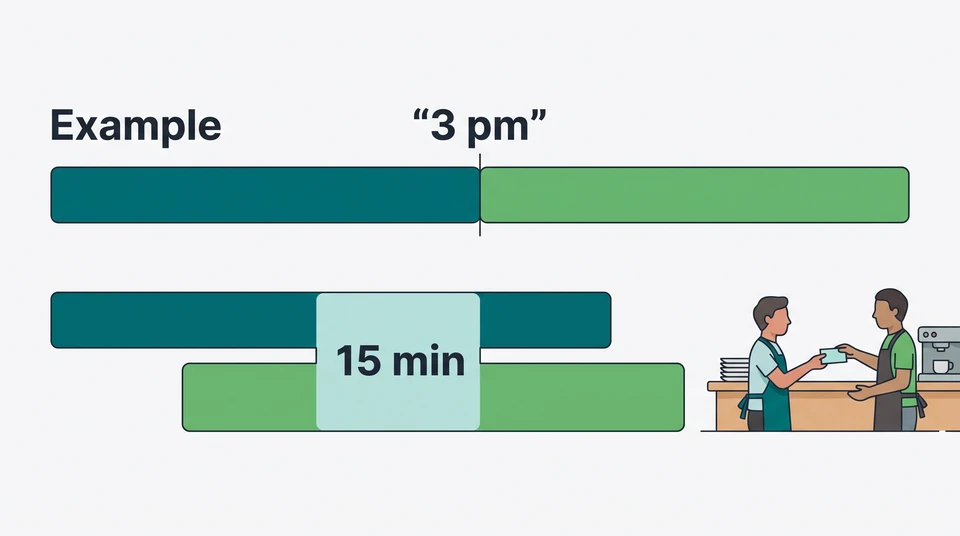
Give shared shift time a clear job. Compare a direct changeover with an example overlap, then adjust from the information the incoming lead still needs.
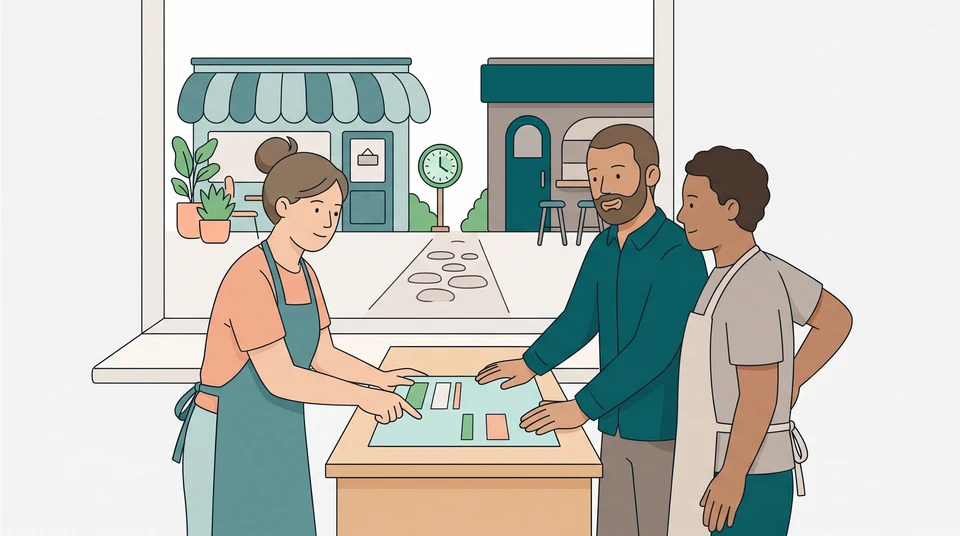
A 2 p.m. café finish cannot cover a 2 p.m. bar start. Check the journey, agree coverage and give both managers one confirmed plan.
Spreadsheets, group chats, and six different apps. Here's why the scheduling problem for hourly teams hasn't actually been solved — and what needs to change.
