Stagger café opening shifts around the prep work
Start with the jobs that must be ready for service. Compare solo and shared preparation before trialling one change to an opener’s start.
A café opening roster needs to cover the work before the first order, not just the hours on the door. Before moving an opener’s start, list what must be ready, who can prepare it and which jobs need both people.
Keep two early starts when the work calls for them. Staggering is an option to test, not the goal.
List opening jobs and dependencies
Walk through an opening with your team. Write down each job, its owner, how long it takes and what must happen first. Include access, equipment preparation, stock, your venue’s food-safety and cleaning checks, the room, the till and any deliveries or kitchen preparation due before service.
For the coffee station, put equipment setup before testing the coffee. Australia’s espresso-coffee training unit describes preparing the machine and grinder to manufacturer instructions and completing test extractions before service. Use your own equipment instructions to work out the timing.
Don’t count only the bar work. The US O*NET barista task list also includes cleaning service areas, stocking stations, checking equipment temperatures and processing payments. Use it as a reminder of jobs to consider, not a prescribed opening checklist or a staffing rule.
Beside each opening job, record three things:
- Ready means: what the opener should be able to see or check when it is finished.
- Depends on: the equipment, supplies or earlier job it needs.
- Needs help when: the point where another person must be available.
A coffee test cannot happen before the machine is ready. A delivery that needs the opener’s attention cannot also be counted as uninterrupted bar setup time.
Separate solo from shared work
Mark the jobs an experienced opener can do alone under your venue’s procedures. Then mark work that needs two people, supervision or a particular skill. Ask the people doing the opening to check the list with you.
Separate waiting time from working time. Equipment warming up may leave room for another task, but only if the opener can safely leave it and the next job fits. Don’t assign the same person to two hands-on jobs at once.
If a new starter needs help setting up the bar, include the trainer’s time. If your opening procedure needs two people from the first job, keep both starts early. Neither a later start nor a checked box makes someone ready to open alone.
Place starts against service milestones
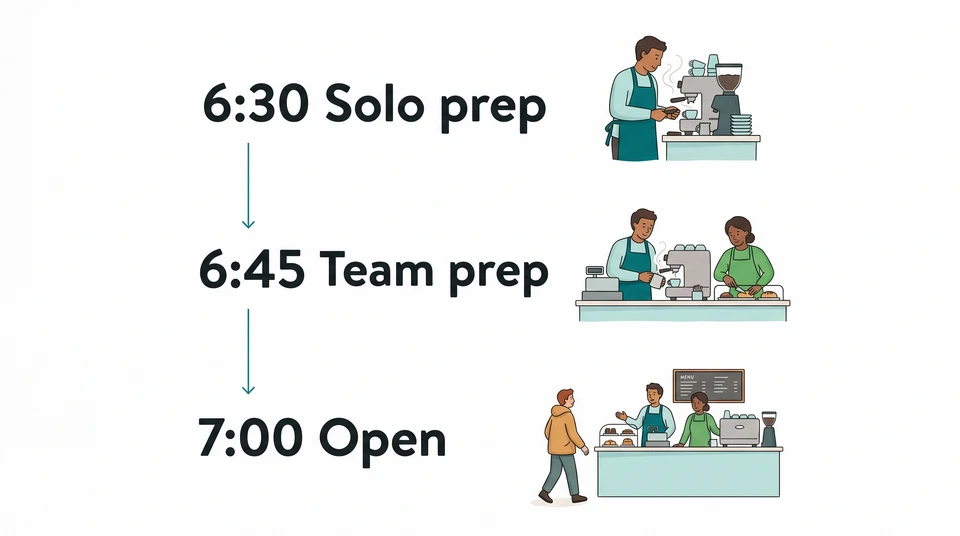
Imagine a small counter-service café opening at 7 a.m. Alex opens the bar; Sam handles the till and room. The room was set up at closing, and there is no cooking or delivery to cover before opening today.
The manager compares two 6:30 starts with Alex at 6:30 and Sam at 6:45. For the staggered option, the proposed sequence is:
- 6:30 — Alex starts. Complete the opening checks, prepare the coffee equipment and stock the bar. Equipment preparation must leave time for coffee testing before the shared check at 6:50.
- 6:45 — Sam starts. Check the already-set room, entrance and till while Alex finishes the bar. Sam’s work must fit before 6:50; it cannot depend on Alex leaving an unfinished bar job.
- 6:50 — Both check the first-order handoff. Sam runs through the order-entry steps without taking a live payment; Alex checks the coffee is ready and the order can reach the bar. Confirm who handles any problem.
- 6:55 — The manager checks readiness. The required opening jobs are complete, the room and stations are ready, and neither person has an unresolved task that prevents service.
- 7:00 — Service starts, provided the checks are complete.
Replace those windows with your own measured preparation times before changing the roster. The example only works if Alex can complete the solo work, Sam’s room-and-till check fits, and both are available for the shared check.
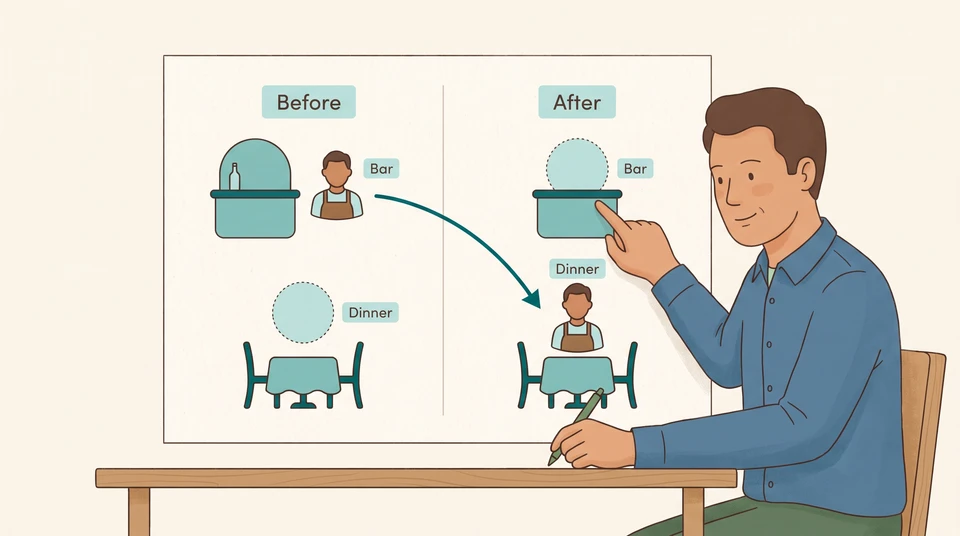
With two 6:30 starts, Sam could handle room preparation, an early delivery or work that needs both people sooner. With 6:30 and 6:45 starts, that early work must still have a named person and enough time. Moving it off the list is not a staggered plan.
If a shared job must begin at 6:40, Sam cannot arrive at 6:45. Keep the earlier start or work out another covered sequence.
Review actual preparation time
Before trialling a change, record when opening jobs start and finish across comparable mornings, including a morning when something runs late. Ask the openers what interrupted them and which checks felt rushed. Include every required opening job within the planned, paid shift—not as preparation someone does before their start.
Agree an early stop point. In the example, Alex checks progress at 6:40. If equipment is not on track for the 6:50 check, Alex contacts the manager immediately. The manager arranges available help or changes the opening plan; Sam is not assumed to be available before the rostered start. Don’t recover the plan by skipping checks.
Trial one bounded change on an agreed comparable morning, after checking applicable employment arrangements and confirming it with the people affected. Review whether all jobs were finished, the shared check happened and service was ready. If work spilled into the opening or help was needed earlier, restore the earlier start and revise the sequence.
Put the checked starts into the roster
Once the sequence works, enter the starts in the free Schedule Maker. It is a manual, browser-local tool: you can edit, print and export CSV without an account or email. It does not work out task durations or tell you whether the café is ready.
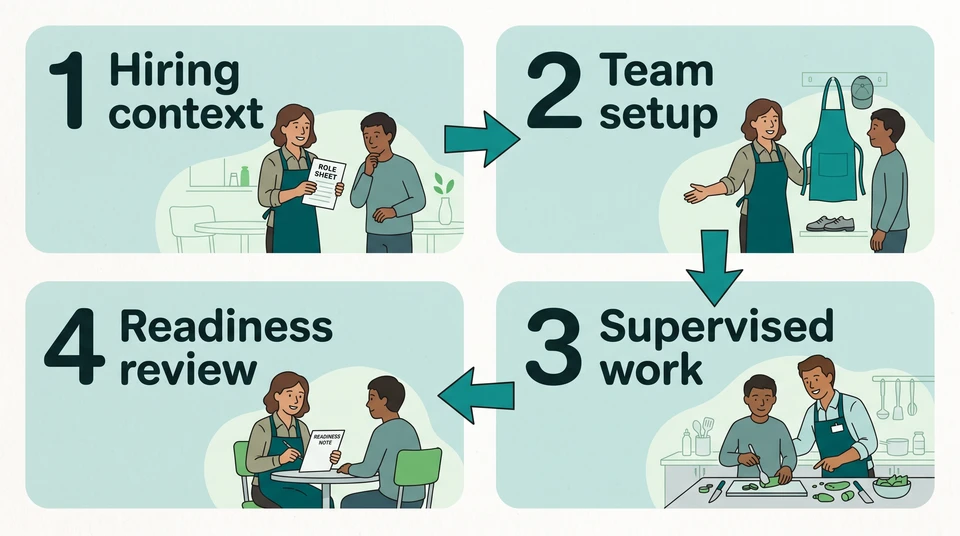
For account-based planning, CrewCentral Scheduling brings availability, role skills and shift drafts together. AI can help draft a roster, but a manager reviews and adjusts it before publishing. Hiring, onboarding, training and scheduling share team context; deciding who can cover the opening still belongs to you.
Start with the opening jobs. Keep the starts that let your team finish them properly.