How much shift overlap does a restaurant handover need
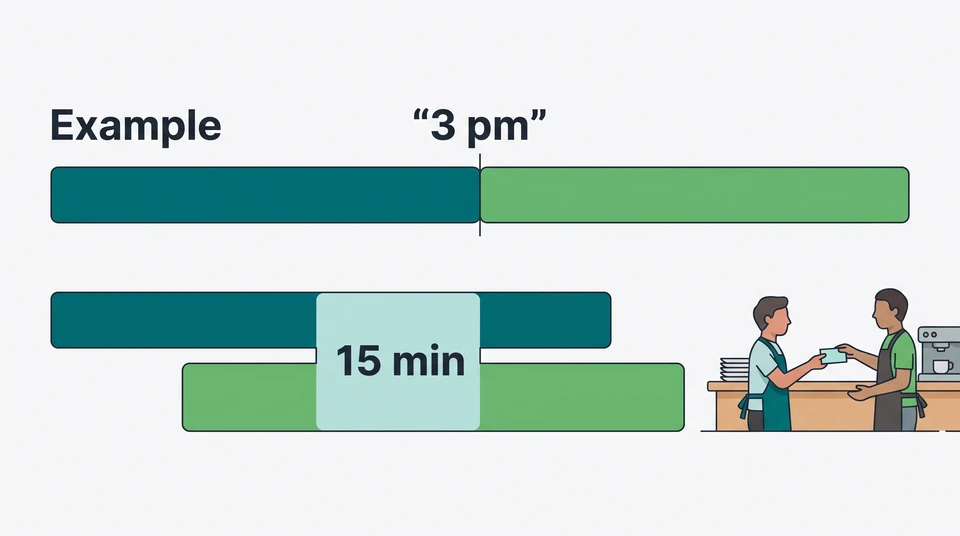
Give shared shift time a clear job. Compare a direct changeover with an example overlap, then adjust from the information the incoming lead still needs.
Start with what the incoming shift needs to take over, not a fixed number of minutes. Name the open tables, stock shortages and unfinished jobs that need attention. Then decide which details can go in a note and which need both people together.
A 15-minute overlap can be a useful test for a particular changeover. It is not a standard for every restaurant, cafe or bar. Give those minutes a job, put the work in paid time, and adjust the next schedule from what was missed.
Identify what must transfer
Before changing shift times, ask the outgoing lead to write down what the next lead must act on. Keep it specific:
- Open tables: “Table 8 is waiting for dessert; Sam will check with the kitchen.”
- Stock shortages: “No more house lemonade. Confirm the alternative with the bar before taking another order.”
- Outstanding tasks: “The rear station still needs restocking. Priya takes it after checking her tables.”
These are example notes, not a checklist to copy unchanged. Use your venue’s actual situation. Give each unfinished job an owner and a next step so the incoming lead knows what to do first.
Now mark the items that need a conversation or a joint check. A clear stock note may be enough on its own. An unclear order still in progress may need the outgoing server to show the incoming server where it stands. Schedule shared time for that work, rather than bringing the whole team in early by default.
Separate the conversation from the physical handover
“Tell the next shift” and “leave the station ready” are different jobs. Ask the outgoing lead what they need to explain, what they can finish before leaving, and what the incoming lead will take over.
For example, explaining which tables are still open does not restock the service station. If restocking is part of the handover window, name who does it and who keeps serving. Otherwise, two people can be scheduled together while neither has a clear chance to listen.
Choose a place for the short conversation and a person to cover interruptions. If you are the duty manager, you might take the floor question while the two leads check the live table list. Don’t add a walkaround unless there is something they need to inspect together.
Compare a direct 3 pm changeover with an overlap
Imagine a restaurant moving from lunch to afternoon service. Alex is the outgoing floor lead and Casey is taking over. There are open tables, a lemonade shortage and a station still to restock. The duty manager stays through the changeover.
With a direct changeover, Alex finishes at 3 pm and Casey starts at 3 pm. There is no scheduled period when both are working together. Alex updates the handover note during paid work before leaving. Casey reads it after starting, while the duty manager covers the floor and resolves any unclear item. This option depends on that manager having the information and time to bridge the handover. It does not mean Alex stays after clocking out or Casey reads work messages before starting.
For the overlap option, suppose Casey is available to start at 2:45 pm and Alex still finishes at 3 pm. The manager checks the changed hours and agrees the shift arrangements before putting them on the schedule. Both leads are working during that shared 15-minute window.
Give the window a short plan:
- Alex and Casey check the open tables and agree who takes each next action.
- Alex points out the stock shortage; Casey checks what the bar can offer instead.
- They agree who owns the unfinished restocking. The manager keeps service covered while they talk.
- Casey repeats the immediate priorities back. Alex updates the note with the agreed owners before leaving.
The overlap is for transferring responsibility, not for finishing every outstanding job together. If the station needs longer to restock, give that task its own time and owner. Don’t assume a longer conversation will solve it.
Put the handover in paid work
Schedule required handover duties as work, not as an unpaid favour before or after a shift. Record the time actually worked, including an overrun, and check the pay consequences before changing the next schedule.
For covered, non-exempt US employees, the Department of Labor’s FLSA guidance says work an employer allows must be paid, including finishing an assigned task after the shift. Required, job-related meetings do not meet its four-part exclusion from working time. See its hours-worked guidance. For covered non-exempt employees, keep complete, accurate hours records; when actual hours differ from a fixed schedule, record the actual hours. See DOL recordkeeping guidance. Check applicable state and local rules too.
For Australian employers in the national workplace system, Fair Work says employees must be paid for all time spent working, including meetings and required early attendance. See paying wages. Check the applicable award or agreement for hours, overtime, breaks and roster-change rules before moving a start or finish time; Fair Work explains those differences in its hours and rosters guidance. Keep accurate pay and time records, with the specific requirements that apply to your employees, using its record-keeping guidance.
Test the window, then adjust from missed information
Try the chosen arrangement at a comparable changeover. Afterward, ask the incoming lead: “What did you have to chase? Which job had no clear owner? Did we need both people there to sort it out?” Write down the actual gap, not just whether the shift felt busy.
If Casey missed a clearly written stock note, first check where the note was kept and when Casey had time to read it. If an open table needed a joint check that could not happen before Alex left, change the shared window or service cover. If both leads had time but the restocking stayed undone, fix the task assignment. Add or remove overlap only after naming the work it is meant to support.
For your next schedule, choose one changeover and write one sentence: “These two people need shared paid time to hand over ___.” If you cannot fill the gap, check whether a clear note and a continuing manager can do the job instead.
To sketch the shift times, try CrewCentral’s free schedule maker. It is manual, saves the draft in your browser and needs no account or email to start; it is not a shared team workspace or an AI generator. For team planning, CrewCentral scheduling connects with hiring, onboarding and training. AI roster drafts are available in the account-based workspace, where a manager reviews and adjusts them before publishing. The handover purpose still comes from you.