Fixed or rotating shifts for a small restaurant team
Keep a weekday core, compare two weekend patterns and ask your team what works. Includes a two-week floor-position example without changing the whole roster.
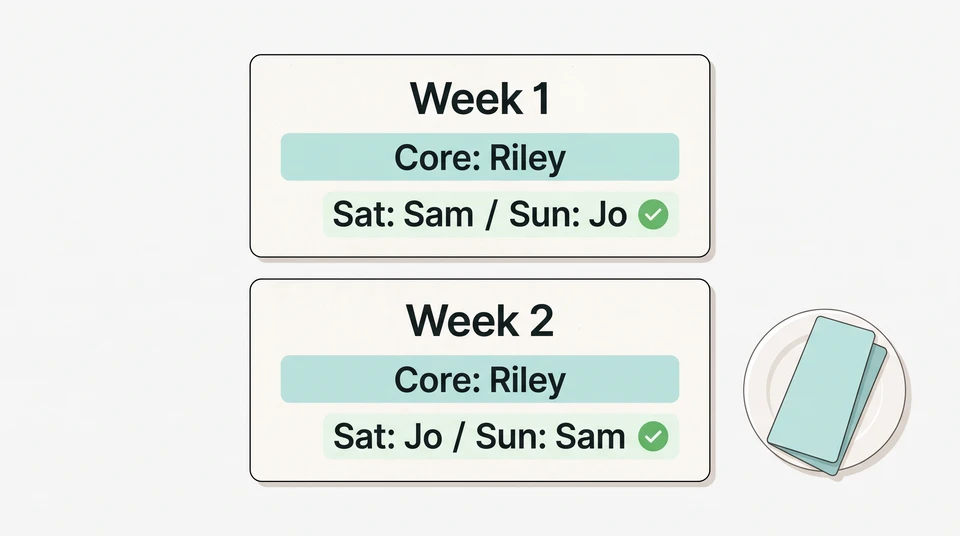
Keep the shifts that already work for your team. Then choose which weekend assignments, if any, would be worth rotating.
You do not have to choose between a completely fixed schedule and changing everyone’s days each week. For a small restaurant, try keeping a fixed core and rotating one clearly defined assignment among people who are available, ready for the role and willing to take part.
Start with a conversation, not a promise that rotation will make everything fair.
Compare stability with coverage
A fixed pattern repeats the same assignments. A rotating pattern changes selected assignments through an agreed cycle. Here, that means restaurant shifts such as Saturday and Sunday dinner—not a day/night rotation borrowed from a round-the-clock operation.
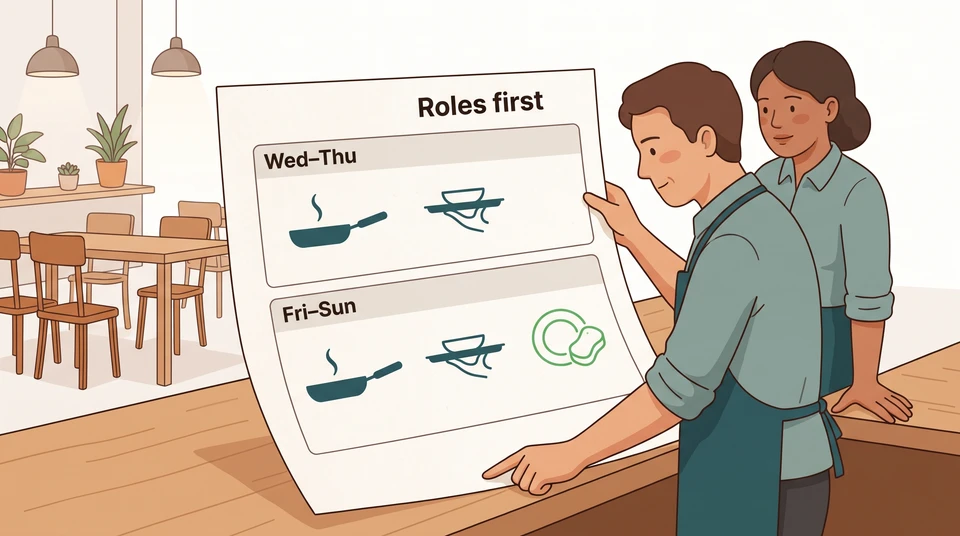
Before changing the pattern, write down three things for each service:
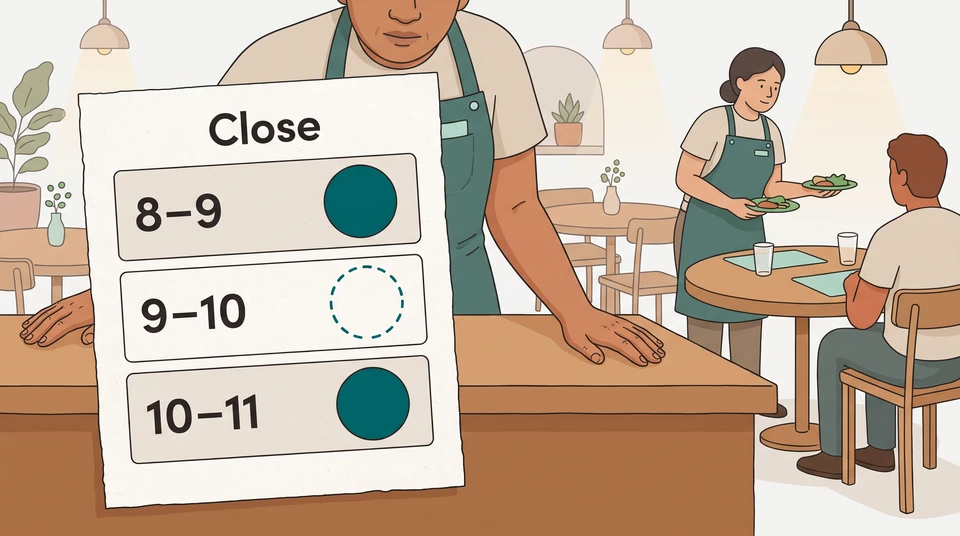
- Which roles must be covered, including opening or closing responsibilities?
- Who is available and ready to cover each role without extra supervision?
- Which assignments do people actually want to keep or change?
Treat hours and duties as one decision. The US O*NET description of food service managers includes both scheduling staff hours and assigning duties. A name in a dinner slot is not enough for your plan: identify who leads service, who handles the kitchen and who can work the floor.
Ask each person about the proposed pattern privately if they prefer. “Would you like alternate Saturdays and Sundays?” is more useful than assuming everybody wants weekends shared in the same way. Someone may prefer a regular Sunday shift; another may need that day free.
Choose a fixed core
Keep an assignment fixed when the person wants that pattern, their availability supports it and the service needs their skills. For example, you might keep an experienced floor team member on Tuesday–Friday dinners rather than move them just to make the schedule look even.
Check readiness before adding someone to a rotation. If a new starter still needs help closing, arrange supported practice first. Do not turn their first independent close into the experiment that tests your new pattern.
Keep the distinction clear: availability tells you when someone can work; readiness tells you which responsibilities they can take on. Use both when choosing the core and the people who could rotate.
Rotate one assignment, not the whole week
Choose a specific problem to discuss. Is one person asking for occasional Saturdays free? Does someone want to try Sunday dinner? Write down the proposed exchange and leave unrelated shifts alone.
For example, imagine a small restaurant with a Tuesday–Sunday dinner service. Riley covers the weekday floor position. Sam and Jo can both cover the weekend floor position independently and are available for either day. All three have agreed to the example assignments. Each floor shift runs from 5 pm to 10 pm, including the assigned closing work.
The owner has separately arranged the shift lead and kitchen coverage for every service. Those assignments stay unchanged. The comparison below shows only the floor position, not a complete staffing plan.
Option A: keep the weekend fixed
- Week 1: Riley works Tuesday–Friday. Sam works Saturday. Jo works Sunday.
- Week 2: Riley works Tuesday–Friday again. Sam works Saturday again. Jo works Sunday again.
Choose this pattern if Sam and Jo prefer those regular days and the coverage works. There is no need to introduce rotation simply because the calendar looks repetitive.
Option B: keep the core and exchange weekend days
- Week 1: Riley works Tuesday–Friday. Sam works Saturday. Jo works Sunday.
- Week 2: Riley keeps Tuesday–Friday. Jo works Saturday. Sam works Sunday.
Only the weekend days change. Sam and Jo still each work one five-hour floor shift per week; Riley’s four weekday shifts stay the same. This exchange gives Sam and Jo one Saturday and one Sunday each across the two weeks. It does not give either person an entire weekend off or prove that their shifts are equally desirable.
Use Option B if both people want that exchange. If Sam can only work Saturdays, or Jo needs more closing practice, do not include them in this rotation as written. Revisit the people or the assignment instead of overriding availability or readiness.
Review the pattern with your team
Show the two-week pattern before settling it. Name what stays fixed, what changes and when you will discuss it again. You could say:
Riley’s Tuesday–Friday dinners would stay the same. Sam and Jo, would exchanging Saturday and Sunday in the second week work for you? Let’s check your availability and preferences before we settle it, then talk again after both weeks.
For Australian venues, the hospitality rostering unit SITXHRM008 includes matching team skills, getting colleagues’ input and evaluating rosters with them. Use that as a practical planning reference—not as permission to change an employee’s arrangements. The example here does not set employment terms, pay or notice rules for either country.
At the review, ask each person whether the days worked for them and ask the shift lead whether the role coverage worked. Record the specific problem before choosing the next pattern. If both weekend workers want the same day, equal counts will not settle that preference: discuss alternatives rather than declaring the rotation fair.
Keep the change narrow. Continue the exchange, adjust it with the people affected or return to a fixed weekend pattern. Do not keep rotating everyone just because you started.
Put the agreed pattern somewhere useful
Sketch both weeks on paper first, or use CrewCentral’s free schedule maker. It is a manual browser-local tool you can start without an account or email. Build each week yourself, then print or export it. It does not generate an AI schedule, notify your team or provide shared cloud storage.
When you need a connected team workspace, explore CrewCentral Scheduling. Hiring, onboarding, training and scheduling share team context. With an account, AI can help prepare a roster draft around availability, role skills and coverage; a manager reviews and adjusts it before publishing. Keep the pattern decision with your team rather than expecting software to decide which rotation is fair.