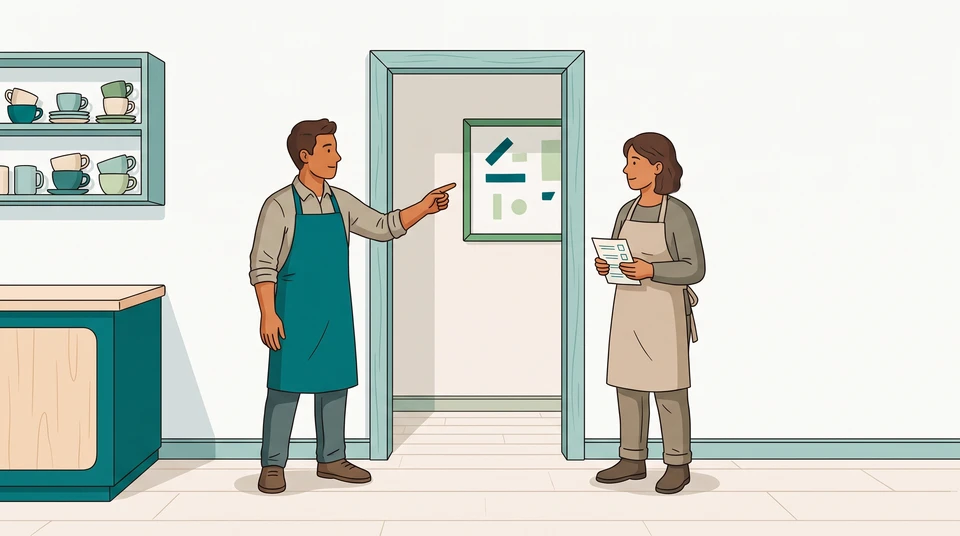
Assign ownership of secure restaurant new-starter details collection
Decide who collects new-starter details, who checks them and what the shift lead needs to know—without circulating private records.
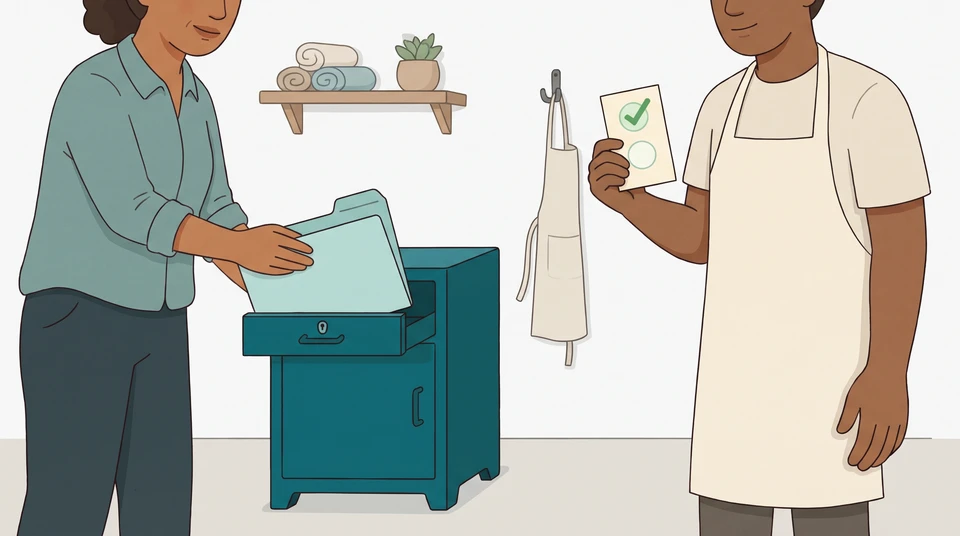
Give each part of your restaurant onboarding paperwork a named owner before asking a new starter to send anything. Decide who requests the information, who checks it and what the shift lead needs to know. Those can be different people—and the shift lead usually needs a status update, not another copy of a private document.
Start with your existing onboarding and payroll arrangements. You do not need another form or a new app to agree who does what.
Separate collection, verification and operational readiness
For every item you request, write down its purpose and the person responsible. Remove questions nobody can explain. The US NIST small-business privacy guide recommends mapping how information moves and considering whether you collect, share or keep data you do not need. It is voluntary guidance, not an employment-paperwork checklist.
Keep three decisions separate:
- Collection: has the requested information reached the person responsible for it?
- Verification: has an authorised person completed the check that item requires?
- Operational readiness: what work can the manager assign, with what training and support?
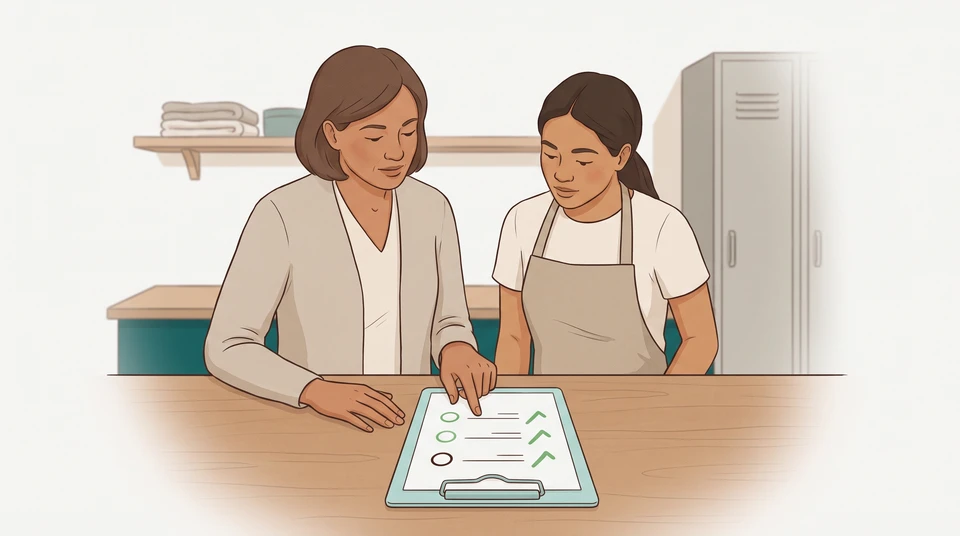
“Received” should not mean “checked.” “Paperwork checked” should not mean “ready to run the kitchen.” Have the owner of each check record its specific result; have the shift manager make the separate work-allocation decision. For that last decision, review readiness for the assigned work through task-specific observation rather than the paperwork status.
Assign manager and HR responsibilities
The venue owner should name an intake contact and a backup. If you have HR, agree which checks HR handles and which belong with payroll or another authorised person. Without HR, name the owner or administrator responsible and arrange qualified help for checks they cannot complete. A job title alone does not establish authority to verify a document.
Use this as an ownership map, not a universal list of documents to request:
Agreed role, start details and contact for practical questions
- Person to name: Hiring manager
- Where it belongs: Existing hiring/onboarding record, shared only as needed
- What the shift lead needs: Confirmed role and start arrangements
Tax and bank information needed for pay setup
- Person to name: Authorised payroll contact
- Where it belongs: The approved payroll collection process
- What the shift lead needs: Whether a pay-setup action needs the owner’s attention—not the numbers
Identity or work-authorisation check, where required
- Person to name: Person authorised to carry out that check
- Where it belongs: The approved checking process and any records it requires
- What the shift lead needs: A specific completion or unresolved status, without document copies
Training and task readiness
- Person to name: Trainer and deciding manager
- Where it belongs: Task-level training/progress record
- What the shift lead needs: Work reviewed, remaining supervision and next check
Confirm the required items, permitted verification method and deadlines for your location with the person responsible for employment administration. Do not copy an Australian forms list into a US venue, or the reverse.
A chef, an admin contact and one missing item
Suppose a small restaurant has hired Lee as a kitchen starter. Chef Ana knows the agreed start date. Morgan handles HR administration and coordinates with the authorised payroll contact. Jo leads Lee’s first shift.
Morgan checks which documents are actually needed and sends Lee the approved collection instructions. Ana does not ask Lee to send a second set to the kitchen. Jo receives the role and start details, plus a short status note:
Pay setup: one item awaiting correction. Morgan owns the follow-up with Lee and will update the owner by 3 pm Wednesday. Jo does not need the form. Training: supervised preparation planned with Ana; independent station work not yet reviewed.
The note does not say Lee is cleared for all work. If an unresolved check could affect the start, Morgan escalates it to the owner and the authorised checker before the relevant deadline. They confirm what can proceed and tell Jo the operational decision. Jo does not decide from the colour of a checklist tick.
For the separate arrival conversation, use the accepted-hire handoff. Keep this paperwork map focused on who requests, checks and follows up.
Route sensitive information through an appropriate secure channel
Before sending collection instructions, the owner should ask the payroll or HR provider to confirm the actual submission route, who can see the records and how the information is protected during transfer and storage. Check those arrangements rather than treating an upload link as proof of security. NIST’s guide recommends controlling access to devices and encrypting sensitive data in transit and at rest.
Give the starter the verified destination and a named contact for problems. Tell them not to post bank details, identity scans or private forms in the staff chat, ordinary shared spreadsheet or arrival-message thread. If they cannot use the approved route, arrange a private alternative with the authorised recipient—for example, an agreed in-person appointment—rather than asking for photos by text.
Australia’s OAIC security guide recommends limiting access to people who need it for their jobs and managing the risks of sending personal information by email. Apply that principle to the status note too: share it with the managers who need the next action, not the whole team.
Australian owners should check Privacy Act coverage and small-business exceptions. Do not assume the employee-records exemption covers every record or an outside HR provider. US owners should have their adviser check the federal, state and local rules that apply. This ownership map is practical guidance, not a compliance guarantee.
Resolve missing items without duplicating sensitive records
Have the intake contact follow up directly with the starter. Name the item and the correction needed without repeating private values in the reminder. Point back to the approved destination and give a contact if they get stuck.
In Lee’s example, Morgan could write:
Hi Lee, one item in your pay setup still needs correcting. Please use the payroll submission route we gave you, or contact me if you cannot access it. Don’t reply with bank details or attach the form here. I’ll confirm when the payroll contact has checked the correction.
Morgan keeps the item open until the responsible checker confirms the result. Update the existing status record with the action, owner and next update time; do not create a second folder of documents for Jo. If the checker is unavailable, use the named backup or escalate to the owner—not a guessed “complete.”
If a private document lands in the wrong place, stop forwarding it and contact the person responsible for privacy or security. Follow the venue’s incident and records process; do not improvise deletion or promise that removing one message resolves the exposure. Have the responsible person confirm applicable retention requirements before changing or disposing of records.
Once the administration is clear, connect the relevant progress to the wider onboarding plan, training and the first schedule. Keep the underlying private records with their authorised recipients.
You can start today by filling in four things for your next starter: the intake contact, each checker, the approved destination and the next update owner. If you want role and contact details, team-specific checklists and manager visibility into outstanding tasks together, explore CrewCentral Onboarding. Hiring, onboarding, training and scheduling share team context. Contracts, payroll and background checks stay separate; this is not a reason to upload identity or bank documents into an unverified workspace.