Keep first-week onboarding consistent across different shifts
Keep completed introductions, pass open questions to a named manager and use one check-in to close the loop across three shifts.
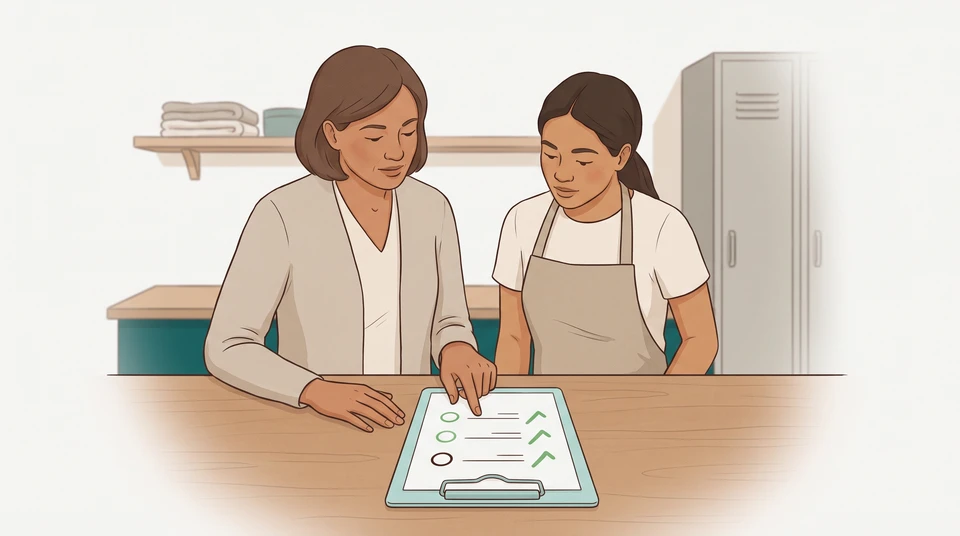
Before each supervisor meets a new starter, have them read one shared orientation record. Keep completed introductions on it. Give every unanswered question a next action and a named manager.
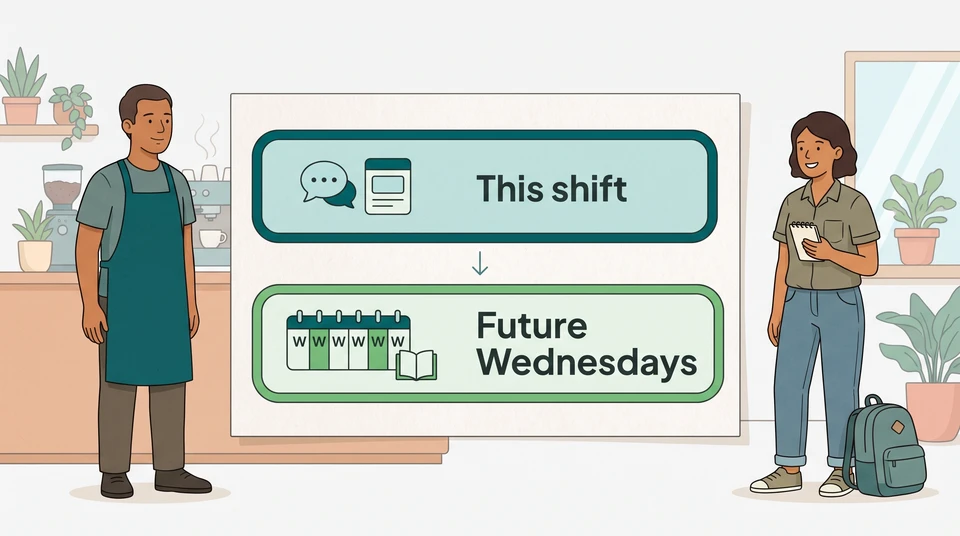
That way, Wednesday’s supervisor can pick up where Monday’s left off, rather than asking the starter to begin the same tour again. Friday’s check-in can focus on what is still unclear.
Define shared first-week responsibilities
Choose one manager to own the record for the week, even when different supervisors lead each shift. That manager agrees who covers each introduction, checks that the next person has the record and follows up on open questions.
Start with the information the person needs to join your venue: where staff facilities are, who to ask for help, how to report an absence and where to find their next shift. Name the person who will explain each item. New York City’s restaurant onboarding playbook recommends clear team roles, a tailored orientation checklist and regular check-ins. Use that as practical restaurant guidance, not a rule that applies everywhere.
Don’t spread urgent safety information across the week. Show the starter the relevant exits, emergency arrangements and how to get help before they need them. In Australia, Safe Work Australia’s induction guidance includes hazards, safe procedures, emergency arrangements and first aid. Check your state or territory regulator for the requirements that apply to your venue. In the US, the NYC playbook also includes a safety walk-through; check the workplace safety requirements that apply where you operate.
Record what has actually been explained
Keep one current record in a manager-controlled document or a folder accessible to the supervisors who need it. Give the starter a chance to read their own orientation notes and ask for corrections. Don’t leave the record on a public counter or in a group chat.
For each item, write what was covered, who explained it and when. Keep a separate space for what is unresolved, the next action, the named owner and when they will follow up. A tick means an introduction or explanation happened. It does not mean the person can perform the job independently.
One starter, three shifts
Suppose Sam joins a small cafe and works Monday, Wednesday and Friday with different supervisors. Priya, the venue manager, owns Sam’s one orientation record. Safety information needed for Monday’s work is covered before that work begins. The notes below track the other introductions across the week.
Monday — Alex covers staff facilities.
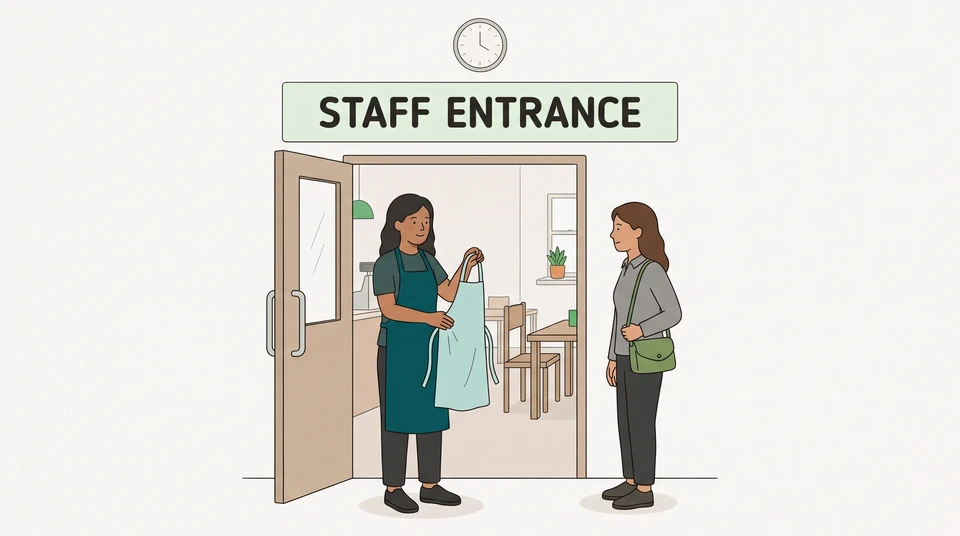
Alex shows Sam the staff entrance, toilets and where to store personal belongings. Alex records those introductions as completed, with Monday’s date and their name. Sam still needs to know which manager to contact about an absence. Alex adds: “Unresolved: absence contact and reporting steps. Jordan to explain before Wednesday’s shift starts.” Priya asks Jordan to read the record and confirm they will cover that item.
Wednesday — Jordan covers communication routines.
Jordan reads Monday’s notes, so there is no need to repeat the facilities tour unless Sam wants another look. Jordan explains the venue’s absence-reporting steps and shows Sam where the current schedule is kept. Jordan records those explanations as completed. Sam asks who to approach if the usual shift supervisor is unavailable. Jordan adds: “Unresolved: backup contact. Priya to confirm with Sam before Friday’s shift starts.” Priya confirms she will take that question.
Friday — Priya checks the remaining uncertainty.
Priya reads the same record and explains the backup contact. She asks Sam to talk through who they would contact in that situation. If the route is still unclear, she clarifies it and keeps the question open until they have worked through it together. She records the answer and asks whether anything else from the week needs another explanation.
The Monday and Wednesday entries stay on the record. Friday is not a fresh orientation from the beginning, and none of these notes signs Sam off to use equipment or work a station alone.
Pass unresolved items to a person, not “the next shift”
At the end of each orientation conversation, the supervisor should ask: “What do you still need explained?” Write the question plainly. “Needs support” gives the next manager less to work with than “Doesn’t know who to contact when the shift supervisor is away.”
Name someone who will actually be there to help. If the planned supervisor changes, the manager who owns the record names a replacement and confirms they have picked up the item. Don’t treat a saved note or an unanswered message as an acknowledgement.
Repeat an explanation when the starter asks, the information changes or their answer shows confusion. Keep the earlier entry and add what changed. The aim is to avoid an unnecessary restart, not to prevent useful repetition.
Keep the shared notes focused on orientation. Leave bank details, identity documents, medical information and private employment discussions in the separate restricted process your venue uses. NIST’s small-business privacy guide recommends considering whether you collect, share or keep data you don’t need, and controlling access to devices. It is voluntary guidance, not a statement of your legal obligations. Australian owners should also check the limits of the employee-records exemption, rather than assuming it covers every record or outside service.
Schedule one overall check-in
Before the week begins, put a short check-in with the record’s owner on the starter’s schedule. At that meeting, review completed introductions, resolve remaining questions and give anything still open a named owner and follow-up time. Ask the starter what they have had to ask twice, or what nobody has explained yet.
Plan required orientation and check-ins as paid work, with time recorded through your normal process. In Australia, the Fair Work Ombudsman says employees must be paid for training that is part of their job. For US employees covered by the FLSA’s hours-worked rules, required job-related orientation does not meet the ordinary training-time exclusion: the Department of Labor lists four conditions, including voluntary attendance and training not directly related to the job. Check applicable state and local requirements too.
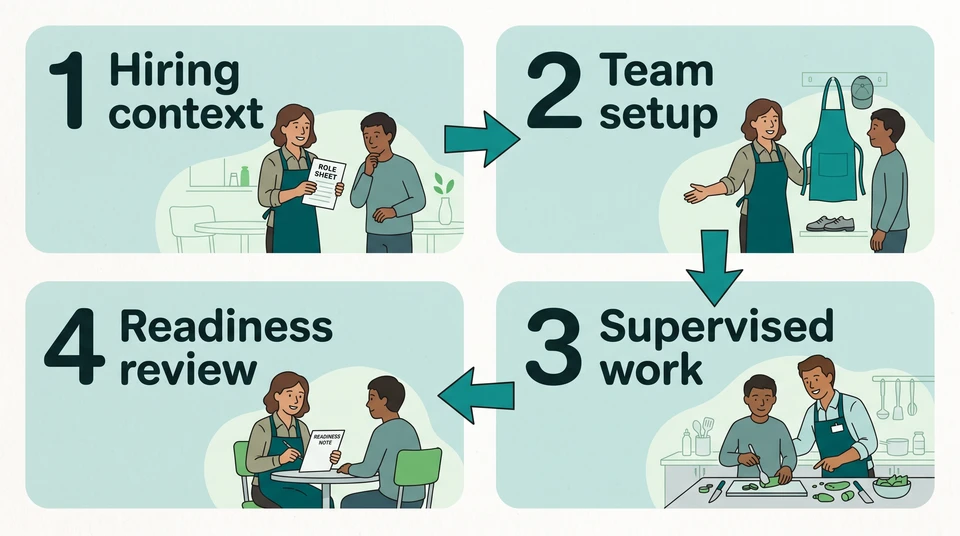
Keep orientation questions separate from training decisions. Knowing where the schedule is does not establish readiness to run a station. Arrange the relevant training and supervised checks before assigning work that needs them.
Start with a record you can keep current
Use the format your supervisors can maintain today; a short, securely stored record is enough to start this routine without buying a new tool.
If you want to bring setup information together, explore CrewCentral Onboarding. It keeps worker role and contact details, team-specific checklists and onboarding progress together, alongside hiring, training and scheduling. Your manager still owns this week’s follow-up: agree who explains each item, confirm they have picked it up and check back with the starter.
For your next new starter, choose that owner and write the first unresolved item with a name and a follow-up time. That’s the point the next supervisor should start from.