Check whether a new starter is ready for a busy service
One table can go well while overlapping requests still need support. Use a worked server example to choose the next assignment, backup and review.
Before you give a new starter more responsibility in a busy service, name the work you want to see and the help that will stay available. Then watch what happens when ordinary requests overlap—not just whether they can complete each task on its own.
A useful restaurant staff training assessment ends with a specific decision: keep the same support, practise one missing step, or try a slightly wider assignment with agreed backup. It is not a score that clears someone for every busy shift.
Define the next service demands
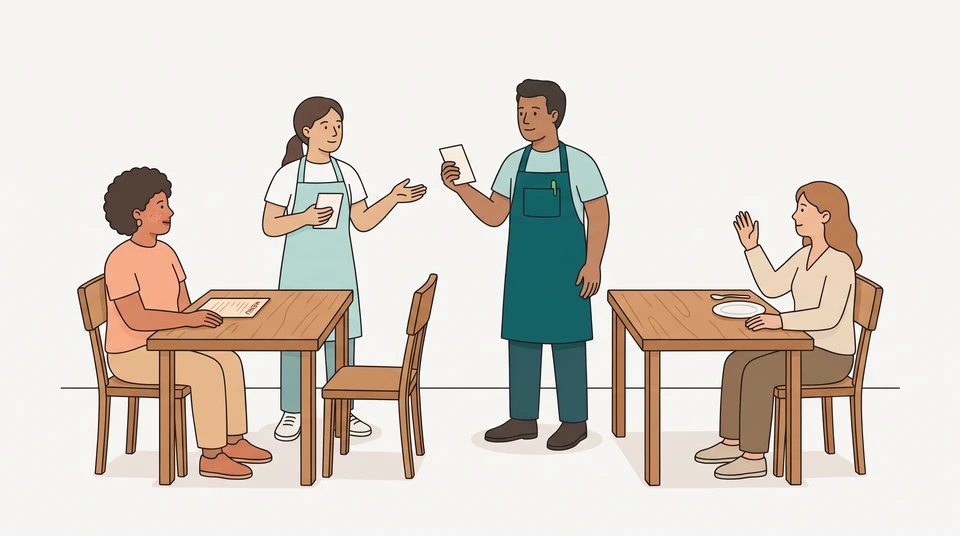
Start with the service you are planning. For a server, that might mean taking an order at one table while another guest asks for the bill. Decide what the starter should handle, what they should hand over and who will take the handover.
These are relevant parts of the job: the US O*NET waiter and waitress profile includes taking orders, preparing checks, checking on guests and communicating with colleagues. Choose the tasks that actually belong to this person’s role in your venue.
Write a short observation brief before service:
- Name the demand: an order and a bill request arriving close together.
- Name the actions to watch: acknowledge both guests, explain the next step and ask for help before losing track of either request.
- Name the backup: the floor manager, who stays close enough to hear the request and take over.
- Name the boundary: the starter does not handle unfamiliar requests or expand their section without checking with that manager.
Tell the starter what you are looking for. Ask them to explain who they will call and what they will do if that person is unavailable. If you cannot provide the promised backup, change the assignment or postpone the observation.
Observe relevant work
Imagine Alex is a new server at a small restaurant. Alex has already practised order entry and presenting a bill with manager Jo. During a quieter service, Alex looks after one table: explains the menu, confirms the order and checks back with the guests.
Jo records those actions rather than writing “good with customers.” That observation tells Jo what Alex did with one table. It leaves an open question: what will Alex communicate when another request arrives before the first task is finished?
Before trying that situation, Jo checks the setup with Alex. Alex will keep the first table; Jo will own the second table and respond to any request passed over. Jo can step in immediately. Alex should stop and get Jo for anything unfamiliar or outside the agreed task, including a question they cannot answer confidently.
Jo also explains that asking for help is part of the observation, not a reason to hide a problem. The aim is to choose useful support, not to catch Alex out.
Test prioritization with supervised scenarios
Rehearse the overlap away from guests first if Alex has not practised it. Two colleagues can play guests: one starts an order while the other asks for a bill. Ask Alex to acknowledge the second request, explain what happens next and make a clear handover to Jo. Discuss a missed step, then try it again.
During real service, observe only work that fits the agreed assignment and available supervision. Do not manufacture a rush, delay help or expose guests to an avoidable problem to make the test harder. If conditions move beyond the brief, Jo takes over and ends the observation.
Suppose Alex is confirming an order at the first table when a guest at Jo’s table asks Alex for the bill. Alex acknowledges the guest but returns to the order without telling Jo. Jo prompts: “Who can take that request while you finish here?” Alex then asks Jo to bring the bill, and Jo confirms that she will.
The useful finding is not simply that both tables were served. Alex completed the order, noticed the second request and made the handover after a prompt. The prompt matters: Jo has not yet seen Alex make that handover without help.
Afterwards, Jo asks, “What were you keeping track of? When would you ask me to take the second request?” Let Alex explain before deciding what to practise next. If the request was unclear or Jo was too far away to help, fix that setup rather than treating it as a gap in Alex’s skill.
Decide support and review timing
Match the next assignment to the observed evidence. In this example, Jo keeps Alex on the same limited assignment with nearby backup. Before the next supported service, they rehearse acknowledging a request and naming the person who will take it. Jo then watches for that handover without supplying the cue.
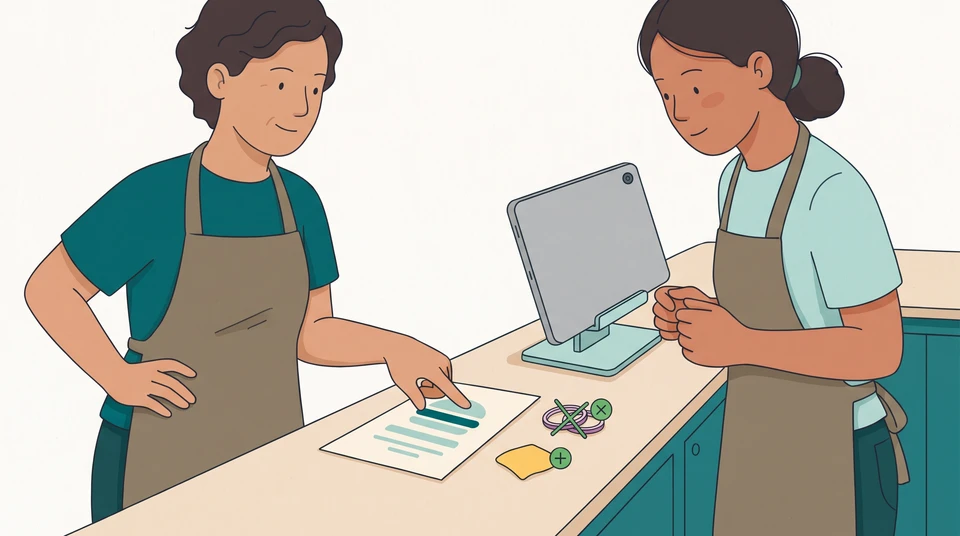
Keep a short note that the next supervising manager can use:
Demand: an order and a bill request overlapped. Alex confirmed the order and acknowledged the second guest. Jo prompted the handover; Alex then asked Jo to take the bill request. Next assignment: keep the same table responsibility with nearby backup. Practise the handover before the next supported service; Jo will observe it again during that service.
Record a different decision when the evidence calls for it. If a starter repeatedly loses track of requests, return to one task and coach the missing step. If they handle the agreed overlap without prompts, consider a modestly wider supported assignment—not an automatic move to a full section alone. Write down what remains unobserved before changing their responsibilities.
Start with paper or a shared document you already use. Before the next schedule or roster is finalized, the manager allocating shifts should read the note and confirm that the named backup will actually be there.
If you want to keep the record beside scheduling, CrewCentral Training brings together role-based training steps, progress and manager sign-offs. Hiring, onboarding, training and scheduling share team context. Keep the decision with the manager: CrewCentral does not verify certifications or licences, and a completed step should not replace observing the work you plan to assign.
For the next new starter you review, choose one overlap, agree the support and record what you saw—including any prompt. Finish with the next assignment and the person who will review it.