Hand off an accepted hire to the first-shift manager
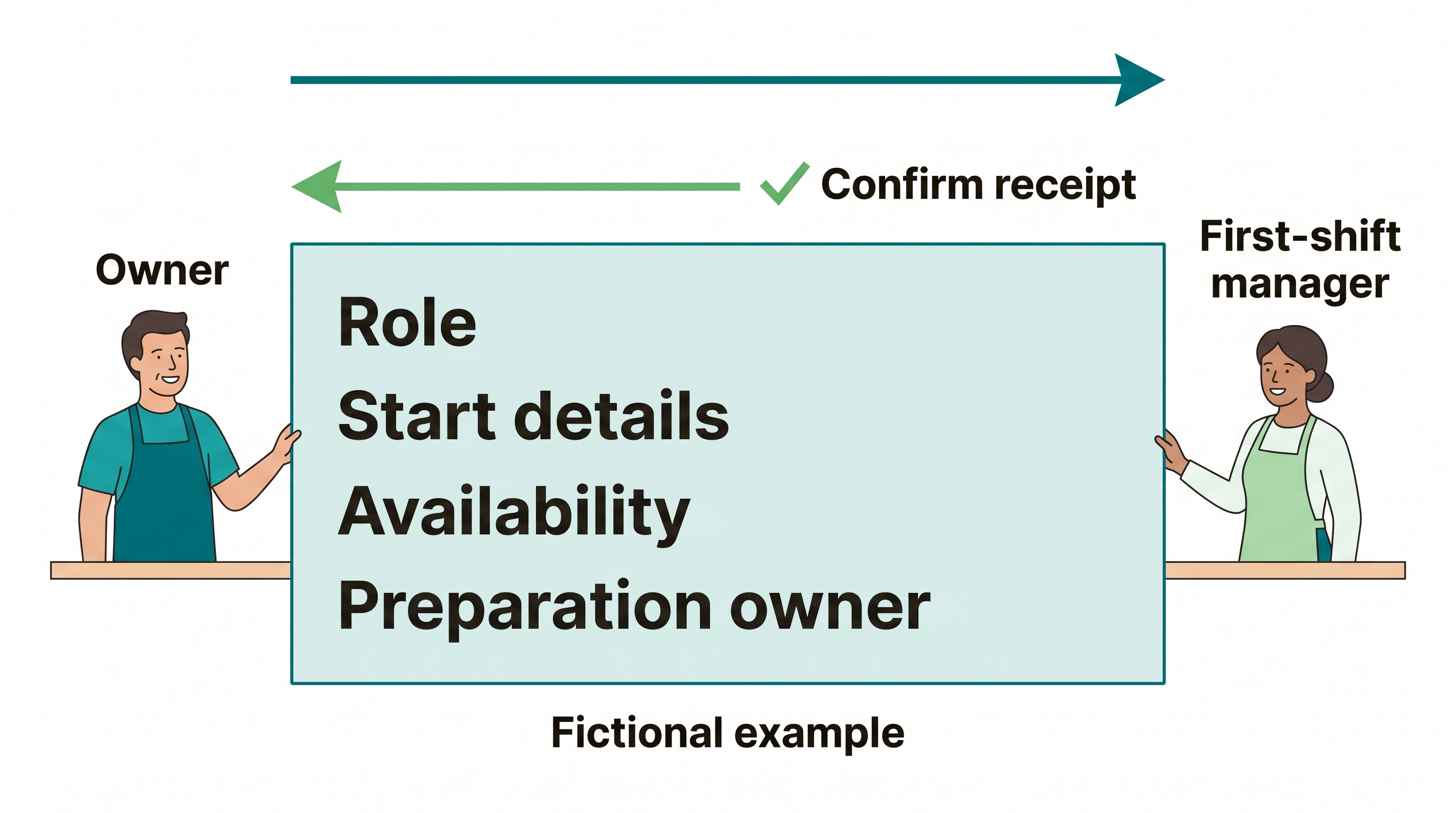
You hired the server. Someone else is running their first shift. Before you step away, give that manager the agreed details and ask them to confirm what they will handle.
This is the hiring-to-onboarding handoff: one person passes on the essential context, and another takes responsibility for the arrival. Keep it short. The aim is a clear transfer, not another form for its own sake.
New York City’s restaurant onboarding playbook starts onboarding at offer acceptance, including communication before the start date. That is useful operational guidance, not a requirement to use a particular tool. NYC playbook
Confirm the agreed start details
Check the first-shift date, start time, venue entrance and arrival contact with the new starter. Give the receiving manager the same details, including anything the starter needs to bring or wear. Ask the manager to flag any missing instructions before you send them to the starter. Arrival guidance
Use confirmed information, not an interviewer’s guess. If the time or availability changes, check with the starter and update the manager before relying on the old record. Availability is not an agreement to take every shift within it.
Transfer relevant job context
Share the agreed role, confirmed availability and any open operational questions. Leave interview opinions, bank details and identity documents out of this short manager handoff. Handle those separately through your venue’s appropriate process.
Use a short note or table the receiving manager can check before the first shift.
Hypothetical example: Harbor Table
Harbor Table is a fictional independent restaurant. Its owner, Maya, hires Alex as a server. Weekend supervisor Jordan will receive Alex for the first shift. All names and details below are invented to illustrate the handoff.
| Detail | Owner-to-manager handoff |
|---|---|
| Agreed role | Server; first shift begins with Jordan’s introduction and role briefing |
| First shift | Saturday, October 17, 2026, at 3 p.m.; meet Jordan at the front entrance |
| Confirmed availability | Friday and Saturday from 3 p.m.; Sunday not agreed |
| Arrival details | Maya has confirmed the time, entrance and venue’s clothing instructions with Alex |
| Receiving manager | Jordan; if Jordan cannot attend, Maya confirms a replacement and tells Alex |
| Preparation owner | Jordan arranges the welcome, team introduction and initial role guidance |
| Open question | Alex has asked who will explain the ordering system; Jordan will confirm the trainer |
| Receipt | Jordan replies to Maya confirming the arrival and preparation responsibilities |
The useful part is Jordan’s reply, not the table. It tells Maya who is taking the next step. Alex should also know who to contact with questions.
Name the receiving manager
Choose an actual person who will be there, not just “the weekend team.” Ask them to confirm the details and flag anything they cannot arrange.
Write the receiving manager’s name in the record. If they have not confirmed before the first shift, contact them to confirm who will cover the arrival. If they are unavailable or unreachable, agree a backup with another manager. If no backup can cover, meet the starter yourself if possible; otherwise agree a workable new arrival plan directly with the starter before the shift. Confirm who is covering, update the record and tell the starter who to ask for. Keep the handoff open until coverage and any changed arrival details are confirmed with everyone involved. First-day oversight
If you both hire and receive the starter, skip the artificial transfer. Keep the details handy and confirm the arrival directly. If another manager takes over, tell the starter who is now meeting them.
Check that preparation has an owner.
Before closing the handoff, ask the receiving manager: who will greet the starter, introduce the team and explain the first shift? What is still unresolved?
Keep these as manager preparation tasks, not extra homework for the starter. A completed record does not replace a welcome, questions or role training.
Don’t wait until your new starter is set up in your internal systems. Send an email or text using the personal contact details they gave you, with the first shift’s date, start time, location, who to ask for and anything they need to bring. Ask them to reply to confirm they’ve received it. If they have not replied before the first shift, try another contact method they supplied if there is one; otherwise retry the supplied method. Keep arrival unconfirmed until they reply. If they remain unreachable, tell the named manager to be ready to greet them if they arrive. A reply confirms receipt, not availability or agreement to changed shift details; agree any changes directly with the starter. Keep private HR documents out of the text. Scheduling communication
CrewCentral brings worker profiles, onboarding checklists and outstanding tasks into one place, so your managers can see what’s ready and what still needs attention. Hiring, onboarding, training and scheduling share the same team context. CrewCentral onboarding
CrewCentral onboarding doesn’t handle contracts, payroll or background checks; arrange those separately. Keep this handoff focused on the person receiving the starter and the context they need. Onboarding scope
Start with the conversation and a short record; you do not need a new tool to try it. To keep new-starter details and preparation tasks together for your team, see CrewCentral onboarding.