Define a line cook role around a real station
Define the grill job before hiring: station preparation, service, handoff and support, while another cook keeps ownership of cold prep.
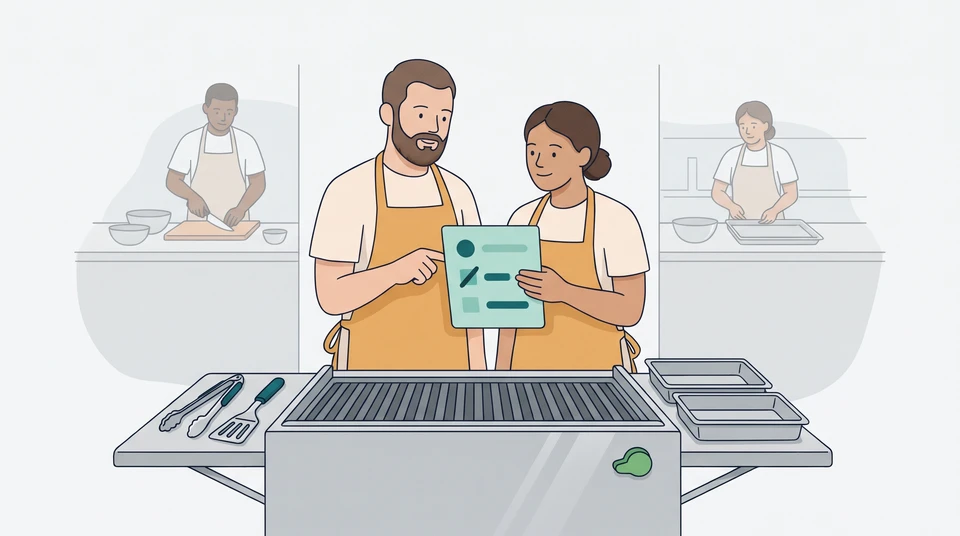
Write your line cook job description beside the station you need covered. Name the dishes, the preparation that belongs to the job, the service work and the person who helps when something goes wrong. Replace “help wherever needed” with a role an applicant—and the rest of your kitchen—can understand.
Start with a page of notes and your kitchen lead. You do not need new software to work out the job.
Map one kitchen station
Choose the actual station first: grill, fry, sauté or another area your kitchen uses. Then list which menu items it handles and where its work starts and finishes.
US O*NET’s restaurant-cook profile includes cooking, plating, ingredient preparation and cleaning. It also lists line cook, grill cook and prep cook among reported titles. Australia’s ABS cook profile covers preparation, cooking, presentation and kitchen equipment. Use those task descriptions to prompt your own list, not to assign every kitchen duty to one hire.
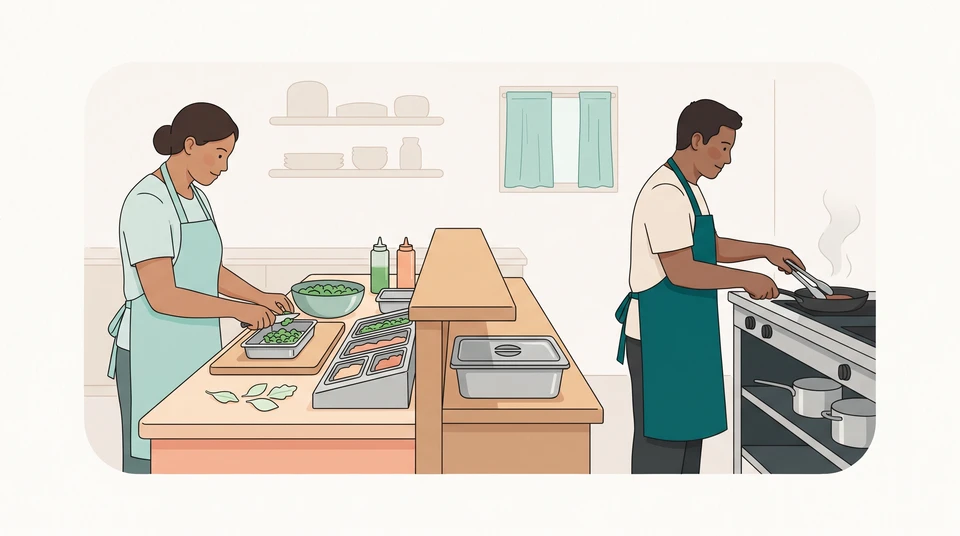
Imagine a small dinner venue hiring for its grill station. The grill cook prepares the station, cooks its assigned menu items and sends them to the pass—the collection point for finished dishes. Mina, an existing cook, owns cold prep and salads. Rae, the kitchen lead, coordinates the pass and handles questions about the service plan.
This is a role-design example, not a recommended team size. The manager still needs workable cover for dishwashing, other kitchen work, breaks and closing.
Walk the station with Rae and answer these questions:
- Which dishes or parts of dishes will the grill cook prepare?
- Which ingredients arrive ready, who supplies them and what must the grill cook finish?
- How do orders reach the station, and who coordinates dishes that need several stations?
- What setup, replenishment and cleaning belong to this job?
- Who takes over when the cook steps away, and what work must that person leave?
In this example, cold prep stays with Mina. If you want the grill cook to take it over later, check the workload and training before changing the role. A quiet moment is not a permanent cover plan.
If you are still deciding whether to hire for preparation or live cooking, settle that role split first. Here, the decision is narrower: describe the grill position you have chosen to fill.
Separate prep, service and handoff duties
Write the work in the order the cook will encounter it. Keep your recipes, equipment instructions and food-safety procedures separate; the role brief tells someone what they own, not how to cook each dish safely.
Before service
For the dinner venue, the grill cook checks the agreed prep list with Rae, sets up the station using the venue’s procedures and checks that the assigned ingredients and utensils are ready. Mina supplies the cold-prep items agreed for that service; the grill cook flags anything missing rather than assuming Mina will notice.
Give setup a place in the scheduled working time. If the job begins with preparation, show that start—not just the time guests can order.
During service
The grill cook handles the station’s tickets, follows the venue’s recipes and procedures, and coordinates with Rae before sending dishes to the pass. Rae resolves timing conflicts involving other stations. The cook reports a shortage or delay while there is still a decision to make, rather than silently adding a cold-prep job to the queue.
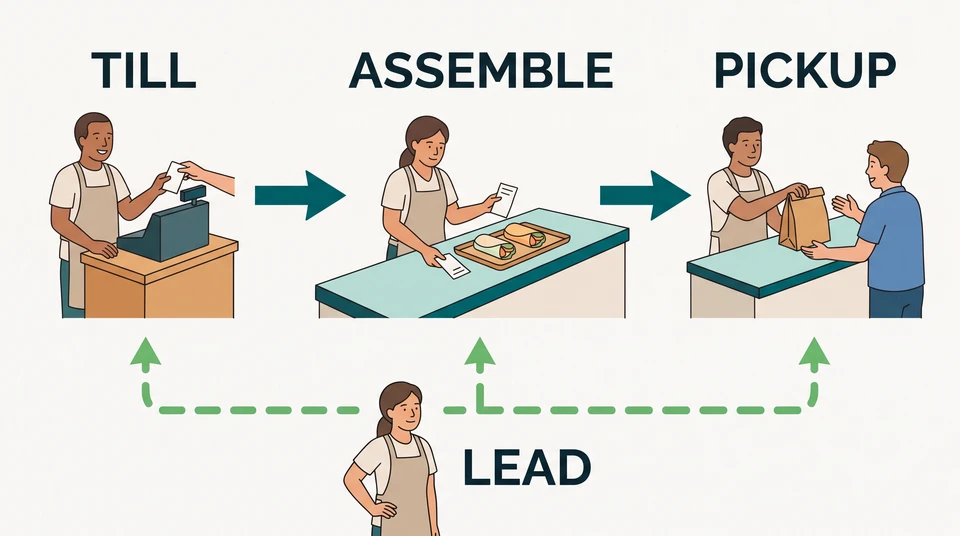
Describe the limit as clearly as the duty: “Own the grill station during dinner; ask the kitchen lead before leaving it to cover another area.” For the wider guest-to-kitchen responsibilities, keep a separate service handoff map.
At handoff and close
Have the outgoing cook identify outstanding tickets, shortages, unfinished tasks and anything the next cook must check. The incoming cook confirms what they are taking over before the outgoing person leaves the station. If nobody is taking over, Rae confirms how remaining work will be completed.
Name the grill cook’s closing tasks explicitly. For example: complete the assigned station clean, follow the venue’s food-storage procedure and report an equipment problem to Rae. Keep whole-kitchen cleaning and dishwashing with their agreed owners; do not hide them under “other duties” if they are a regular part of the vacancy.
Explain support and escalation
“Reports to the kitchen lead” is a start. Add when the cook should ask for help and what the lead can decide.
At this venue, Rae is the first contact for an unclear ticket, a shortage, a timing clash or equipment trouble. For an allergy question, the cook pauses the affected order and follows the venue’s escalation procedure rather than guessing or making an unapproved substitution.
Test whether the support is actually available. Suppose Rae needs to take over the grill while the cook steps away. Who coordinates the pass then? Rae and the floor manager must arrange that work before the handover. If there is no suitable cover, they need to change the service plan—not count Rae in two places.
Be equally clear about learning. Decide what the new hire needs to do on arrival and what Rae will teach under supervision. Previous grill experience does not replace an introduction to this venue’s menu, equipment and procedures. Do not promise supported learning unless the schedule gives the trainer time to provide it.
Check food-handling requirements before you advertise them. For Australian venues, FSANZ’s skills guidance explains that skills and knowledge must suit the work, with additional requirements potentially applying under Standard 3.2.2A and state or territory rules. For US venues, use the FDA’s state agency directory to find the relevant authority, then confirm local requirements. Do not turn either country’s guidance into a universal certificate requirement for every line cook.
Turn the station map into a truthful role brief
Use the agreed duties to write a short description. For the dinner venue, the core could read:
Line cook — grill station
Prepare and run the grill station for dinner service, reporting to the kitchen lead. Set up the station, check the agreed ingredients, cook and plate assigned menu items, coordinate ticket timing through the lead and complete the station’s handoff and closing tasks.
Cold prep and salads belong to another cook. Raise shortages, unclear orders, equipment problems and requests for help with the kitchen lead. Follow the venue’s food-safety and allergy procedures; do not make unapproved substitutions or leave the station without arranged cover.
We will introduce you to our menu, equipment and service routines before reviewing readiness for independent station work.
Before using that description, the hiring manager should add the actual venue, employment arrangement, pay details and shift pattern, including setup and close. Separate essential skills from work you can genuinely teach. Resolve applicable employment and food-handling requirements for the venue rather than copying a certificate list or pay classification from another job ad.
Ask Rae to read the brief as tonight’s kitchen lead: “Does this match the job we need, and can we provide the support it promises?” Correct the description if the answer depends on someone dropping their own station. Check this with your own team, rather than using an applicant as service cover; plan any assessment separately with clear stage-shift arrangements.
Carry the same brief into onboarding. Name the trainer, the station tasks still to practise and the manager who will review readiness before scheduling independent work. Keep the grill duties consistent through hiring, onboarding, training and scheduling. Do not hire for one station and quietly roster the starter for another.
Keep your first version in the document you already use. When you want to organize candidates around the role, explore CrewCentral Hiring. It keeps candidate details with open roles and connects the person you choose to onboarding; your team makes the hiring decisions. Start by finishing one station brief, then check that the next shift can deliver what it promises.