Restaurant positions and who owns each service handoff
Give each service handoff a sender, a receiver and a backup. Adapt a dinner-service map for your host, servers, kitchen and shift lead.
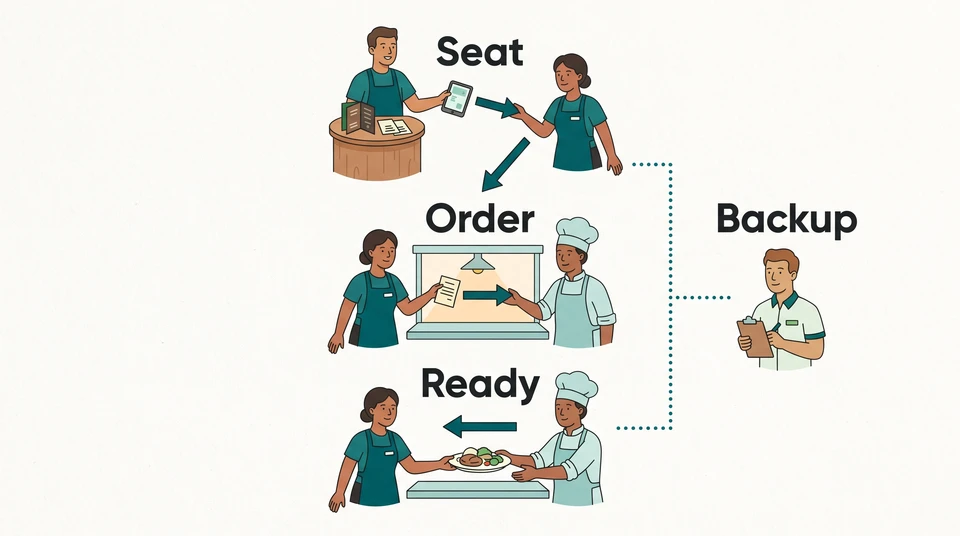
Before your next dinner service, give each handoff a sender, a receiver and a backup. Start with three questions: Who tells the server a table has arrived? Who confirms the kitchen has the order? Who collects the food when it is ready?
Use a sheet of paper or your existing shift notes. Write the responsibilities first, then put names beside them. You do not need another job title for every task.
Map guest and kitchen work
For a starting point, US O*NET describes hosts greeting and seating guests, servers taking orders and serving meals, and restaurant cooks preparing and plating food. Those descriptions are useful starting points, not a staffing plan for your venue.
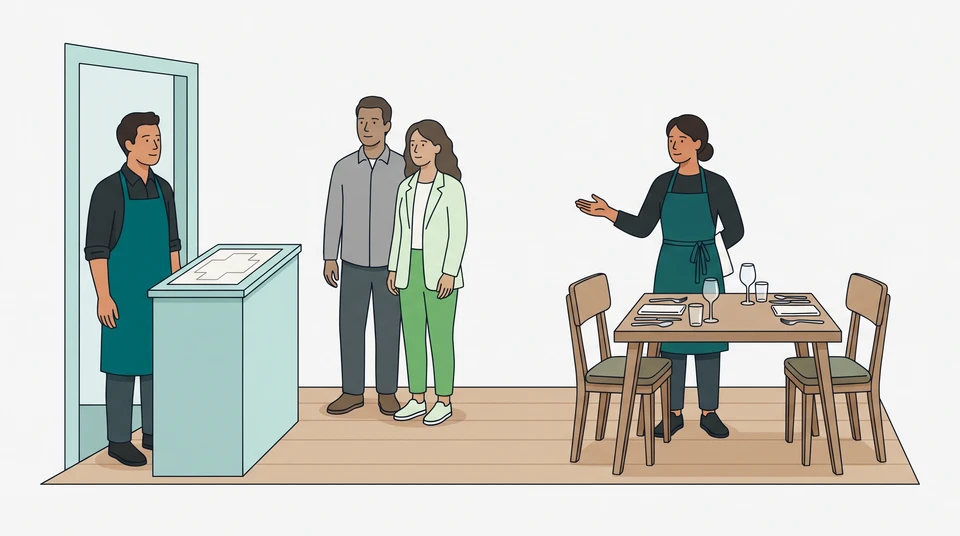
Imagine a 40-seat restaurant serving dinner at tables. Guests arrive at the entrance, a server takes their order, and the kitchen prepares it for collection at the pass—the collection point between kitchen and floor. A shift lead is on duty to arrange cover and resolve problems.
This example maps four responsibilities, not a four-person staffing recommendation. Before using it, account for your actual sections, kitchen stations, drinks, dishwashing, breaks and expected demand.
Split the service into two paths:
- Guest work: welcome, seat, take the order, serve, check back, take payment and reset the table.
- Kitchen work: receive the order, clarify it, prepare the meal and release it for collection.
Then connect the paths at the order and the pass. Name someone to notice when information or food has not reached the next person.
Define the role boundaries
For this dinner service, give the host responsibility for the entrance and seating updates. Give each table a named server who stays responsible for guest communication, even when a colleague helps carry plates.
Give the kitchen lead responsibility for confirming order questions and calling food ready. Assign that contact before service; do not expect the server to ask every cook separately.
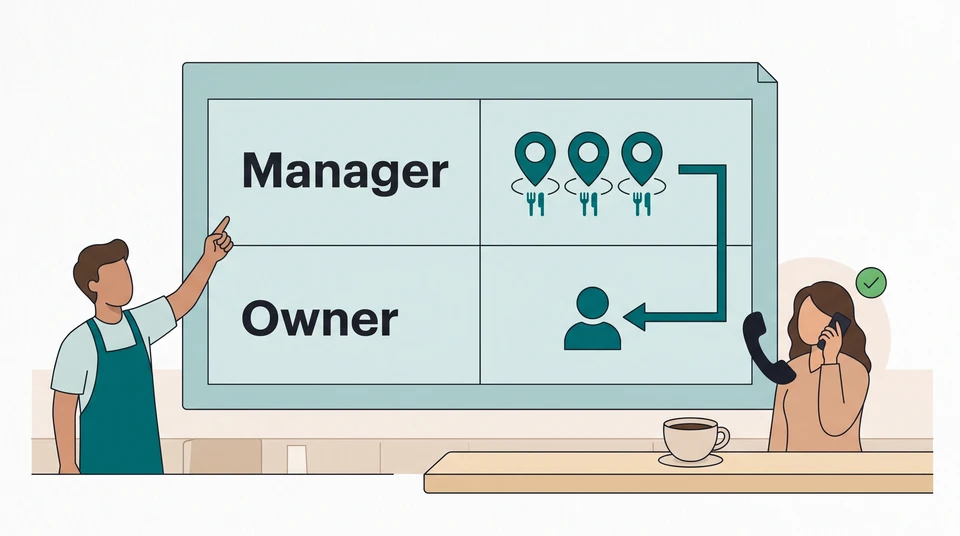
The shift lead owns unresolved handoffs, cover decisions and guest exceptions beyond the team’s agreed authority. US O*NET includes assigning duties and resolving service complaints in food-service supervisory work. Decide what your lead can approve, such as a changed seating plan or refund, before the shift starts.
Try this boundary sentence for each responsibility:
I own this until the next person confirms they have it. If they cannot take it, I ask the shift lead to arrange cover.
Keep it practical. The host does not need to follow a server around after seating a table, but does need to know the server has received the table number and arrival update.
Assign ownership at each handoff
Use this example map in your pre-service briefing. Replace the role names with the people covering them tonight.
Seat: host to server
- Host sends: table number, party size and any guest request already raised.
- Server confirms: the seating update is received and they own the first greeting.
- If it stalls: the host asks the shift lead to name cover. A nearby server is not automatically the receiver.
Order: server to kitchen
- Server sends: the order through the venue’s agreed ordering process, with unclear details checked with the guest.
- Kitchen confirms: the order is received, with questions directed to the named server.
- If it stalls: the server checks the existing order before sending another; the lead helps resolve a missing or disputed ticket.
Ready: kitchen to server
- Kitchen sends: the table number when the dishes are matched to the order and ready at the pass.
- Server or named runner confirms: the table and order are checked and the food is collected.
- If it stalls: kitchen keeps collection outstanding and calls the lead to name someone to collect.
Help: server to shift lead
- Server sends: the table, the problem and what the guest has been told, while keeping the guest updated.
- Lead confirms: the next action and who will speak to the guest.
- If it stalls: the lead arranges another authorized manager if the decision is outside their authority.
Reset: server to host
- Server sends: confirmation that payment is finished and the table has been cleared and reset.
- Host confirms: the table is marked available before seating the next party.
- If it stalls: the lead assigns clearing support; an empty table is not treated as ready.
For example, the kitchen calls table six while its server is taking another order. The lead names a runner to collect. The runner confirms collection; the server still owns the table’s check-back and any guest follow-up. Helping with one task does not silently transfer the whole table.
At the start of a break or section change, hand over open tables, orders awaiting collection and guest follow-ups to a named colleague. Ask them to acknowledge the list before you step away.
Australia’s table-service training unit also covers kitchen liaison, meal collection and handover to incoming colleagues. Use the map as an operational briefing in either country, not a substitute for your venue’s local requirements or food-safety procedures.
Spot combined roles that need support
If one person hosts and serves, test the collision rather than just joining the titles. In this example, a party arrives while that person is taking an order. Agree beforehand that the shift lead covers the entrance during that task. If the lead is already resolving a guest issue, they must arrange another named cover person or revise the seating plan—not promise to be in two places.
Use the same test for server and runner duties. Ask who collects food when all servers are occupied. If the answer is “whoever notices,” assign a collector for the busy period and decide who covers that person’s other work.
Check support work too. Write down who clears and resets, who keeps service supplies ready and who covers the dishwashing work your menu creates. Assigning a task on paper does not establish that the person has the time, training or equipment to do it. Review the workload before adding it to a shift.
After service, ask the team for one handoff that needed chasing. Note what was missing—a table number, an acknowledgement or available cover—and change that line before the next briefing. Keep the map short enough to use during service.
Carry the map into hiring and the first shift
Once the boundaries are clear, use them to explain the job you need covered. “Takes orders and coordinates collection for an assigned section, with a shift lead handling exceptions” tells an applicant more than “helps wherever needed.” Keep the full service map in your team briefing; put only the relevant responsibilities and support arrangements in the job description.
CrewCentral Hiring keeps candidate details organized around roles and carries the person you choose into onboarding. Your team reviews candidates and makes the hiring decisions; it does not screen them for you. Hiring, onboarding, training and scheduling share team context.
Start with the map in your existing document. When you choose a new starter, give their first-shift manager the relevant boundaries, name a trainer and check what the person is ready to cover before assigning the schedule. Keep those decisions with the manager rather than assuming an accepted offer means readiness for every handoff.