Define dishwasher and kitchen porter responsibilities
Define who takes dirty returns, puts clean plates away, replenishes service stock and handles faults before you advertise a kitchen-support vacancy.
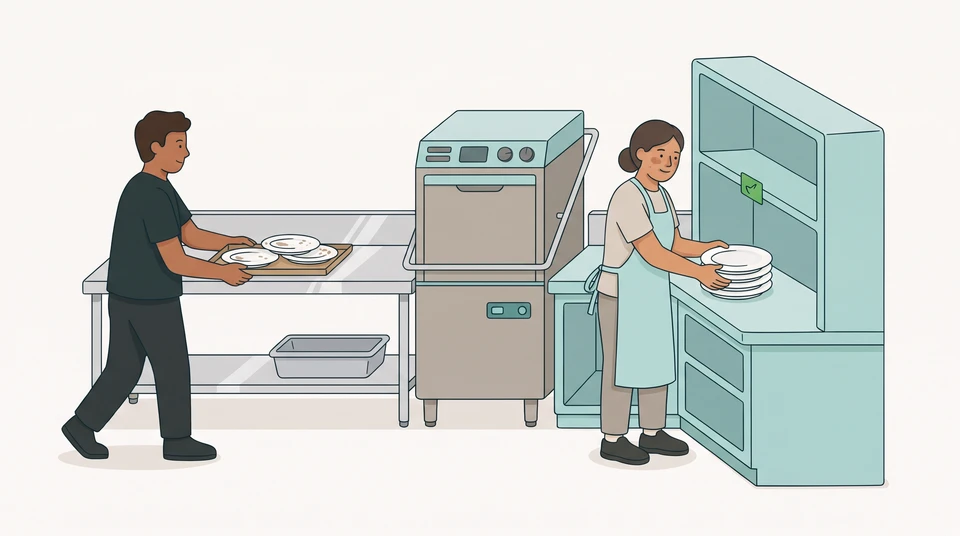
A useful dishwasher job description follows the plates all the way back to where the team needs them. Name who receives dirty items, who washes them, who returns clean stock and who deals with a fault. Otherwise, “keep the kitchen clean” leaves too much for the new starter to guess.
Use the title applicants recognise, then describe your actual work. US O*NET’s dishwasher profile includes washing utensils, storing clean equipment and replenishing supplies. Australia’s ABS lists Dishwasher separately from Kitchenhand (General), whose tasks include food-preparation assistance. If you advertise for a kitchen porter or kitchenhand, spell out whether preparation is part of the vacancy rather than treating the names as interchangeable.
Follow the dish and restocking workflow
Walk the route with your kitchen lead before writing the duties. Start where used plates arrive and finish at the shelf or station that needs the clean items. Include pots, trays and utensils—not just guest plates.
Imagine a small dinner restaurant. Ellis owns the dish area, Dana leads the kitchen and Bo coordinates the floor. Servers bring used tableware to the return bench. Ellis handles the assigned washing work and returns clean plates to the kitchen shelf. Floor staff collect clean cutlery from the agreed pickup point and replenish their own service station.
These are responsibilities in an example, not a recommended staffing level. The manager still needs to account for cooking, guest service, breaks, supervision and closing.
Write a short route like this for your venue:
| Point in the route | Agreed owner and responsibility |
|---|---|
| Dirty return | Servers bring used tableware to the designated return point, following the venue’s arrangements for waste and sharp items. |
| Dish area | Ellis follows the approved washing and sanitising procedures for the assigned equipment and items. |
| Clean storage | Ellis checks and puts away clean items under the venue’s procedure, keeping the clean area separate from dirty returns. |
| Service restock | Floor staff collect clean cutlery and replenish the service station; Ellis tells Bo if the agreed pickup stock is running low. |
| Unfinished work | Ellis tells Dana what remains, including waiting pots, missing supplies or a fault; Dana assigns the next action. |
In Australia, FSANZ distinguishes cleaning from sanitising: removing dirt is not the same as destroying microorganisms, and items need cleaning before sanitising. It also advises following the dishwasher manufacturer’s instructions. Put the approved method in your site procedure; the job description should identify the work, not invent a cycle, temperature or chemical mixture.
Now test the last part of the route. Suppose clean cutlery is waiting at pickup while the service station runs low. Bo asks Ellis to carry it out, but Ellis is also handling the waiting pots. Under this example’s arrangement, Bo assigns an available floor colleague to collect it. Ellis has not left the dish area, and the restocking job has a person responsible for finishing it.
If your venue instead expects the dishwasher to restock the floor, say so. Check when that trip can happen and who covers the dish work. A clean item at pickup and a stocked service station are different finishing points.
Define what belongs to other roles
List the jobs that meet at the dish area without automatically adding them all to this vacancy. Ask the kitchen and floor leads to settle these boundaries:
- Food preparation: which tasks, if any, belong to this hire? Name the preparation, supervisor and training separately. Do not add prep work just because the title says kitchenhand.
- Glassware: does the bar wash and restock its own glasses, or send them to this dish area? Confirm the actual equipment and route before including the work.
- Cleaning: specify the assigned areas and closing jobs. “Clean the whole venue” is not a useful substitute for naming the kitchen floor, dish bench or other agreed work.
- Deliveries and waste: name any duties away from the station, when they happen and who handles incoming dish work during them.
- Equipment problems: the worker reports the problem; the manager arranges the appropriate response. Routine trained care and repairs are not the same responsibility.
Keep cooking, guest orders, bar service and repair work out of the description unless you have deliberately designed and supported those duties. For the wider division of service work, use a separate restaurant positions and handoff map.
Check the workload as well as the wording. If Ellis must handle pots, collect deliveries and replenish the floor during the same rush, Dana needs to change the allocation or arrange suitable help. Writing three duties on one line does not make them fit together.
Set safe escalation and training expectations
Give the worker a named first contact and a backup. In the dinner example, Ellis calls Dana about a machine warning, an unexpected leak, damaged utensils, missing cleaning supplies or work that cannot be completed under the approved procedure. If Dana is unavailable, the duty manager takes the report.
Agree the response before service: stop the affected work, follow the site’s safety procedure and tell the manager what happened. Do not ask the worker to bypass a guard, improvise a repair or choose an unapproved washing method to keep the queue moving. Dana arranges competent assistance and decides how service will operate while the problem remains unresolved.
The US OSHA restaurant clean-up guidance, written for young workers, identifies burns, cuts, electrical hazards, chemical exposure, slips and strains. Use those hazards to check your site’s instruction and supervision needs, not as a complete training course or permission to assign restricted work.
Before the first shift, the manager should name who will teach the actual machine, chemicals, protective equipment, handling tasks and reporting procedure. Separate what applicants need before starting from what you genuinely plan to teach. Keep equipment operation with trained, authorised people; experience elsewhere is not an introduction to your setup.
For US food-service requirements, the FDA’s state agency directory is a starting point for finding the relevant authority. Confirm the state and local requirements that apply to your work rather than copying a food-handler certificate requirement from another venue’s advertisement.
Keep the training promise manageable. Tell the first-shift manager which duties need instruction and who will provide it. Before scheduling the starter without that support, have the manager check readiness for the assigned work. A completed hiring conversation is not that check.
Write the small-venue role brief
For the dinner restaurant, the core description could read:
Dishwasher / kitchen porter — dinner service
Keep our dish area moving from dirty returns to clean storage. Wash the assigned tableware, pots, trays and utensils using our equipment and approved procedures. Put clean plates and equipment in their agreed storage locations and keep the assigned dish area orderly.
Floor staff bring used tableware to the return point and collect clean cutlery for their service station. Food preparation and bar glasswashing are outside this role. Report shortages, faults, damaged items and unfinished work to the kitchen lead; the duty manager is the backup contact.
Complete the agreed dish-area closing tasks and hand over anything unfinished. We will provide instruction on our equipment, cleaning procedures and reporting arrangements before reviewing readiness for independent work.
Change that brief to match your venue. Add the actual employment arrangement, confirmed pay details, shift windows, closing responsibilities and application contact. Resolve the applicable employment requirements before advertising; the title alone does not settle them. Describe genuine task requirements and available support, not an unexplained demand to “handle anything.”
Ask your kitchen and floor leads one final question: “When clean stock is needed during a dish backlog, who does what?” If they give different answers, fix the role brief before using it with applicants. Carry the same duties into onboarding, the training plan and the schedule so the starter is not hired for one job and assigned another.
Start in a document you already use. If you want to keep candidates organised around the agreed role, CrewCentral Hiring brings candidate details and open roles together and carries the person you choose into onboarding. Your team makes the hiring decisions. Finish the dish route first; choose software after the responsibilities are clear.