Plan a restaurant stage shift with clear expectations
Set the purpose, compensation and supervision before inviting someone in. Use a short kitchen handoff example to plan observations without relying on an applicant for cover.
Before inviting someone into your kitchen, write down what you need to observe, who will supervise and what happens afterward. Settle the employment and pay arrangements first. A stage should not become a spare pair of hands when service gets busy.
Start with a one-page plan. You can use paper or an email; you do not need new software.
Define the purpose and scope
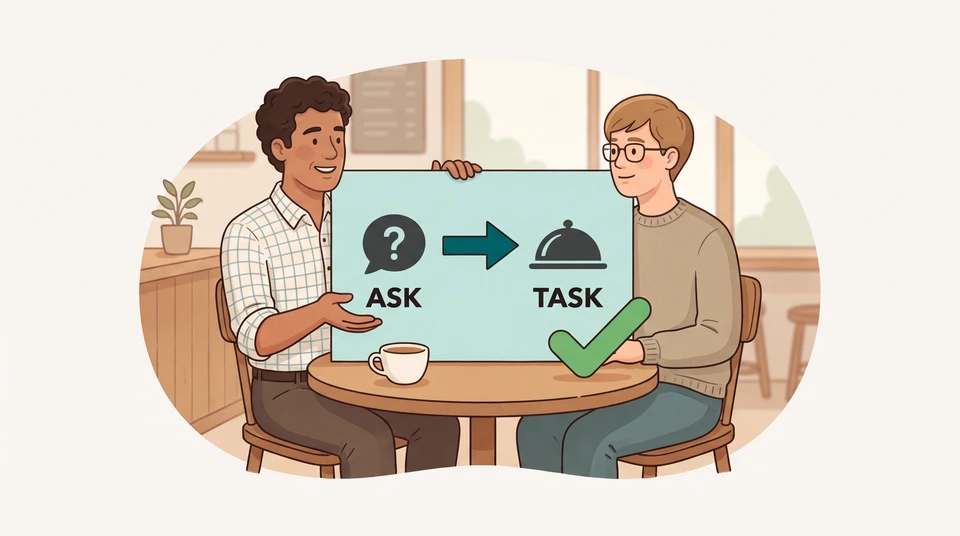
Choose one question about the actual job. For a line cook, that might be: can this person clarify a prep handoff before starting? Avoid a vague goal such as “see whether they fit in.” Write down the task you will discuss or observe and what you will leave for training after hiring.
Before sending an invitation, resolve the person’s status, compensation and the requirements that apply where your venue operates. Record the agreed pay arrangement, how time will be recorded and who will explain payment. Do not treat “stage,” “trial” or a short visit as permission for unpaid work.
For US venues, the Department of Labor’s hours-worked guidance says work an employee is allowed to perform counts as paid work time under the FLSA. That employee rule does not, by itself, decide a job applicant’s status or your state and local obligations. Ask the relevant labor authority or an employment adviser about your actual arrangement before inviting the person. If status or pay is unresolved, postpone the assessment.
For Australian venues, use the Fair Work Ombudsman’s unpaid-trial guidance, not a US stage custom. Its guidance concerns a necessary demonstration of skills relevant to a vacant job, under direct supervision, limited to what is reasonably needed. Time beyond that must be paid at the appropriate minimum rate. This is not permission to use an unpaid person for routine service cover. Check which workplace system applies to your venue; WA has separate state-system guidance.
Paying for an assessment does not settle every employment obligation either. Keep your practical plan separate from the venue-specific advice you need on the arrangement.
Use these prompts to finish the plan before making contact:
- What role and job-related skill are we assessing?
- What will the person observe or demonstrate, and what is outside scope?
- Who has resolved status and compensation, and what will the invitation say?
- Who will supervise throughout, and when will the assessment end?
- Who will give the person a next step, and by what date?
Agree supervision and tasks
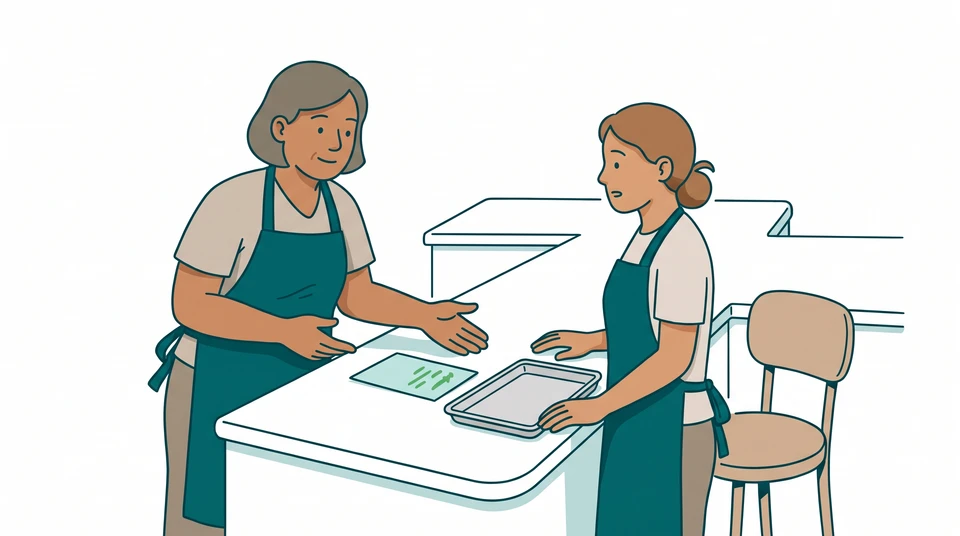
Name one supervisor who has time to explain the plan, stay with the person and answer questions. Do not count the applicant toward service coverage. If the supervisor has to return to the line, pause the assessment rather than leaving the person to keep working.
Tell the rest of the team what is happening. For example: “Maya is here to discuss and demonstrate a prep handoff with Sam. Sam stays with her. Please do not add cleaning jobs, prep lists or service tickets.”
Send the candidate the location, arrival and finish times, supervisor’s name, planned activity and confirmed compensation details. Include what to bring and a contact for questions. Ask them to reply to confirm they have received the plan; that reply is not a substitute for resolving employment or pay requirements.
A kitchen handoff example
Imagine an independent US restaurant assessing an adult applicant for a line-cook role. The manager has arranged compensation and checked the employment requirements for this particular visit before inviting Maya. The restaurant’s usual team covers service; Maya is not filling a vacancy on that day’s schedule.
The manager chooses one purpose: observe how Maya clarifies a prep handoff. Sam, the supervisor, sets out an empty tray and a sample prep note away from live orders. He explains a pretend handoff with one missing detail, then asks Maya to talk through what she would clarify before starting. There is no food for customers to prepare and no equipment test added on the spot.
Maya asks which batch the note refers to and who can confirm it. Sam records the question and asks her to explain the next action. He does not turn the exercise into a speed contest or ask her to finish someone else’s prep.
If a rush pulls Sam back into service, the manager pauses the exercise, explains the change to Maya and arranges the next step. The confirmed pay arrangement still needs to be followed; ending the activity early is not a reason to assume less is owed.
Record job-related observations
Give the supervisor a short note sheet with the planned task, what the person actually did and what remains unclear. Keep the task and observation prompts consistent for people applying for the same role. Explain the exercise clearly and give the person a way to ask about adjustments they need to take part.
For the example above, Sam could record:
- Task: clarify the sample prep handoff before starting.
- Observation: Maya asked which batch the note described and who could confirm it.
- Still unclear: we have not observed her using the restaurant’s real prep system.
- Next action: the manager reviews the note; if hired, Maya will need an introduction to that system.
Write “asked who could confirm the batch,” not “confident personality.” Do not turn an accent, nervousness or a guess about someone’s personal life into a job-performance conclusion. Keep notes about the assessment, not medical histories. US employers should also check the EEOC’s pre-employment disability guidance before asking health-related questions.
Leave hiring judgments with the manager. Do not ask AI to score, rank or screen applicants, infer protected traits or assess a real person’s private details from your notes.
Communicate next steps
Before the person leaves, explain who will contact them and when. A concrete message is more useful than “we’ll be in touch.” For example:
Thanks for coming in. I’ll review Sam’s notes and email you by Thursday afternoon with the next step. Please contact me if you have a question about today’s payment arrangement.
If you need more information, name the gap before proposing another assessment. Do not keep extending the same visit or use repeated tryouts to cover shifts. If you hire the person, pass on the role, agreed availability and what still needs teaching. Then prepare onboarding, training and the first schedule rather than assuming an assessment makes them ready to work alone.
Keep your plan and notes together in the method you already use. If you want a shared place for role and candidate context, explore CrewCentral Hiring. It keeps candidate details and hiring steps together, with your team making the decisions; the person you choose can continue into onboarding. It is not a screening or employment-law check.
For the next invitation, finish the purpose, compensation and supervision details first. If any of those is missing, sort it out before booking the visit.