Run a restaurant team meeting for problems a pre-shift briefing cannot solve
Keep tonight's specials in the pre-shift briefing. Use a separate team meeting to work through a recurring problem and agree what happens next.
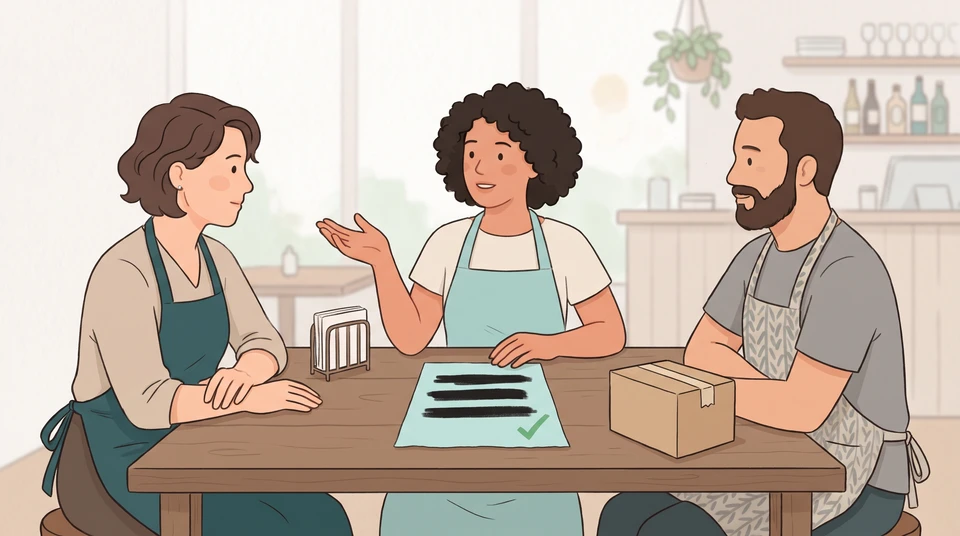
Build your restaurant staff meeting agenda around one problem that needs a discussion, not another reminder. Bring the people who see different parts of the work, ask what gets in the way and leave with a decision, an owner and a review point.
Imagine a small restaurant where the opening team keeps finding the napkin station unready. The closing note says “napkins low”, but nobody knows whether that means refill from the cupboard or ask the owner to order more. Tonight’s specials can stay in the pre-shift briefing. This repeated handoff needs a separate conversation.
Separate service briefing from team problem-solving
Use the pre-shift briefing for what the team needs to do during the coming service: menu availability, a booking or who covers a station. Use the team meeting when you need accounts from different shifts before choosing a change.
For the napkin problem, the manager needs to hear from someone who closes, someone who opens and the person who can approve a stock order. If one person does two of those jobs, invite them once. Don’t pull the whole team away just because the calendar says “staff meeting”.
First check whether a meeting is needed at all. If the refill instruction is clear and someone simply needs to see it demonstrated, arrange that practice. If the supply cupboard is empty, get a stock decision now. Don’t wait for a recurring meeting to deal with a problem affecting today’s service.
Plan required attendance as paid work, not a favour after the shift. For Australian employers in the national workplace system, Fair Work’s time-paid guidance includes meetings among the time employees may need to be paid for and directs employers to check the applicable employment arrangements. For covered, non-exempt US employees, DOL’s meeting-time guidance excludes attendance only if all four conditions hold: outside regular hours, genuinely voluntary, not directly job-related and no productive work. A required, job-related team meeting does not fit that exclusion. Check applicable state and local rules too.
Before inviting people, confirm a workable time, service cover and any applicable hours, pay and roster requirements. Share the agenda without requiring unpaid preparation; arrange paid time if you need people to collect notes beforehand.
Choose one issue and send a focused agenda
Write the issue as something the team can investigate: “The opening team cannot tell what action is still needed when a closing stock note says ‘low’.” Avoid “Closers never finish properly.” The first version leaves room to find a missing instruction, unavailable supplies or a decision nobody owned.
Bring the relevant operational notes, with private staff information left out. Ask each affected shift for a recent example: what they found, what they did and where the next step stopped. Let someone give their account privately if they prefer; take personal performance concerns out of the group discussion.
Fair Work’s consultation guide describes consultation as seeking and considering employees’ views when making decisions. Use that listening habit here: ask before settling on the answer, then explain how the input affected your choice. This small operational meeting is not a substitute for any formal consultation process that applies to your venue.
Send an agenda like this, adding the confirmed time, place and attendees:
Purpose: Agree how an unfinished napkin restock reaches someone who can act.
Look at the handoff: What does the closer check? What does the opener actually receive?
Hear the obstacle: Is the missing step a refill, access to supplies or an order decision?
Choose one change: Agree what the note must say and who responds.
Close with an action: Name who updates the instruction, who explains it and when we check the next handoffs.
Tell attendees what is open for discussion and what is not. For example: “We can change the note and how it reaches the next manager. A new supplier or extra staffing needs the owner’s separate decision.” Check those manager decision limits before promising a solution.
Keep tonight’s menu updates out of this agenda. If a second issue comes up, record who will look into it and when they will respond. Only change the meeting’s focus immediately if something urgent needs action through the venue’s usual procedures.
Make decisions with named owners
At the meeting, have each person describe the same handoff from their side before suggesting a fix. The manager can ask: “When you wrote ‘low’, what did you expect the next person to do?” Then ask the opener: “What information would have let you act without chasing someone?”
Suppose the closer thought the note was an order request. The opener thought the closer had already told the owner. Neither account proves the other person ignored the task. The useful decision is how an unfinished item reaches a named person and stays visible until resolved.
For this example, the team agrees to try one change over the next three closing-to-opening handoffs. Dev will review it with an opener and closer during paid work after the third opening:
- Closing lead Rosa checks the station and the reserve cupboard. If the refill is unfinished, Rosa records what is missing, what was checked and who has been contacted. She does not mark it complete.
- Manager Dev receives the unresolved item and confirms the next action. Dev can arrange a refill from available stock; a new order goes to owner Casey for a decision. If Dev is off duty, the rostered manager is the contact, not Dev’s personal inbox.
- Owner Casey confirms the ordering decision when needed and tells the responsible manager what is still outstanding. Dev cannot promise an order has been placed just because Casey received the request.
- Dev updates the existing closing instruction and explains the change to affected openers and closers during paid work, including people not at the meeting. Dev asks them to explain where they would send an unfinished item.
Keep those responsibilities in one short decision note. Record the problem, the change being tried, each person’s next action, anything still undecided and the agreed review point. An acknowledgement confirms receipt; it does not mean the stock has arrived or the task is finished.
If the group cannot decide because Casey needs more information, say so. Name who will collect it and when Casey will reply. A clear open decision is better than minutes that say “team agreed” when nobody has authority to act.
Review actions rather than repeat the meeting
At the agreed review point, Dev looks at the handoff notes with an opener and a closer. Did each unfinished item say what was missing? Did it reach the named manager? Was the next action confirmed? Could the opener tell what remained unresolved?
Compare those notes with what people actually found. A completed form is not proof the station was ready. If the same issue remains, ask where the trial stopped: the instruction, time to do the work, available stock or the manager’s response. Don’t automatically book another reminder session.
Keep, change or stop the trial based on that discussion. For example, a clear handoff may reveal that supplies cannot be reached during the close. That needs an access or work-planning decision, not a longer note. If someone needs to learn the task, arrange supervised practice separately.
Tell the affected team what you decided, including suggestions you could not use and why. The everyday manager follow-through that shapes restaurant culture happens after people raise a problem, not just while they have the floor. Keep a regular review slot if it is useful, but don’t invent a new agenda when a short action check will do.
Start with your existing shift book or a shared document. You don’t need new software to run this meeting. If the agreed change creates a training step, explore CrewCentral Training for role-based steps, progress and manager sign-offs alongside scheduling. Keep the meeting decision and stock follow-up in your own record; training progress is not an ordering system. Carry a changed instruction into onboarding for new starters, and check the training and support people need before assigning the work on a roster.
For your next meeting, finish this line before sending the invitation: “We need to decide this one thing, with input from these people, and we will check the action here.”