Choose a training method for the task your restaurant team needs to learn
Finding spare napkins and handing a guest to another server need different checks. Choose the method for the task, not the format you already have.
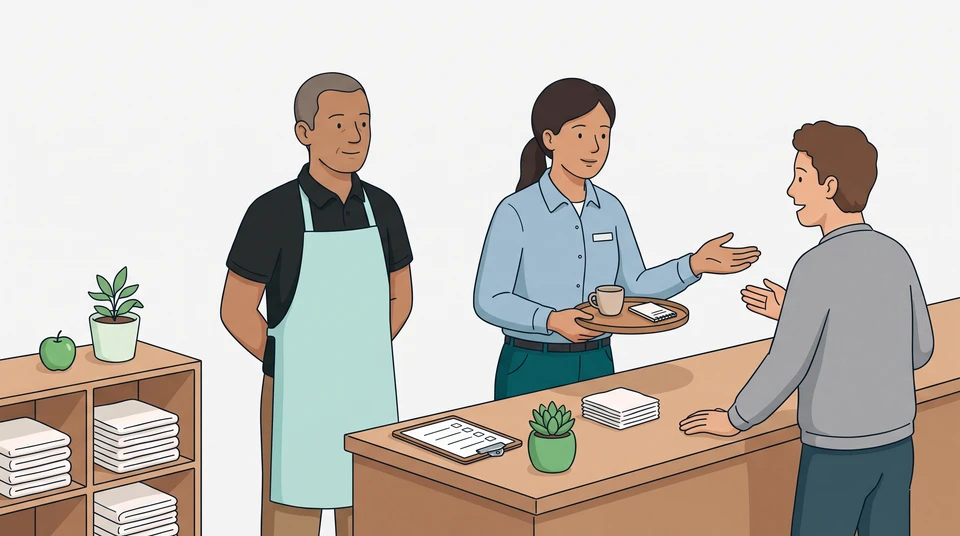
Before choosing a video, a written guide or a buddy shift, decide what your team member needs to do. Finding spare napkins and handing a guest over to another server are different tasks. Give each one a different check.
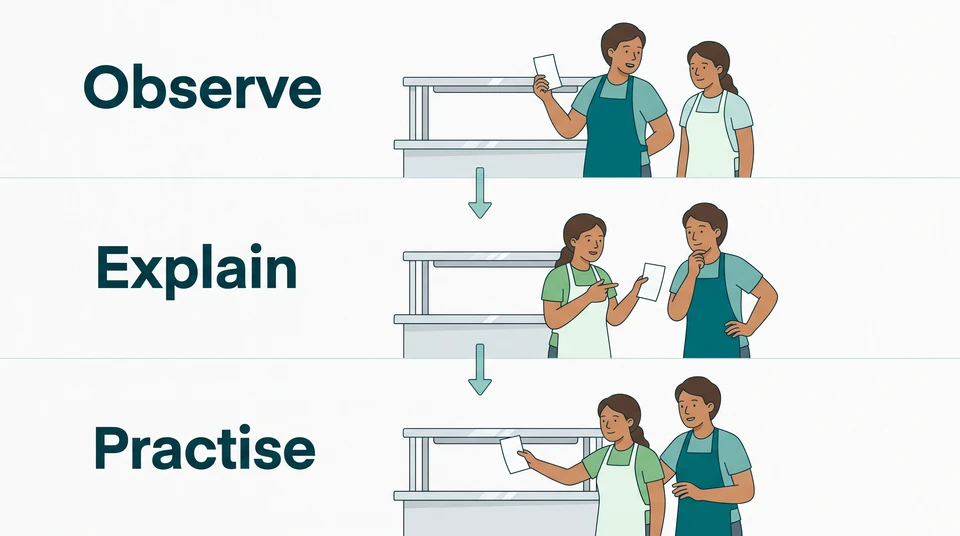
A useful starting point for restaurant staff training methods is simple: explain information, demonstrate an action and add coached practice when the person needs to perform it. Combine these where needed. Reading a guide is preparation, not proof that someone can cover a role alone.
Classify the task before choosing the method
Write one sentence that starts with “After this session, you can…” Finish it with something you can check, such as finding an item, showing an action or responding to a guest.
Then ask the team member what they already know. Watch a safe attempt where appropriate. An experienced server who is new to your venue may need local information rather than a repeat of basic service training.
Use these questions to narrow your choice:
- Is the person learning a fact or location? Start with a short explanation or written reference, then ask them to find or explain it.
- Do they need to see how an action is done? Demonstrate it using your venue’s current instructions, then let them try.
- Must they respond to another person or a changing situation? Add a rehearsal, feedback and a supervised chance to use it at work.
Check the work setup too. Suppose staff keep asking for napkins because the storage shelf changes every shift. Agree a location and label it before repeating the lesson.
Choose explanation, demonstration or coached practice
Explain what the person needs to know
Use a short note, photo, map or conversation for a location, a name or a simple piece of venue information. Keep the reference where the team can find it during work. Ask the learner to show you the answer rather than only asking, “Does that make sense?”
For example, tell a new starter where spare napkins are kept. Ask them to find the correct shelf and explain who to tell if it is empty. That checks this small task; it does not establish readiness for a whole floor shift.
Demonstrate what the person needs to do
Choose a demonstration when the learner needs to see an action or sequence. Ask a person who knows your current venue procedure to show it, explain the important parts and invite questions. Then change places so the learner does the action.
A video can provide a reference, but pair it with questions and an appropriate practical check. Use plain words, show the relevant object and ask what would make the explanation clearer.
Coach a response, not just a script
Choose rehearsal when another person’s response changes what happens next. Have a colleague play the guest while the learner practises. Give feedback on one observable action, then let them try again.
Safe Work Australia’s training guidance describes on-the-job training that combines explanation, demonstration, practice, feedback and questions. It also distinguishes informal training from work needing formal training and assessment. For safety-sensitive or regulated work, check the requirements that apply to your venue in Australia or the US; this informal comparison is not a substitute for required training or credentials.
An example: supplies versus a guest handoff
Imagine a small cafe preparing a new floor team member, Alex, for the next shift. The manager, Sam, has two tasks to cover.
For supplies, Sam shows Alex the napkin shelf and points out the agreed restocking contact. Alex finds the napkins without a prompt and explains what to do if the shelf is empty. Sam can record that specific check and move on.
For a guest handoff, Sam chooses a rehearsal instead of another reading task. A colleague plays a guest asking for help while Alex’s section is being handed to another server. Sam first shows how to introduce the receiving server, pass on the request and confirm that the server has taken it on.
Alex then tries. Sam watches whether the receiving server acknowledges the request before Alex walks away. If that acknowledgement is missed, Sam pauses the rehearsal, explains the gap and offers another attempt. No guest is left waiting as part of the exercise.
The difference is the decision Sam needs to make. Locating supplies calls for a location check. A service handoff calls for interaction and observation. Neither check, on its own, makes Alex ready for every task in the role.
Plan a small session you can actually run
For your next session, choose one task and name the trainer, learner and manager who will review it. Set aside working time and arrange cover so the trainer is not responsible for an unattended station while teaching.
Bring the current instruction or reference. Agree what the learner will do, what you will observe and what happens if they need more help. Keep the session small enough to finish with a clear next step: ready for this task, another coached attempt or a different explanation.
If your starting point is a written venue procedure, use the separate guide to turning a restaurant procedure into training. Here, the first decision is which method fits the task—not how to rebuild every procedure or the whole onboarding plan.
Review whether the method worked
Check again when the person has a supervised opportunity to use the learning. Finishing the material and saying it was useful are not the same as showing the task in context.
Ask the learner what helped and where they still need support. Record what you observed and the next check. If a problem remains, look at the explanation, practice opportunity and work setup before deciding that the person needs the same lesson again.
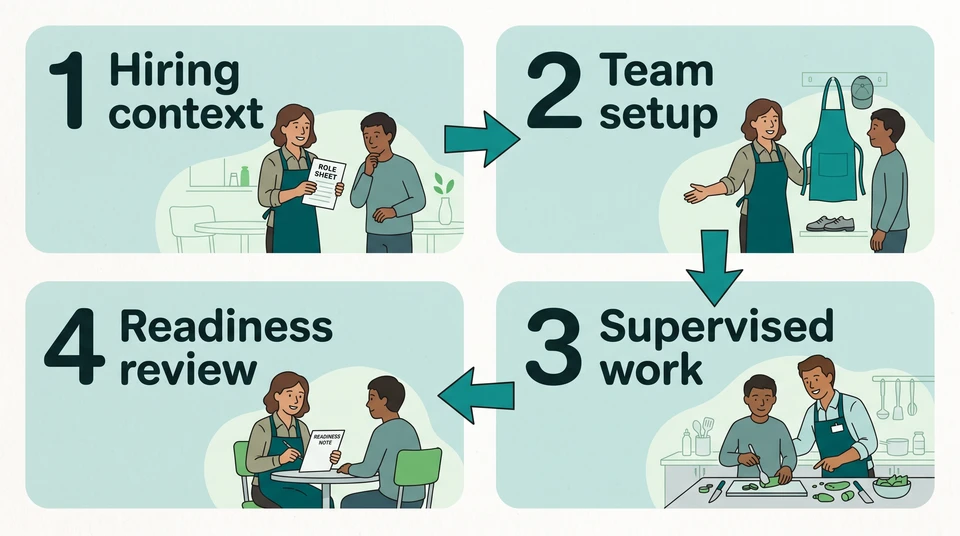
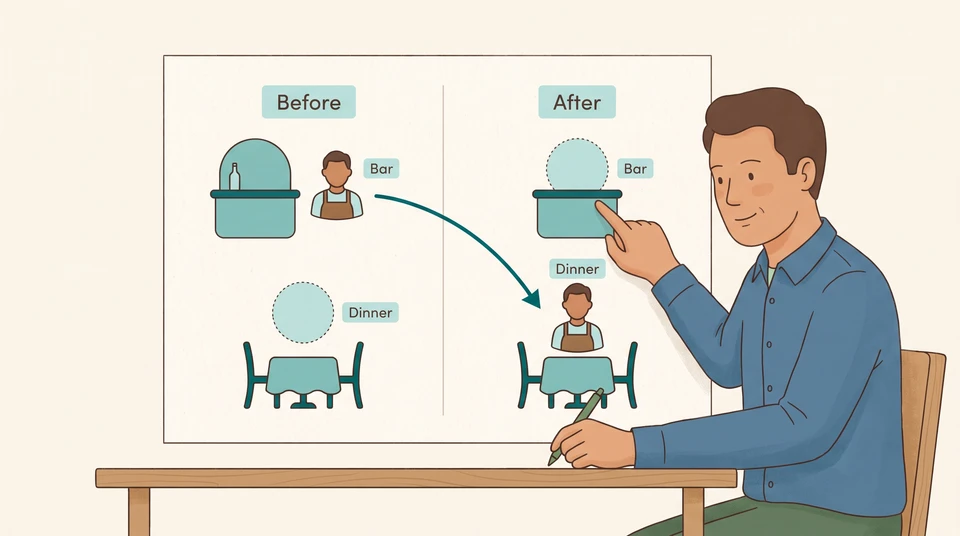
Carry that task-level note from onboarding into the manager’s scheduling decision. Experience discussed during hiring is a starting point; decide who can cover this venue’s role using the relevant checks, not a reading-complete tick.
You can start planning trainer and learner time with CrewCentral’s free schedule maker. It is a manual, browser-local tool with no account or email needed to start—not a shared training record or an AI schedule generator. For the next step, explore CrewCentral training and review which role-learning steps need a manager’s attention. CrewCentral does not verify certifications or licences; those checks remain with your venue.