Run a restaurant pre-shift meeting that gives the team clear actions
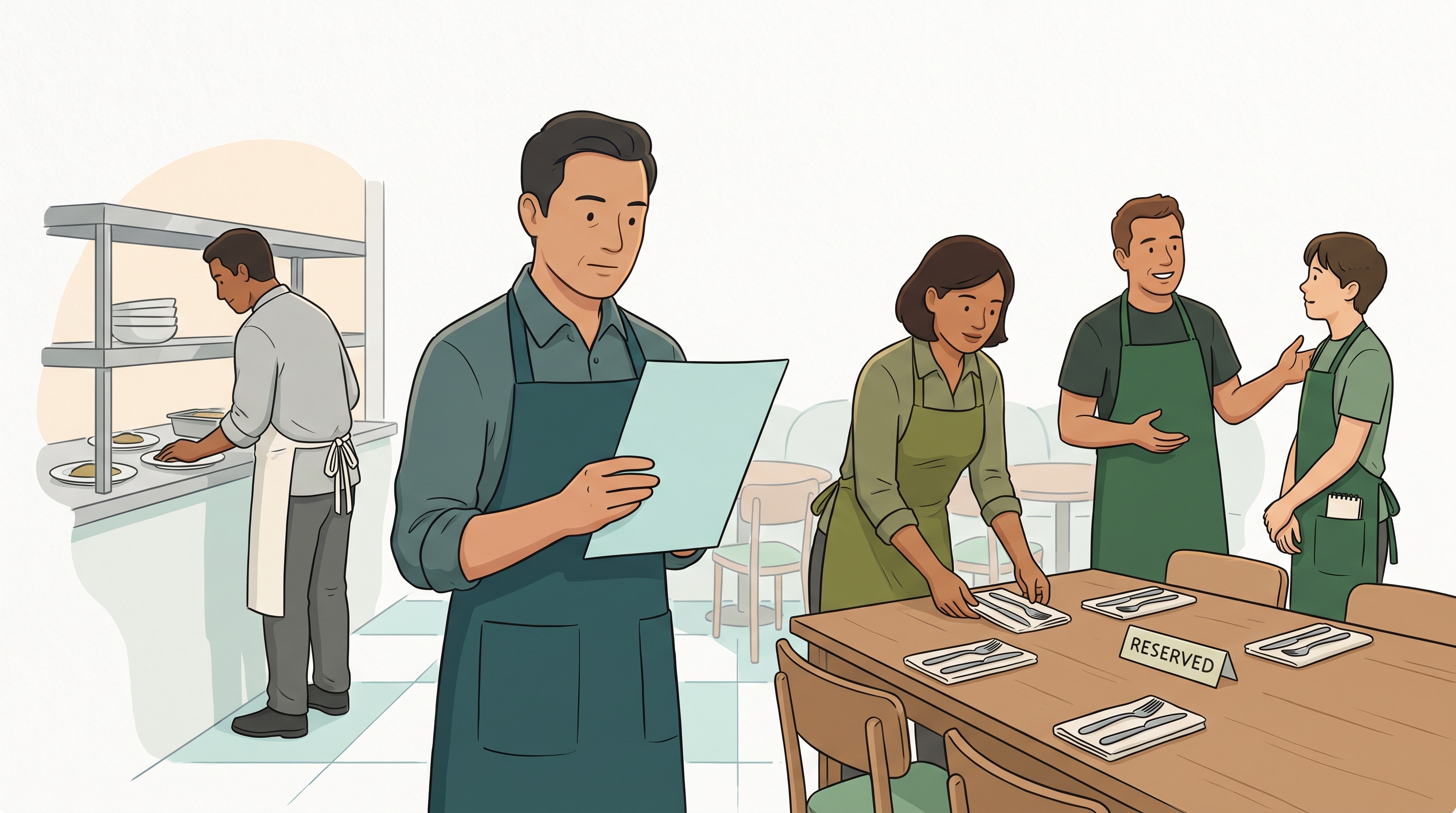
Before gathering the team, write down what has changed for this service, who needs to act and who can answer questions. Use the briefing to work through those decisions—not to squeeze a whole training session into the minutes before opening.
Hypothetical example: Harbor Table is an independent restaurant preparing for a large booking. One menu item is unavailable, and a new server is starting. Manager Jordan wants each issue to leave the briefing with a clear next action. All venue, people and service details in this example are fictional.
Choose the few service changes that affect this shift
Check the booking with the host and the unavailable item with the kitchen before preparing your notes. Confirm the arrival time, seating needs and what the kitchen has approved staff to tell guests. If an alternative is still uncertain, leave it out until the kitchen confirms it.
Keep the agenda tied to this service. WebstaurantStore’s pre-shift guide suggests topics such as reservations, menu changes and the team on duty. At Harbor Table, Jordan uses those topics to choose just the booking, unavailable item and starter’s support—not a recap of every restaurant procedure.
Ask who needs each update. If a change affects only the host, check it directly with the host rather than gathering everyone. When nothing needs a group discussion, skip the ritual instead of filling a fixed time slot.
Include required briefings and rehearsal in paid working time. For covered US employees, Department of Labor guidance allows meeting or training time to be excluded only when all four conditions apply: outside normal hours, voluntary, unrelated to the job and no work performed at the same time. Check applicable state and local rules too.
Name an owner and escalation route for each operational issue
Give each item an action, a person and a point to report back. Ask whether that person has time and authority to do it. If not, reassign the task or reduce what you are asking them to cover.
Jordan’s working agenda looks like this:
| Service change | Named action | If it cannot be resolved |
|---|---|---|
| Large booking | Host Maya checks the agreed seating setup and reports readiness to Jordan before the group arrives. | Maya tells Jordan what is missing; Jordan reallocates preparation work. |
| Unavailable item | Floor lead Sam tells the servers which item is off and passes on only the kitchen-confirmed alternative. | Sam asks kitchen lead Alex before promising another option. |
| New server | Buddy Riley stays available for the starter’s questions and checks their first guest exchange. | Riley brings unfamiliar tasks or unanswered questions to Jordan. |
Keep Jordan available as the fallback. Naming Maya as the owner does not give her spare time while she is greeting guests; Jordan still needs to arrange coverage if preparation is unfinished.
Use the group briefing for service decisions. Take an individual performance concern into a private conversation. That separation also follows 7shifts’ briefing advice, which recommends keeping individual and lengthy discussions outside the huddle.
Rehearse one relevant service situation instead of covering a whole lesson
Choose one exchange the starter may need during this shift. At Harbor Table, Riley plays a guest asking for the unavailable item. The starter practices explaining that it is off and offering only the kitchen-confirmed alternative.
Try a follow-up question whose answer has not been confirmed. The starter practices saying, “Let me check with Alex before I recommend that.” Riley then asks who they would contact and listens to their answer. Do not ask the starter to guess about ingredients or suitability.
Treat this as practice, not permission to work alone. Keep Riley available during service. If the starter needs to learn an unfamiliar task, Jordan arranges separate supervised practice and reviews their readiness before assigning it independently. Do not turn the briefing into the full lesson.
Confirm questions and pass the essential notes to later starters
Finish by asking, “What is still unclear, and what might stop you doing your part?” Work through a live service question now. Give a longer question a named person and a follow-up time rather than dropping it.
Ask each action owner to repeat their next step and where they will take a problem. If Maya flags that she cannot finish the seating setup, Jordan changes the plan before ending the briefing.
Name who will brief later starters during their paid work. At Harbor Table, Sam takes the short booking and menu notes to a server arriving later, explains the changes and invites questions before that server starts serving. Sam then tells Jordan the update has been delivered. A note on the counter is not the whole handoff, and “got it” is not a readiness check.
Before opening, Jordan checks that booking preparation, menu answers and starter support each have an available owner. Keep the briefing and its notes manual. For the learning that needs more than a quick rehearsal, explore CrewCentral Training.