Define a barista role before advertising
Choose independent espresso work or supported learning before adding till duties. Use a six-person cafe example and a short role brief to define the hire.
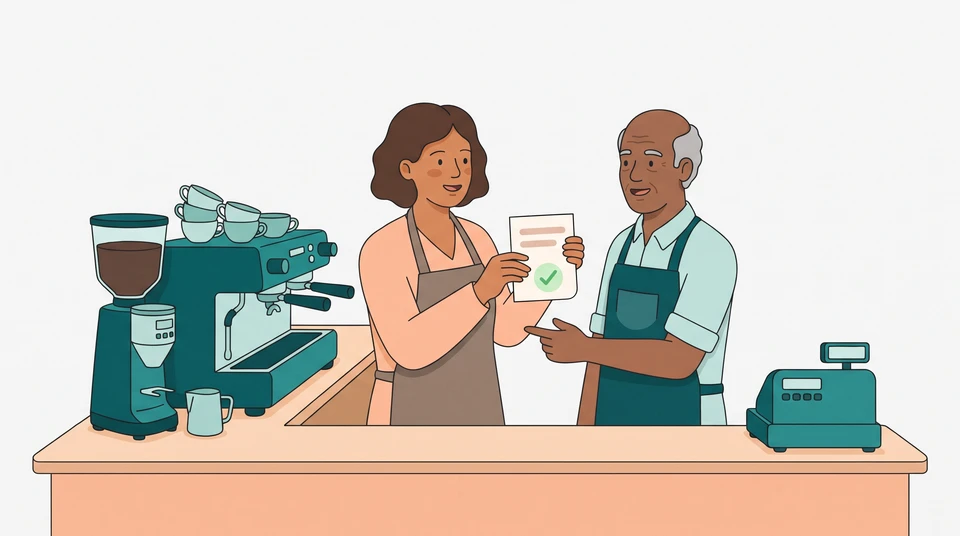
Start your barista job description with a decision: are you hiring someone to run the espresso station, or someone who will learn it with a coffee lead alongside? Write that down before listing till work, food service or closing duties.
You can make the first version in a document you already use. The useful result is a role an applicant can understand and your shift manager can actually support.
Define the coffee station and support tasks
Walk the coffee station with the person who runs it. List the work before, during and after service. Include preparing the machine and grinder, checking espresso, preparing drinks, keeping supplies ready and cleaning the assigned equipment. Australia’s espresso-coffee training unit separates these responsibilities, including milk texturing and reporting technical faults. Use it to check your list, not to invent a qualification requirement.
Then decide which other jobs belong to this vacancy. The US O*NET barista profile includes payments, orders, cleaning and food service as well as drinks. That is a broad occupation list—not a reason to put all those jobs on one person during a rush.
Imagine a six-person cafe team replacing a departing barista. Owner Mina wants the new hire to learn espresso with coffee lead Jules. Tess handles the till during those learning shifts. The remaining team works across the floor and kitchen; being on the team does not mean everyone is on every shift.
Mina writes three boundaries:
- Coffee: Jules remains responsible for the station while the new starter practises beside them.
- Till: Tess records orders and takes payments. The new starter learns this separately, not while also expected to make the drinks.
- Support: the starter restocks cups and completes assigned cleaning when released from coffee practice. Jules confirms the station is covered before they move.
If you mainly need order taking and pickup, start with a counter-service role description instead. Calling that job “barista” should not hide that coffee work is only an occasional extra.
Separate entry requirements from teachable skills
Put each skill under one of two headings: “needed before starting” or “we will teach”. Test the choice against the first shifts you can offer.
For Mina’s supported role, following instructions, checking an unclear order and asking for help belong in the starting requirements. Jules will teach the cafe’s equipment routine, espresso recipe, milk preparation and cleaning process through supervised practice. Till shortcuts and menu names are also house training, not assumed knowledge.
That is a different vacancy from needing someone to run espresso without close supervision on their first service. If that is your gap, describe the relevant experience: preparing espresso, texturing milk and noticing when a drink or extraction needs attention. Explain that they will still receive an introduction to your equipment and recipes. “Experienced” alone leaves too much unexplained.
Do not make latte art the deciding requirement if the actual gap is keeping the coffee station ready and producing the drinks on your menu. Equally, do not advertise “no experience needed” unless someone has time to demonstrate, watch and help.
Check food-handler requirements separately from coffee skills. FSANZ’s Australian guidance explains the activities covered by its food-handler training requirements. Ask the relevant regulator what applies to your venue’s work; US managers should check with their local health authority. Name any confirmed requirement accurately rather than copying a certificate list from another cafe.
Describe real shifts and supervisor support
Replace “flexible hours” with the days and shift windows you need covered, including preparation and closing work. Say whether the role opens the coffee station, joins someone already working, or closes it after service.
For example, Mina is recruiting for Tuesday and Saturday, 7am–1pm. Customers arrive from 7:30am. Jules is rostered for the preparation and coffee-service work, with protected attention for the starter’s practice; Tess owns the till. These are example arrangements, not a staffing formula.
Mina must also arrange Jules’s breaks and any time away from coffee. Until the starter has been observed and reviewed for independent work, the plan needs another coffee-ready person or a different service arrangement. A learner’s name on the schedule is not replacement cover.
If Jules must leave to receive a delivery, stop the practice and settle who owns coffee before moving anyone. Do not quietly turn a supported role into solo service because another task has become urgent.
Check the plan with the coffee lead before advertising. If supervision cannot be provided, change the shifts, the training arrangement or the experience requirement. Later, use the same shift windows when you discuss candidate availability.
Adapt the role brief and check the advertisement
Use this short brief in your own document. Replace the brackets with confirmed details and change the support arrangement if yours is different.
Barista — [cafe name and location]
Work [days and start–finish times], including [opening preparation or closing tasks]. Your main work is espresso drinks and the assigned coffee-station cleaning and restocking.
You will learn our espresso recipe, milk preparation, equipment routine and drink handoff with [coffee lead]. During supported shifts, that lead retains coffee-station responsibility; [colleague role] handles the till. Independent coffee work follows a manager review of observed practice.
Bring the ability to follow instructions, clarify orders and ask when something is unfamiliar. [Add specific coffee experience genuinely needed before starting, or remove.] We will teach [confirmed house routines].
[Employment type, confirmed pay details and any applicable role requirements.] Apply through [destination] with [relevant information requested]. Ask [hiring contact] about the role or listed shifts.
Read it beside your actual shift plan. Can the named lead supervise? Who handles orders while coffee is being made? Does “closing” mean cleaning the machine, closing the till or locking the venue? State only the work this hire will own. Leave technical repairs with the appropriate specialist rather than adding them to routine coffee duties.
Have the person responsible for pay check the advertisement before posting:
- Australia: confirm the applicable award or agreement, classification and pay for the actual duties and employment arrangement. Fair Work’s job-ad guidance explains that advertised rates cannot undercut applicable minimum entitlements.
- US: check the requirements for your location and employer before choosing pay wording. For example, California’s pay-transparency guidance explains when a job posting must include a pay scale. Do not copy Australian award wording or assume another state’s advertisement fits your cafe.
Keep the checked brief for interviews, onboarding and the training plan. Give it to the manager preparing the first schedule so the duties and support do not change between the ad and the first shift.
Your own document is enough to start. If you want to keep candidates organized around this role, explore CrewCentral Hiring. It connects hiring with onboarding, training and scheduling; your team still reviews candidates and makes the hiring decisions.
Before you post, finish this sentence: “We need someone to handle ___, with ___ support, on ___ shifts.” If the answer changes depending on who you ask, settle it with the coffee lead first.