A cocktail server job description for table service in a bar
Define who takes the order, makes the drink and follows up with guests. Adapt a plain floor-service role description and prepare the first shift.
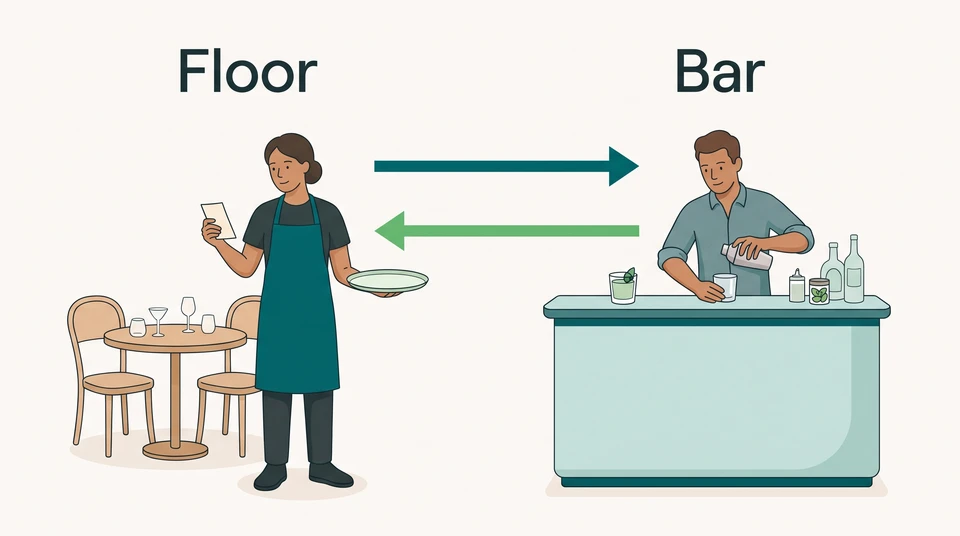
Write the role around one complete drink order: who takes it, who makes it, who delivers it and who follows up when something is wrong. For a table-service bar, make the floor-to-bar handoff explicit before you advertise.
Start with a plain document. You do not need new software to decide where the job starts and stops.
Define floor versus bar responsibilities
US O*NET lists Cocktail Server among table-service job titles. Its bartender description covers mixing and serving drinks, directly or through waitstaff. Use that distinction to define your venue’s role, not as a rule that every bar must divide work the same way.
For example, imagine a small US cocktail bar with seated guests and a separate service pickup point. The cocktail server owns the guest conversation, order details, delivery and follow-up. The bartender owns drink production. The shift manager arranges floor cover and handles decisions outside the server’s authority.
Agree these boundaries with the people who will work them:
| Work | Cocktail server | Bartender or shift manager |
|---|---|---|
| Take the order | Confirm the drink, requested changes and table identifier. | Bartender answers preparation questions the server cannot resolve. |
| Pass it to the bar | Record it through the venue’s agreed order process. | Bartender receives the order and makes the drink. |
| Collect and deliver | Match the prepared drinks to the order before taking them to the table. | Bartender clarifies anything that does not match. |
| Follow up | Check back with the guests and bring questions to the right person. | Manager handles escalations; bartender resolves drink-production questions. |
| Handle payment | Present and settle the bill using the venue’s trained process. | Manager handles corrections outside the server’s authority. |
Put clearing and restocking in the role only where you have assigned them. Name who watches the section while the server is at the pickup point, taking a break or doing another task. Do not quietly give the bartender both a production queue and an unattended floor.
If the same person will mix drinks and serve tables, write that combined role honestly. Decide what happens when a bar order and a table request arrive together. Do not advertise a floor-only job and add bartending on the first shift.
Describe guest-order and delivery handoffs
Keep the order route simple:
Guest tells server → server sends order to bar → bartender prepares → server checks pickup and delivers → server follows up with guest.
The manager owns exceptions and cover. That is a responsibility sketch, not a recommended staffing ratio.
Suppose a guest at table four asks for a change the server has not learned. The server checks with the bartender before confirming it, then records the agreed order once. At pickup, the server compares the drinks with that order. If something is unclear, they ask before taking the tray away.
For an ingredient or allergy question, have the server use your established checking process and contact the designated person. Do not have them guess or promise a drink is safe. Likewise, explain your alcohol-service procedures, who handles age or service concerns and how the server gets immediate help. This example is not a substitute for checking the requirements that apply to your venue.
Practice a delay as well as a clean handoff. Ask the bartender how the server should check an outstanding order; ask the server what they will tell the waiting table. Choose one agreed way to flag a correction so a second message is not mistaken for another order.
Separate must-have and trainable skills
Tie each requirement to a task. For this floor-focused role, look for clear guest communication, careful order recording, willingness to ask when unsure and the ability to follow the agreed payment process after training.
Put your menu shorthand, table plan, order-entry system, pickup checks and correction route in the training list if you intend to teach them. Prior bartending experience should not become a substitute for deciding whether this person will actually make drinks.
Describe the real work and shift pattern rather than asking for someone who can “do everything.” Before adding a physical requirement, identify the essential task and discuss how it can be performed, including adjustments where needed. Do not borrow a tray-weight threshold or a certification requirement from another venue’s advertisement.
A plain job-description example
Adapt this example to your venue. It describes the table-service role above, not a complete employment document. Before posting, add your actual location, shift pattern, pay information and application contact, plus the requirements applicable to your venue. Check those details separately; do not invent them to fill a template.
Job title: Cocktail server — table service
Reports to: Shift manager. Works with the service bartender.
Your main job: Look after guests in your assigned table section, from drink order to payment. The bartender prepares drinks; you keep the guest-to-bar handoff clear.
Duties: Confirm and record drink orders with the correct table details. Ask the bartender about unfamiliar preparation requests before confirming them. Match prepared drinks to the order, deliver them, check back with guests and follow the trained payment process. Clear and reset your assigned tables when cover allows. Raise order problems and service concerns through the venue’s agreed process.
What you bring: Clear communication with guests and colleagues, attention to order details and a habit of asking for help when something does not match. Discuss your availability against the advertised shifts.
What we teach: Our menu, table plan, order-entry and payment steps, pickup checks, correction route and venue service procedures. A named trainer supports the first shift; independent tasks follow a manager check.
Role limits: This is not a drink-production role. Ask the shift manager before leaving your section for another duty. The manager confirms cover and handles decisions outside your agreed authority.
Remove any duty or training promise you cannot provide. If food service is a substantial part of the job, describe it explicitly rather than hiding it inside “other duties.”
Prepare the first-shift handoff
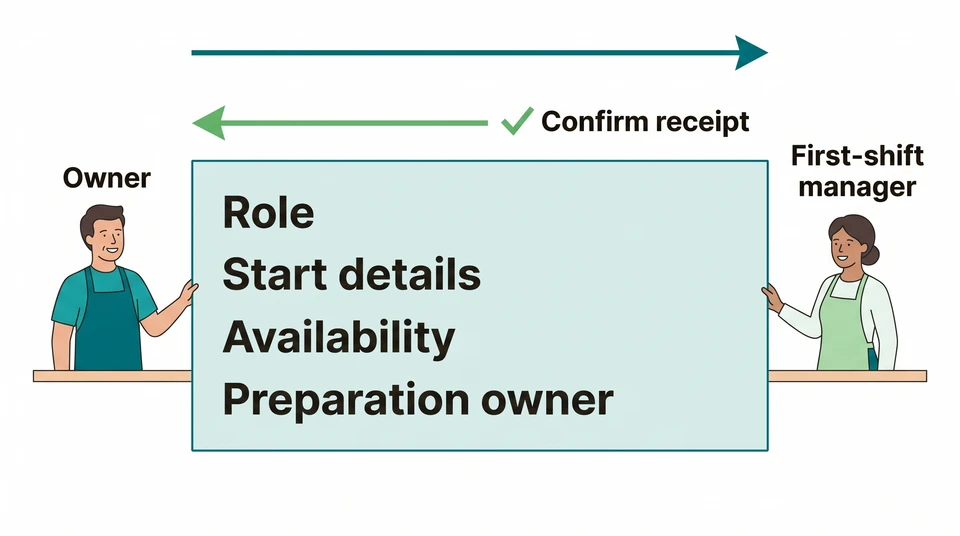
Give the trainer and first-shift manager the same role description the candidate saw. Add the starter’s assigned section, training priorities, order route, escalation contact and cover arrangement. Include a backup contact if the manager is unavailable.
Before the starter handles a section independently, have the trainer walk through a practice order and watch them try it. Include an unclear request, a pickup mismatch and a payment correction. The useful question is “Do they know what to do next and who to ask?”, not “Have they read the menu?”
Record what still needs support. For example: “Order recording and pickup practised with trainer; payment correction still needs manager help.” Give that note to whoever assigns the next shift. Do not treat the job title as proof the starter can cover the bar.
Keep hiring, onboarding, training and scheduling connected around that role. CrewCentral Hiring keeps candidate and role details together while your team makes the hiring decision. Onboarding holds setup tasks and progress; Training tracks role steps and manager sign-offs beside scheduling.
You can begin with the plain role note above at no software cost. If you want those team details together, explore CrewCentral Hiring and its free-start option. For the next schedule, check availability, training support and floor cover before assigning the new starter.