Make a restaurant shadow shift useful for the learner and the trainer
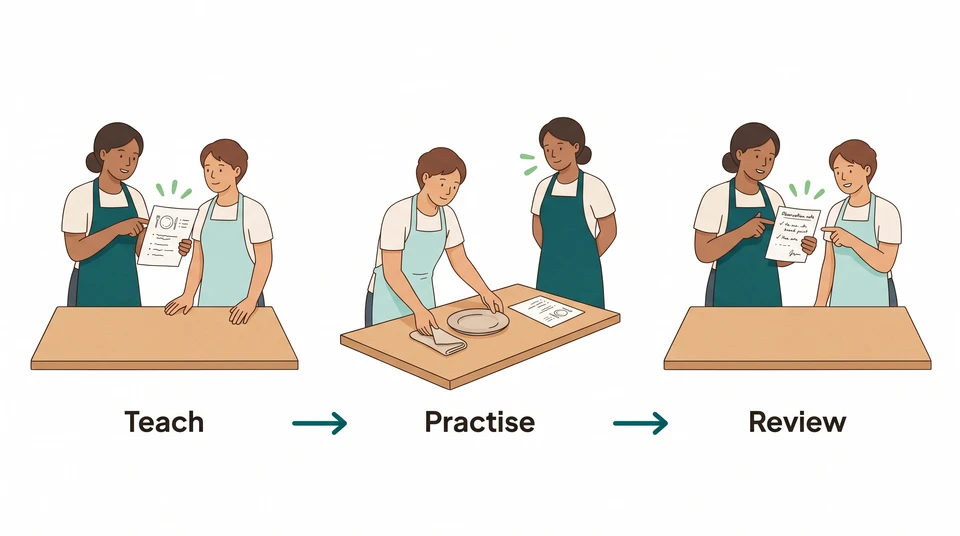
Give a new server one handoff to watch, a chance to explain it back and supported practice—not just a shift spent following someone.
Before your new server follows an experienced teammate onto the floor, give them one thing to notice. Then ask them to explain it back and try it with support. Make that the goal of the shadow shift—not simply staying beside someone until the shift ends.
This is post-hire learning for someone already on your team, not a recruitment trial. Keep the learning task small enough that the trainer can watch the learner practise before you decide what they should do next.
Start with a clear purpose and paid time
Tell the learner and trainer what the session is for: “Today, we’ll follow one order from the guest to the kitchen. You’ll watch, explain the handoff back to me, then try it while I stay beside you.” Give the venue tour and wider onboarding tasks a separate place in the paid work plan.
For Australian employers covered by the national workplace system, Fair Work says employees must be paid for training they do as part of their job. Put the shadowing, explanation and debrief in the paid work plan; don’t treat watching as unpaid time. Check the applicable award or agreement and employment terms for pay and conditions. See Fair Work’s guidance on employee training and time worked.
For US employers, the federal FLSA guidance excludes training time only when all four conditions apply: it is outside normal hours, genuinely voluntary, unrelated to the job, and involves no other work. A required, job-related shadow session does not meet that exclusion. Check FLSA coverage and the applicable state and local requirements rather than importing Australian rules. Start with the US Department of Labor’s hours-worked guidance and your state labor office.
Choose what the learner should notice
Give the new starter a few prompts before the demonstration. For a guest-to-kitchen handoff, try:
- What information does the server confirm before leaving the guest?
- How does the order reach the right person in the kitchen?
- How does the server check that the kitchen has understood?
Use your venue’s actual ordering procedure. Ask the trainer to explain the parts the learner cannot see, such as why an unclear detail needs checking before the order goes through. Don’t ask the learner to memorise every exception during the first demonstration.
Australia’s hospitality coaching unit includes explaining and demonstrating skills, checking understanding, allowing practice and giving feedback. Use that as a practical structure, not a claim that one shadow shift certifies someone. See Coach others in job skills.
Protect the trainer’s attention
As the shift manager, choose someone who knows the task and has room to explain it. Agree who will cover interruptions while they demonstrate and watch the learner. If you are both manager and trainer, name who can take the floor question or incoming order while you coach.
Before service, ask the trainer: “Can you stop and listen when they explain it back? Can you stay beside them for the practice?” If the answer is no, reduce the task or choose another paid learning window. Don’t quietly turn a supported practice into solo work because the queue has grown.
Agree a pause point too. If the trainer needs to step away, the learner stops the practice and asks the shift manager what to do next. For a task with safety risks, follow your venue’s required procedures and supervision; this example is not a substitute for specialist training.
Work through one guest-to-kitchen handoff
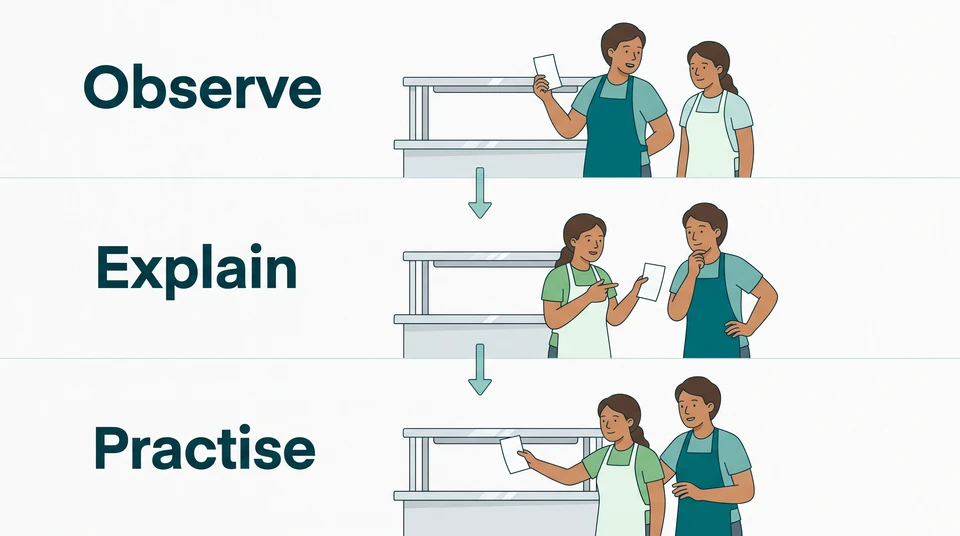
Suppose your restaurant uses an order slip and a verbal handoff at the kitchen pass. You want a new server to learn that specific routine. Here is one way the trainer could run it; adapt the details to your own system.
- Observe. The trainer confirms the guest’s table and order, records them using the venue’s procedure, then passes the order to the designated kitchen teammate. The learner watches how the trainer gets an acknowledgement before returning to the floor.
- Explain. Away from the pass, the trainer asks, “Talk me through what you’d do from leaving the table to returning to the floor.” If the learner stops at “hand over the slip”, ask, “How would you know the kitchen had received it?” Explain the missing step, then invite another explanation.
- Practise. Rehearse with a sample order first. Before a live attempt, the trainer checks that the learner understands the routine and stays beside them. If a detail is unclear, pause and check it using the venue’s procedure rather than guessing.
The point of the explanation is to hear the learner’s thinking. It does not replace watching the action. If they can describe the steps but still need prompts at the pass, keep the next attempt supervised.
Debrief and choose the next practice
Before the learning window ends, ask the learner what was clear and where they hesitated. Then ask the trainer what they actually saw, including any prompts they gave. Keep the feedback specific: “You passed on the table and order. Next time, wait for the kitchen’s acknowledgement before leaving.”
Write a short note in your existing training record: the task, what was observed, support still needed, and who will watch the next attempt. For example: “Order handoff practised with trainer beside learner; acknowledgement needed a reminder. Repeat with the next suitable order under supervision.”
The manager then chooses the next step: repeat the same task, practise a different situation, or review readiness for that task. Don’t mark the whole server role ready because one handoff went well. Before the next roster, check which tasks still need support and who will provide it.
Start with a conversation and the record you already use—there is no need to buy a tool to try this approach. If you want training progress closer to shift planning, explore CrewCentral training. CrewCentral brings role-based training steps, progress and manager sign-offs alongside scheduling, connecting hiring, onboarding, training and the roster. Managers still decide readiness and remain responsible for checking required certifications and licences.