Write a barback role with clear service boundaries
Define where glassware and stock support ends, who takes a guest request and who sets priorities when support jobs clash.
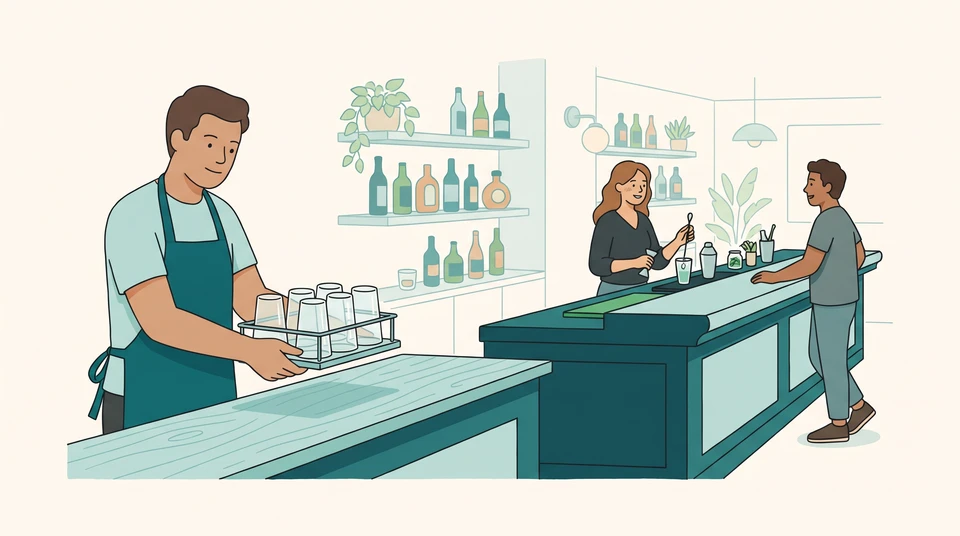
Write the barback job description around the support your bar needs: clean glasses in the right place, agreed supplies replenished and shortages brought to someone who can act. Then say which guest requests stay with the bartender or manager.
Start in a document you already use. The role needs a clear working agreement before it needs software.
Map bar support before service
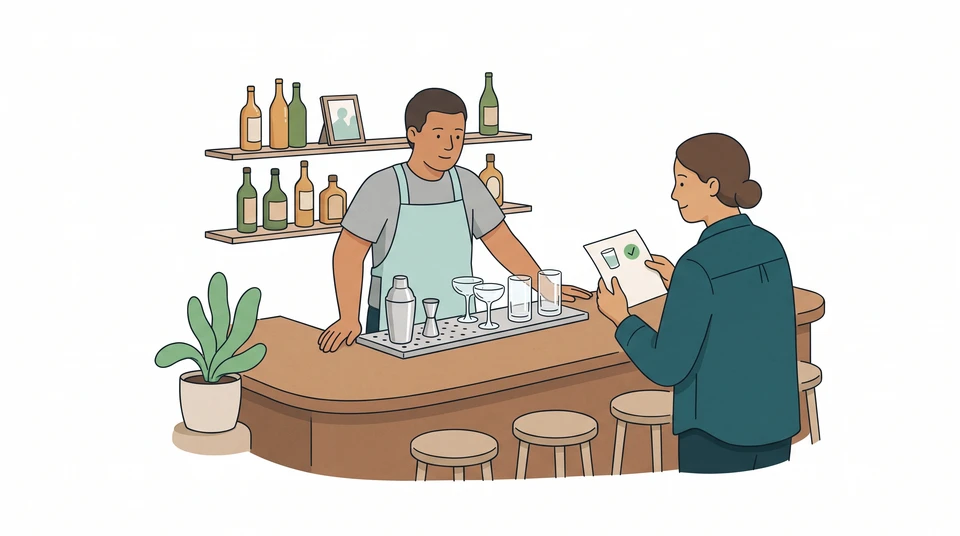
Walk the bar with the person who runs service. Follow one glass from dirty return through washing to the shelf where the bartender reaches for it. Decide where this hire takes responsibility and where another person takes over.
The US O*NET support-worker profile includes barback among its reported titles, alongside bussers and other service-support roles. Its tasks include maintaining glassware supplies and washing glasses at bars. Use those tasks as a starting point, not a requirement to combine every listed job.
For your venue, write down:
- Where used glasses return, who washes them and who puts clean glasses away.
- Which supplies the barback replenishes, their approved storage locations and how the bartender signals a need.
- Who decides priorities when glassware, stock and cleanup need attention together.
- Who covers support work during a break or a trip to the storeroom.
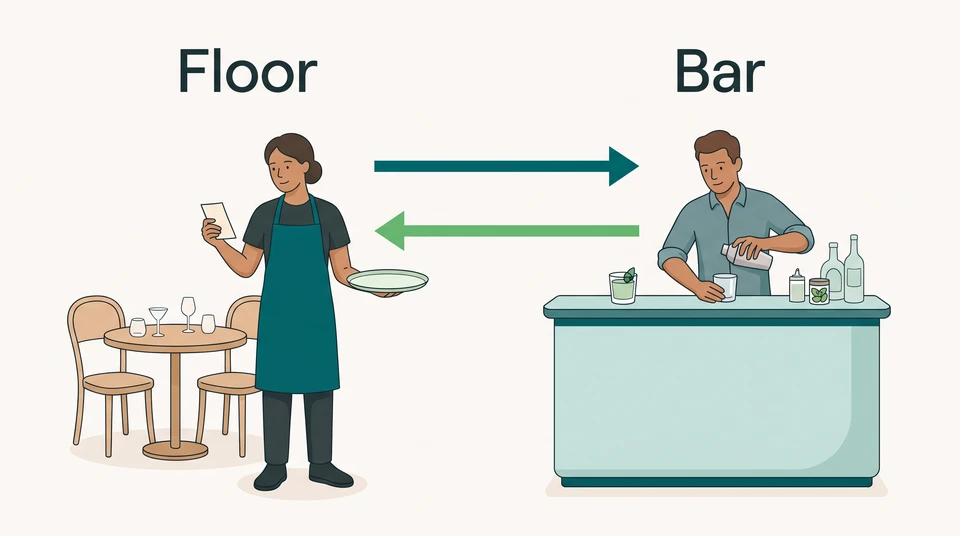
Keep drink production with the bartender role unless you are deliberately hiring and supporting a combined job. Keep table orders and drink delivery with the cocktail-server role where that is your service arrangement. Those are separate choices, not duties a new barback picks up because someone asks during a rush.
Define restocking, glassware and handoffs
Describe a useful finishing point for each task. “Help with glasses” leaves too much open. “Wash assigned glassware using the taught procedure, then put clean glasses on the service shelf” tells the applicant where the work ends. If a separate dish team washes them, replace that duty with collecting and replenishing clean glasses.
For supplies, name the items and the agreed refill point. The manager should set levels from the venue’s own service needs, not copy quantities from another bar’s advertisement. Say what happens when the reserve location is empty: the barback reports the item and location to the shift lead, who decides the next action. Do not make “find more stock” an instruction to leave the venue or substitute an unfamiliar product.
Assign cleaning areas and the route for reporting a spill, broken glass or equipment fault. Have the manager teach the venue’s safe response and make help available. Keep repairs and unfamiliar equipment work outside the starter’s assignment; a job description is not a handling procedure.
A guest request during a restock
Suppose a small bar has Taylor on support, Morgan making drinks and Lee managing service. Taylor has learned the clean-glass route. Morgan handles counter orders; a floor colleague handles table orders. Lee stays available for priority and service decisions.
Taylor is replenishing the clean-glass shelf when a guest asks for two drinks. Taylor acknowledges the guest: “Morgan takes the drinks orders. I’ll let them know you’re waiting.” Taylor gets Morgan’s acknowledgement, without taking an order or promising when the drinks will arrive. Morgan then owns the guest conversation.
If Morgan cannot respond, Taylor tells Lee that a guest is waiting for someone to take an order. Lee arranges the response. Taylor does not quietly start serving to keep the queue moving.
Now add a competing task. Lee asks for more napkins while Morgan needs clean glasses. Taylor names both requests and asks Lee which comes first. Lee chooses the priority and assigns any work Taylor cannot do at the same time. The role brief should identify that decision-maker before the first busy service.
State limits on guest-facing and regulated work
Be precise about what “support” excludes in this vacancy. For the example above, Taylor does not take alcohol orders, make or deliver drinks, check identification for admission or service, accept payments or approve refunds. The manager gives Taylor a named person to call for a guest concern, rather than expecting them to judge an unfamiliar situation alone.
That is the example venue’s role split, not a claim that barbacks everywhere are barred from those tasks. If you need a combined role, describe the extra duties, verify the requirements and arrange training before assigning them. Do not advertise support work and add bartending on arrival.
Check the actual duties against the rules for your location. In NSW, RSA training applies to people who sell, serve or supply alcohol. Do not assume calling someone a barback settles the question.
In California, the ABC’s RBS guidance defines an alcohol server to include someone who takes alcohol orders, pours or delivers alcoholic drinks, or checks identification for alcohol service or entry to an on-premises licensed establishment. Passing a finished drink to a guest is not simply the same task as restocking empty glasses.
These are two local examples, not an AU-wide or US-wide rule. Before advertising, have the hiring owner confirm applicable alcohol-service training, age and work restrictions with the relevant local authority. If a proposed task remains uncertain, keep it out of the starter’s assignment until it is resolved. A venue’s permission alone does not settle a legal requirement.
Write the brief and training expectations
Adapt the sample below. Replace the brackets with confirmed details and remove duties you do not intend to assign. Keep any location-specific requirements separate from house routines you will teach.
Barback — [venue name and location]
Your work: Keep the bar’s assigned glassware and supplies ready for service. Report to [shift lead role]. Work [days and shift windows, including preparation and closing], under [employment type] with [confirmed pay details].
Before service: Check [named glassware and supplies] against our opening list. Replenish from [approved locations]. Tell [shift lead] about missing items or faults before service starts.
During service: [Wash assigned glasses using our taught procedure, or collect clean glasses from the dish team]. Replenish [service shelf and named supplies]. Keep [assigned areas] clear using the procedures we teach. Tell [shift lead] when requests clash or stock cannot be replenished; they decide the priority and next action.
Role limits: [Bartender role] takes counter orders and makes drinks. [Floor role] takes table orders and delivers drinks. Refer guest requests to those people and get acknowledgement. This support role does not include [confirmed excluded tasks]. Ask [shift lead or backup] for help with an uncertain request or unsafe situation.
At close: Complete [specific cleaning and reset tasks]. Report shortages, faults and unfinished work to [receiving role], who confirms the next action. [Manager role] owns final venue checks and lockup.
What you bring: Care with supplies, clear communication and willingness to follow the agreed task and ask for help. [Add experience or locally required qualifications only where confirmed for this vacancy].
What we teach: Our glassware route, replenishment points, assigned equipment procedures, cleaning routine and guest-request handoff. [Trainer role] supports initial shifts. The manager reviews observed practice before widening the assignment.
How to apply: Send [relevant information] to [application destination]. Tell [hiring contact] which advertised shifts you can consider and ask about any task or support arrangement that is unclear.
Before posting, check that someone can deliver each training promise. Describe actual carrying, standing and other work rather than copying an arbitrary lifting threshold. Confirm how those tasks can be performed safely and discuss support or adjustments where needed.
Give the first-shift manager the same role brief, plus the tasks still needing practice. Rehearse the restock-and-guest-request example away from guests, then observe the assigned work with agreed backup. Record what the starter completed and where they needed a prompt. Keep support-role readiness separate from permission to cover a bartender’s shift.
You can use the role brief and your existing documents at no software cost. If you want candidate and role details together, CrewCentral Hiring organizes candidates around the roles you need to fill and carries the person you choose into onboarding. Your team makes the hiring decision. Hiring, onboarding, training and scheduling share team context; the manager still checks the work and support before assigning a shift.
Before you advertise, ask the shift lead to explain one stock shortage, one guest request and one clash of priorities using this brief. If the next action is unclear, fix that line first.