Train a multilingual restaurant team with clear demonstrations
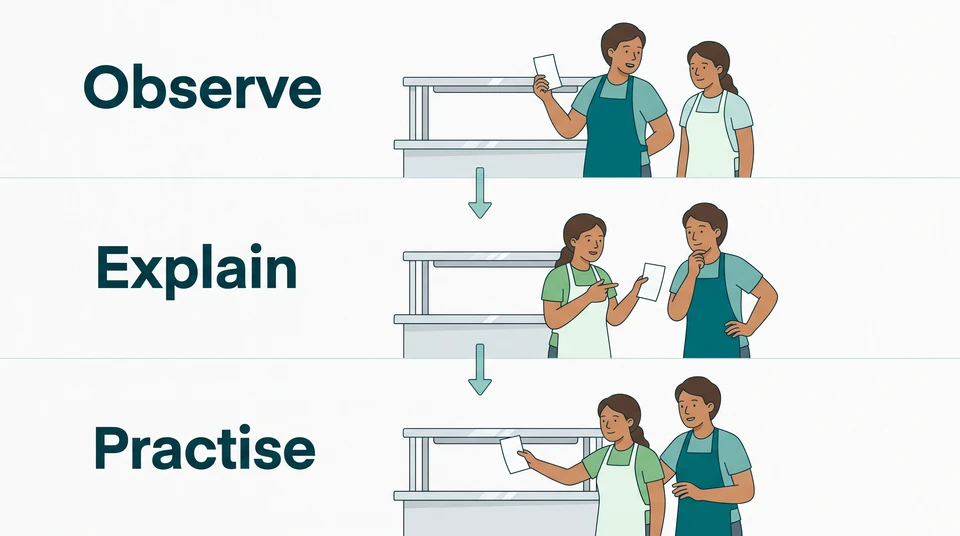
Ask privately which instruction format helps, demonstrate one table setup and let the learner show the next step. Keep reviewed versions together.
Choose one task, make the instructions easier to use and ask the new starter to show you what happens next. The aim is to check that particular task—not test someone’s English or ask them to work through a dense manual unaided.
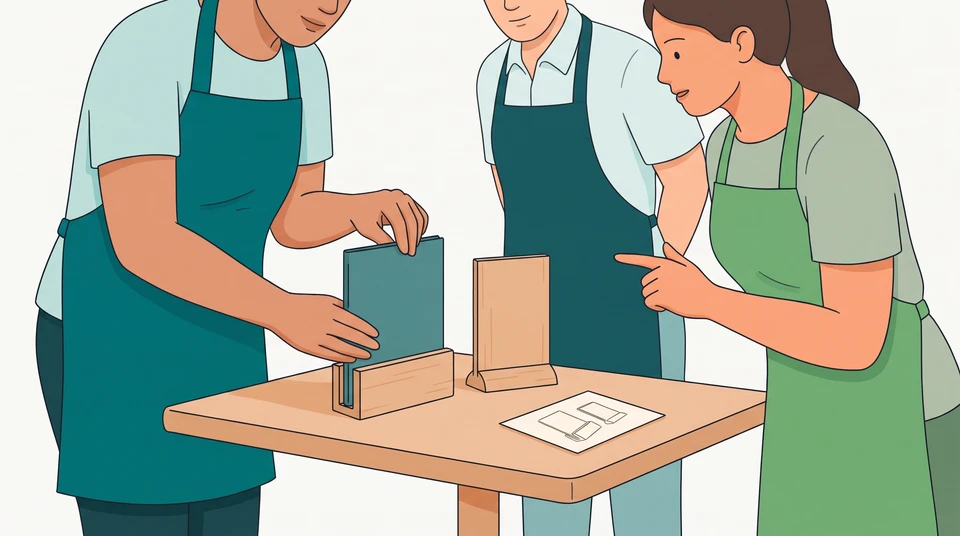
Start with a quiet moment before service and a low-risk task. For example, a restaurant manager could teach a new starter how to set out a menu and table-number stand. Keep safety-critical work with a suitably qualified trainer and the venue’s current procedures.
Ask which instruction format helps
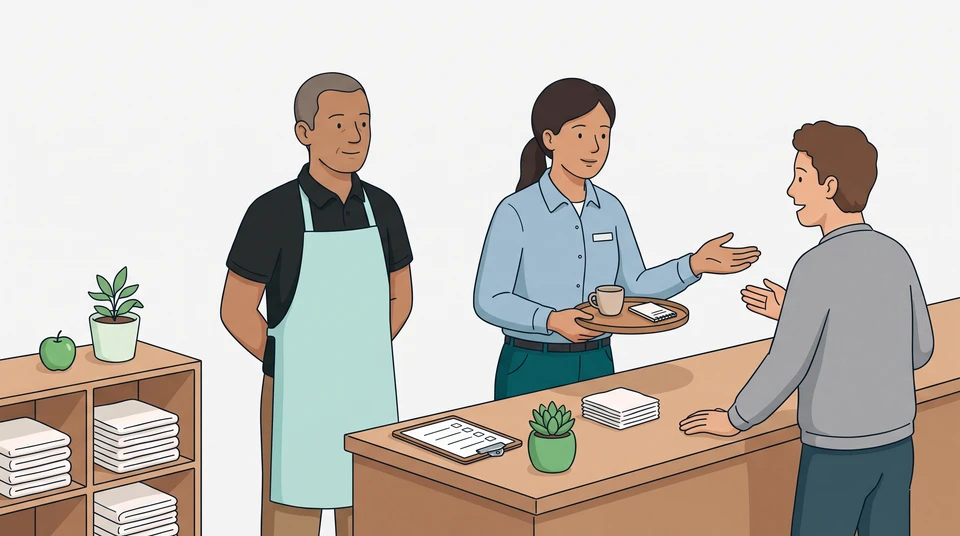
Speak privately with the learner rather than guessing from their name, nationality, accent or background. Ask:
Would it help if I showed you first, used a picture, or went through short written steps with you? Is there a language you would prefer for the instructions?
Let the person tell you what helps. Someone may be comfortable speaking a language but prefer help with written instructions. Do not ask them to explain a reading difficulty in front of the team. If they need another adjustment to participate, agree the next step privately rather than treating a format choice as the whole answer.
In a first-person restaurant training account for CHART, Bonchon’s Ashley Helkenn describes using agreed visual cues and matching printed and digital instructions. Use that idea carefully: explain what a picture means instead of assuming everyone reads it the same way.
Demonstrate one task with short, reviewed steps
Imagine Sam manages a small restaurant. Alex, a new starter, can arrange a table after watching a demonstration but finds the restaurant’s written setup sheet difficult to follow. Sam asks what would help; Alex chooses a demonstration with a reference picture and short written steps.
Sam brings the current menu, its holder and the table-number stand to an empty table. Together, they look at a photo of the restaurant’s agreed arrangement. Sam replaces the long setup paragraph with three steps:
- Check the table number against the floor plan. Ask the shift lead if they do not match.
- Put the current menu in its holder beside the number stand, as shown in the photo.
- Turn the menu and number toward the seats so guests can see them. Ask the trainer to check the arrangement.
Sam demonstrates slowly, pointing to each object as it appears in the instructions. Alex can see the placement from the guest’s side of the table. Before using the card with another starter, Sam checks that the words, photo and actual table arrangement agree.
If you provide another language version, have someone competent in both the language and the task review the wording. Keep object names consistent. Helkenn’s account describes translation ambiguity between different types of pan; a machine-produced translation is a draft to check, not proof that a learner understands the instruction. For critical safety wording, arrange competent review before using it.
Ask the learner to show and explain the next step
Now Sam resets the table and gives Alex a turn:
Please show me how you would set this table. What would you do if the number did not match the floor plan?
Alex can point, demonstrate and explain using the agreed support. Sam checks the arrangement and the response to the mismatch, not the quality of Alex’s English. If a step is unclear, Sam changes the explanation, demonstrates it again and offers another attempt. A nod or “yes” alone does not show how the person will do the task.
Write a short note about what you observed: the task, procedure version, what the learner demonstrated and anything still needing supervised practice. Check again during the next suitable setup. Being ready for this table task does not establish readiness for every floor duty.
Safe Work Australia’s workplace-training guidance supports demonstrations, practice, constructive feedback and clear instructions, including translations or diagrams where needed. It describes Australia’s model WHS framework; check your state or territory regulator for local requirements. In the US, check the applicable OSHA or approved state-plan requirements, as outlined by the US Department of Labor. This table-setting example does not replace required safety training, licences or assessments.
Keep every instruction version aligned
Give one manager responsibility for the master procedure and its review date. If the menu holder or table layout changes, update the photo, short steps and any reviewed language versions together. Remove outdated copies from the station and explain the change to the people using them.
For Alex’s next setup, Sam uses the revised card, demonstrates the changed placement and checks it again. Do not leave the printed card describing one arrangement while the digital instructions show another.
Keep the training check beside the next shift
After hiring and onboarding, keep the next training task clear before assigning someone to work a role alone. CrewCentral Training brings role-based training steps, manager-visible progress and manager sign-offs close to scheduling. The manager still needs to observe the task and decide what is ready.
Training is free to use for restaurants. Start with the task your next new starter needs to learn, then explore CrewCentral Training to keep track of the steps and sign-offs. Prepare and review any translated instructions separately; do not rely on the tracker to translate or validate them.