Build a restaurant cross-training plan before you need emergency cover
Plan a second trained person with real trainer time, original-station cover and a manager review before relying on them.
Pick one station where you need another trained person. Then plan how that person will learn it without leaving their usual job uncovered.
The aim is a useful backup option, not a name on a checklist. Before you depend on someone for cover, know what they can do, what support they still need and whether they are available for that shift.
Identify stations with too little trained backup
Make a short list of your working stations: counter, floor, bar or whichever areas your venue uses. Beside each one, note who you have observed working there and who still needs supervision. Keep availability separate from skill: a person who knows the station may not be available when you need them.
Choose one gap to work on first. Ask: “If our usual operator is away, who could take this station, and what would they need to learn before we relied on them?” If the answer is nobody, that is a training priority—not permission to assign an unprepared person.
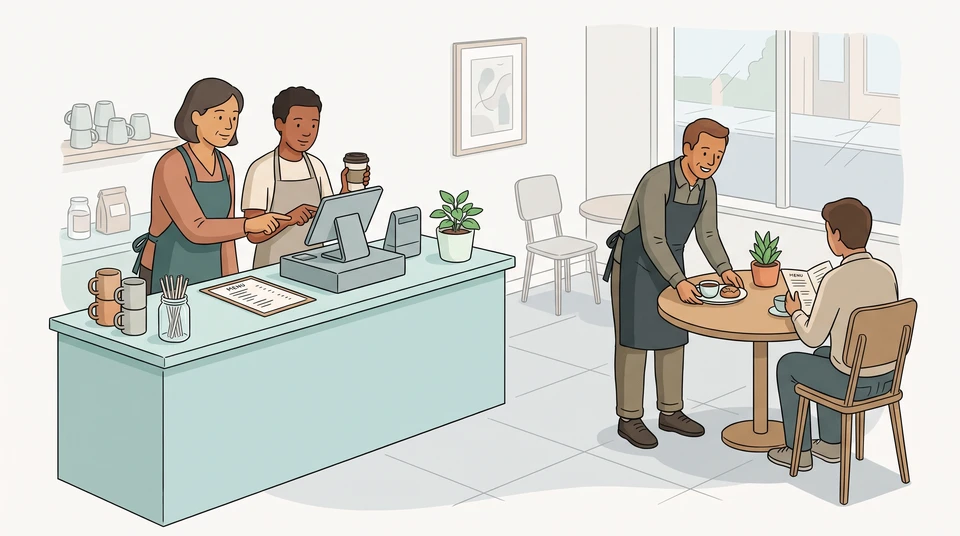
For example, imagine Harbor Counter, a small restaurant where Maya is the only person currently ready to run the busy counter. Eli usually works the floor and would like to learn the counter. Manager Sam plans a second-skill pathway for Eli while keeping Maya responsible for the counter during practice.
Choose one useful cross-training pairing and confirm interest
Ask the learner which second role interests them and what support they would need. Start with a specific station and a manageable practice task, rather than asking everyone to learn every role. Hospitality vendor 7shifts’ cross-training guide also recommends considering staff interest when choosing a pairing.
Choose the trainer for their ability to explain the work, watch the learner and give useful feedback. Your fastest operator is not automatically the best teacher; NYC’s restaurant training playbook makes that distinction.
Sam asks Maya whether she can coach Eli through taking an order and checking it before handoff. Maya agrees, but only during a window when she can stay beside Eli. Sam records that limit instead of treating Maya’s agreement as unlimited training capacity.
Arrange protected practice while preserving primary-station coverage
Before adding practice to the schedule, name the trainer, learner and person covering the learner’s usual station. Confirm they are actually available. Do not count the learner as floor cover and counter cover at the same time.
Write down the practice task, supervision needed and stop condition. Share the plan with everyone affected so they know where to work and who owns each station. NYC’s playbook recommends planning training and communicating the trainer and schedule to the team.
For Harbor Counter, Sam’s plan looks like this:
- Learner: Eli, practicing order entry and the check before handoff.
- Trainer: Maya, staying at the counter to demonstrate and supervise.
- Original-station cover: Sam takes Eli’s floor section during practice, provided Sam has no competing duty.
- Stop condition: if Maya must focus on service or Sam cannot cover the floor, pause practice and return Eli to the floor.
- Review owner: Sam checks Maya’s observation notes with Eli before planning the next session.
If that coverage is not workable, Sam chooses another window. Calling a shift “training” does not make the trainer or floor cover available.
Use demonstration, supervised practice and feedback, as NYC’s playbook recommends. Ask the learner to explain what they would check and when they would call for help. Keep the trainer close enough to intervene; completing the session is not a reason to remove supervision.
Record supervised versus independently reviewed readiness and revisit unused skills
After practice, record what the learner actually did, what needed prompting and what you will review next. Use clear descriptions such as “practice with Maya beside them” or “manager reviewed order entry; busy-counter service not yet reviewed.” Avoid a single “trained” tick that hides those limits.
Sam might record: “Eli entered and checked orders with Maya alongside. Still needed prompts before handoff. Continue supervised practice; not yet our independent counter cover.”
Before relying on Eli, Sam arranges another observation under the conditions Eli would be expected to handle. If support is still needed, keep it in the plan. Check any role-specific requirements separately; a practice record is not a certificate or licence.
Revisit the skill when the work changes or the person has not used it recently. Ask what needs another demonstration, then arrange supervised practice before depending on the old record. Safe Work Australia’s training guidance supports ongoing training, supervision and review; it does not set a universal refresher interval for your cross-training plan.
A second skill gives you another assignment option, not another person. If Eli is needed on the floor and at the counter at once, Sam still needs to choose an assignment and arrange real cover for the other station.
For your next schedule, choose one pairing, confirm trainer time and original-station cover, and name the person who will review progress. Keep hiring expectations, onboarding, training and shift assignments connected as you make that plan. You can also read about Training at CrewCentral.