Record useful observations after a hospitality trial shift
Replace a vague impression with the task you observed, the help provided and a clear next step. A cafe till example shows what to record—and what to leave open.
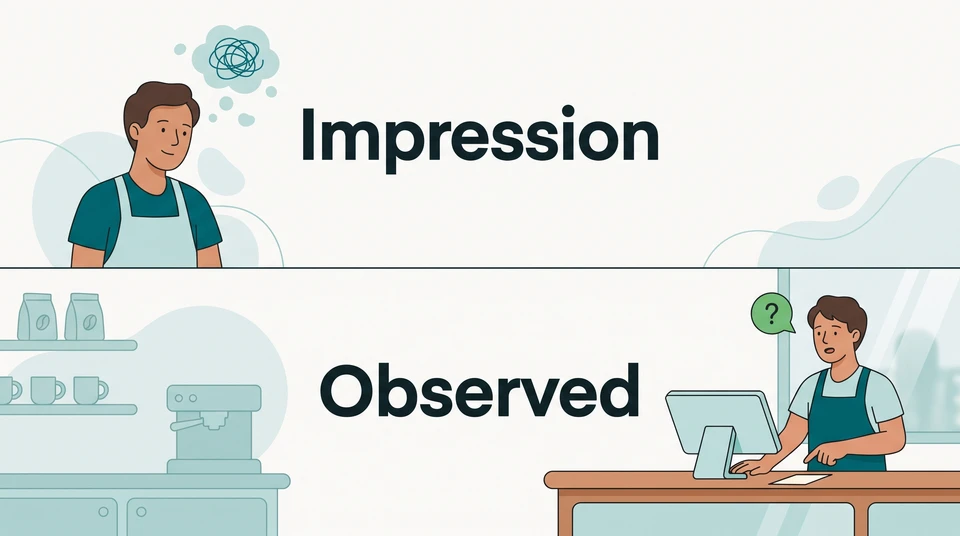
After a trial shift, write down the work you actually saw, the help the candidate had and what you still need to know. Leave the hiring decision with the manager responsible for the role. A note such as “not confident” needs a specific example before it can help that conversation.
Start with the moment behind the impression. Did the candidate ask a question, wait for instructions or try an unfamiliar task? Describe that action without turning it into a personality label.
Identify the work you actually observed
The person who watched the work should make the first note. Record the candidate’s name, the role, the date, who observed them and the task they saw. If different people watched different tasks, keep each observation attributed to its observer.
Be specific about the limits. “I watched Taylor enter an order after a till demonstration” describes one task. It does not tell you how Taylor would handle a full section, make coffee or close the bar.
Use “not observed” for work you did not see. Don’t turn a gap in the observation into “cannot do it”. If another supervisor mentions a concern, ask them to describe the task and what happened rather than copying their conclusion as your own.
A cafe order and a clarification
Imagine Taylor has completed a paid trial at a cafe. Manager Alex showed Taylor the till, then watched as Taylor prepared to enter an unfamiliar order. Taylor paused and asked Alex which option to use before entering it.
Alex’s first impression might be:
Not confident on the till.
A more useful note would be:
After I demonstrated the till, Taylor asked which option to use for an unfamiliar order before entering it. I answered the question. I did not observe Taylor taking orders without support or during the busy service.
That note does not prove Taylor is ready to run the till alone. It also does not treat asking for clarification as a failure. Alex can now see the action, the support given and the question still open.
Separate behaviour from impressions
When you catch yourself writing “slow”, “a natural” or “not a team fit”, ask: what did I see or hear that relates to this role?
For example, replace “great team player” with the particular action you saw, such as “asked the shift lead where the clean glasses belonged before putting them away”. Keep your interpretation separate: you may still need to discuss whether that action tells you anything useful about the job.
Don’t replace a vague impression with an invented detail. If you cannot recall the task or the words used, say the detail is unclear. Ask the person who observed it before using it in a hiring decision. Don’t add timings, error counts or confident-sounding quotes from memory if you did not record them.
If two observers disagree, keep their accounts separate and identify what each person actually watched. Avoid settling the disagreement with a personality score or a vote on who “felt right”.
Record the support and conditions
Beside each observation, add the context a second manager would need:
- What instructions or demonstration did the candidate receive?
- Who answered questions or stepped in, and what did they do?
- Was the equipment or task unfamiliar to the candidate?
- Was this a quiet period or a busy service?
- Was the task completed, interrupted or taken over by someone else?
Record what you know. If you don’t know whether someone had already explained a task, ask the supervisor rather than assuming the candidate ignored an instruction.
In the cafe example, Alex should keep “I demonstrated the till” beside the order observation. Removing that detail would make the note sound as though Taylor worked without help. Adding “busy service” would be just as misleading if Alex only watched during a quiet period.
Keep pay questions separate from feedback
Don’t use positive or negative feedback to decide whether time already worked should be paid. For Australian venues in the national workplace system, Fair Work’s unpaid-trial guidance says unpaid trials may be unlawful when they go beyond a necessary demonstration of relevant skills or lack direct supervision. Time beyond what is reasonably required to demonstrate those skills must be paid at the appropriate minimum rate. Don’t assume a shift is unpaid because it was called a trial.
For US venues, check US requirements separately. The Department of Labor explains that work an employee is allowed to perform must be counted as paid work time under the federal FLSA hours-worked guidance. Check coverage and applicable state and local requirements too; your state labor office is a starting point for state questions. The Australian guidance is not a US unpaid-trial exception. If pay is unresolved, get advice for your venue rather than using the feedback note as a pay ruling.
Identify unanswered questions and the next action
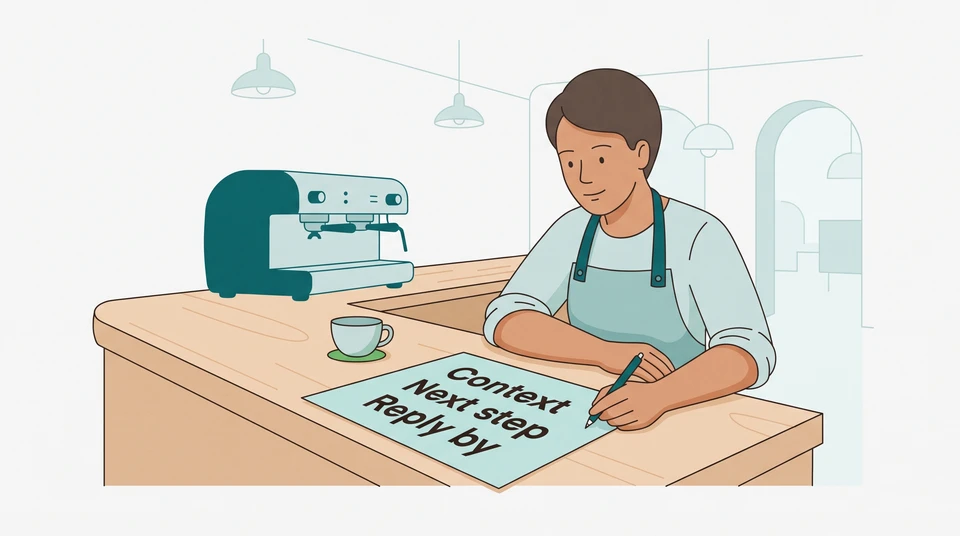
Finish the record with the job-related question still open, who will resolve it and when they will follow up. “Needs another look” leaves the next manager guessing. Be clear about whether you need a supervisor’s missing account, an explanation from the candidate or a hiring decision from the owner.
For Taylor, Alex could write:
Open question: I have not seen Taylor use the till without support. Alex will discuss this with the hiring manager tomorrow before a decision is made. No further work has been arranged.
An unanswered question is not an instruction to extend an unpaid trial. Decide any further assessment and its pay arrangements separately, under the rules that apply to your venue.
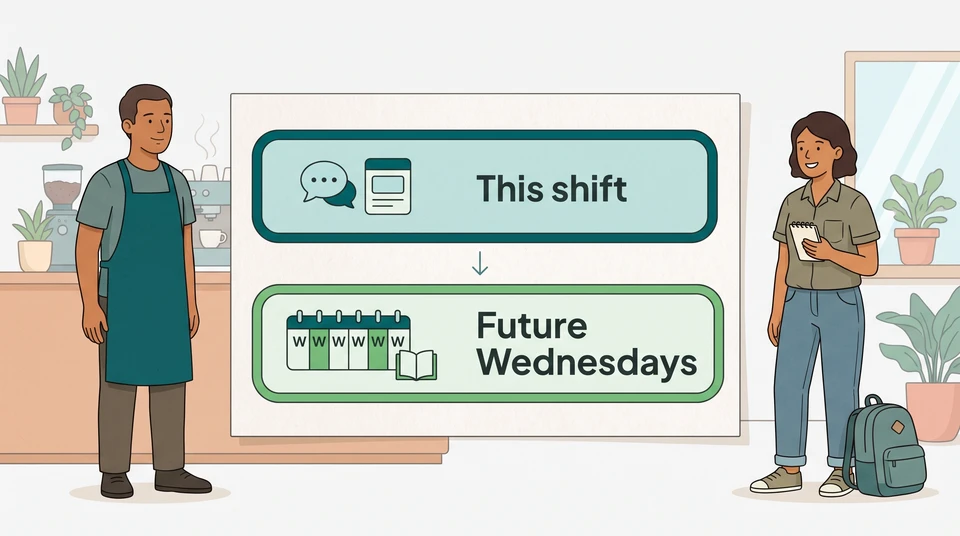
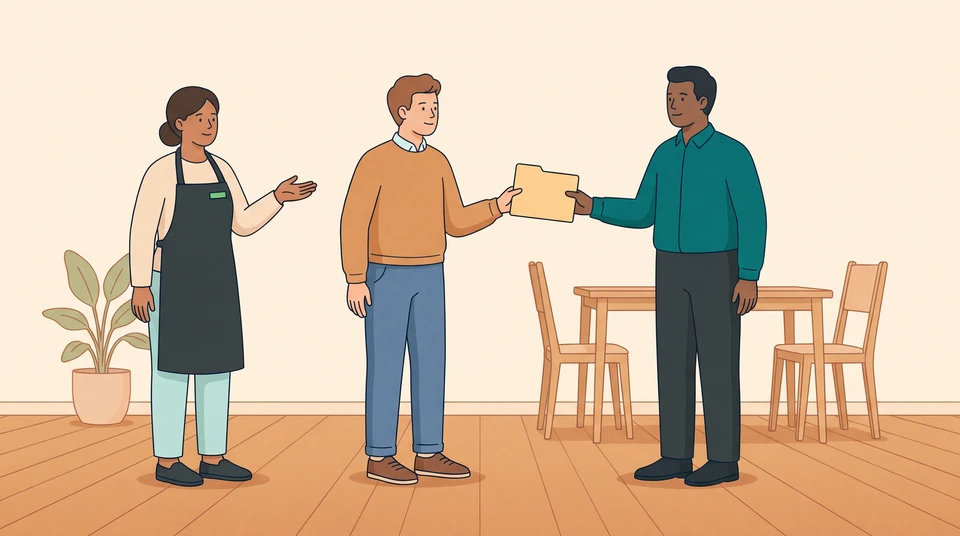
If you choose to hire the person, carry the relevant support needs into the first-shift handover. Tell the first-shift manager what still needs teaching; don’t turn an unobserved task into either a permanent weakness or a claim that the person is ready to work alone.
Keep the person and the role connected
CrewCentral hiring keeps candidate details organised around open roles, with your team making the hiring decisions. Hiring, onboarding, training and scheduling belong together. In the first-shift handover, explain what support the new starter still needs and who will provide it.
If you just need a weekly plan, start with the free schedule maker: it is manual, saves in your browser and needs no account or email to start. It is not an AI generator or a shared cloud workspace.
Before closing the trial-shift record, check that another manager can answer three questions: what did we see, what help was given and what happens next?