Follow up when a restaurant candidate stops replying
Check the last conversation, offer a concrete next step and decide when to close the loop—without treating silence as a judgment about the candidate.
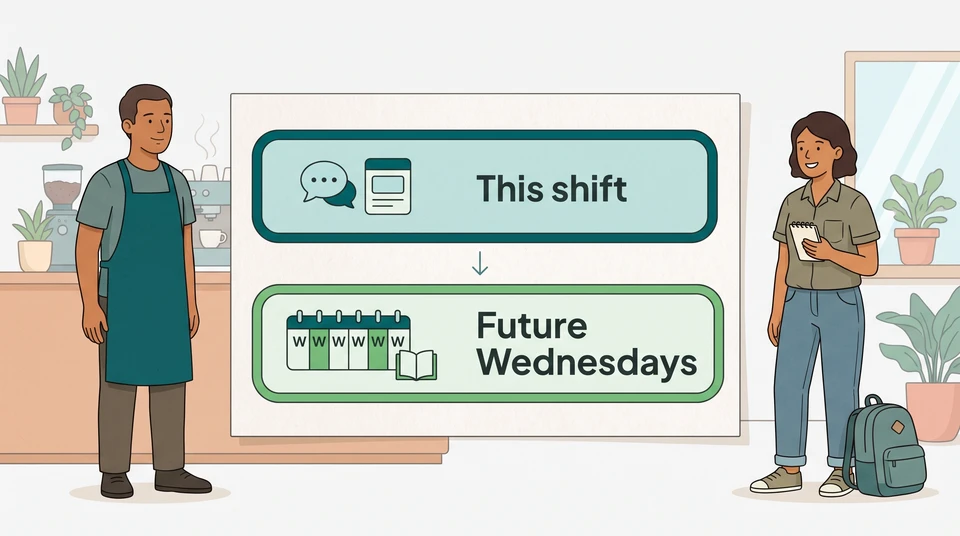
A candidate has not replied, and you still need to decide who to speak with next. Start with the last thing you agreed, send one clear follow-up and set a time to review the outcome. Treat the silence as an unanswered question—not a verdict on the person.
You do not need a clever subject line or a string of reminders. You need a message the candidate can act on, and a plan for what you will do if there is still no reply.
Check what was last agreed
Open the application and the last conversation before you send anything. Check the role, venue, agreed next step and any time you promised to get back to them. If you said you would send interview times but never did, send those times now rather than asking why they have not responded.
Look for a practical mistake you can fix: an incorrect address, an unsent draft or a message that asked several questions without making the next step clear. Use the contact details the candidate gave you for hiring, and the channel you have already agreed to use. Do not search for their private social accounts or ask another employee to chase them.
Give one manager ownership of the follow-up. Before sending, that manager checks whether another supervisor has already heard back. If the same person handles hiring and the first shift, they can keep ownership; there is no need to add another handoff.
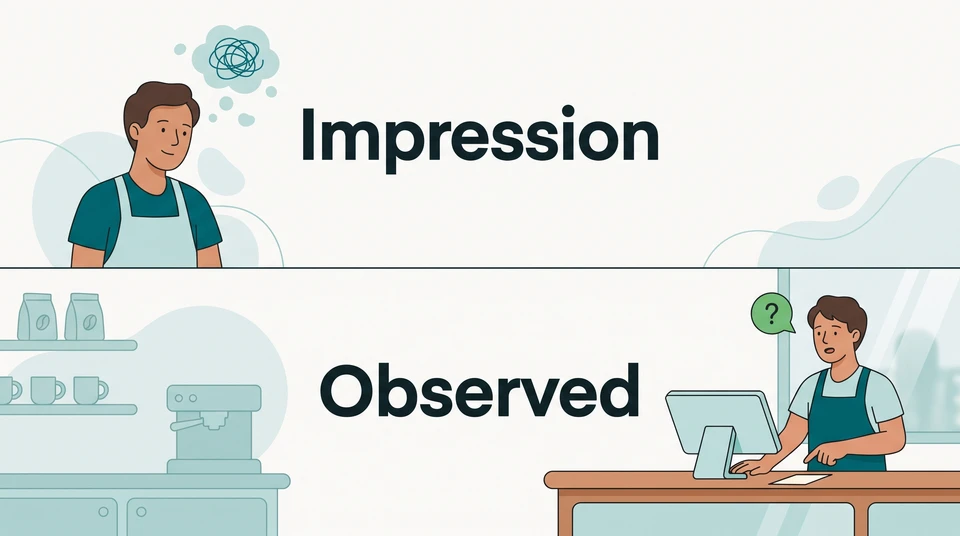
Separate what you know from what you do not. “No reply to Wednesday’s email” describes the record. “Unreliable” or “not interested” adds a conclusion the message history does not establish. You do not need to ask for a personal explanation before offering the next step.
Send a clear next-step message
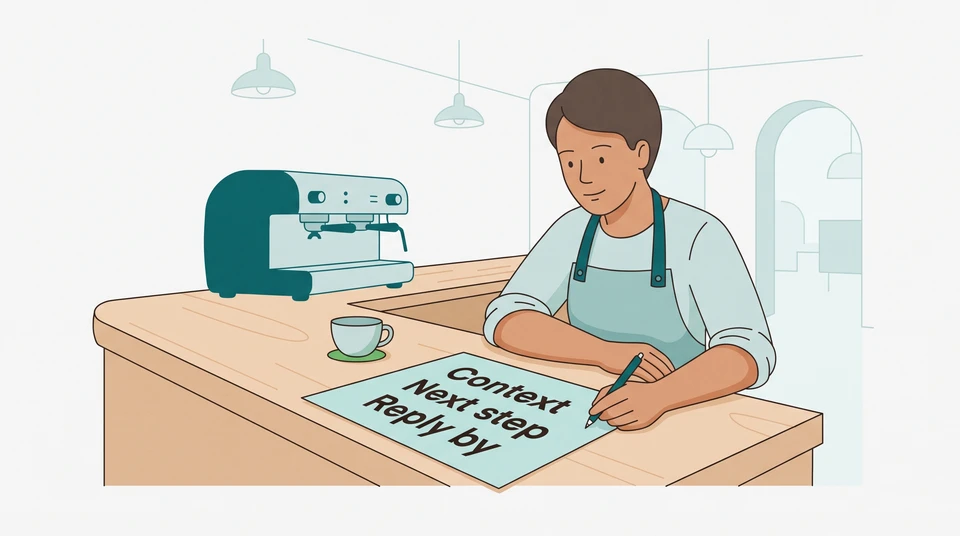
Name yourself, the venue and the role. Restate the next step, offer a simple choice and explain how to reply. Read the message once before sending—especially if you used AI to draft it—and remove any detail you have not agreed.
Match the request to the stage:
- Before an interview, ask the candidate to choose between actual interview times. Include the venue or call details they need.
- After an interview, restate the specific discussion you agreed to have next. Do not turn “let’s discuss a start date” into “your first shift is confirmed.”
- If they have already accepted an offer or agreed to a first shift, ask the hiring owner to check the existing commitments. Do not use a generic no-reply closeout as an offer withdrawal or a decision about someone’s employment.
A cafe manager’s follow-up
Suppose Morgan manages a cafe and has interviewed Alex for a server role. They agreed to discuss a possible start date, but no start date or shift has been confirmed. Morgan sent a message on Monday and has not heard back by Wednesday. Morgan needs to arrange the remaining interviews on Thursday afternoon.
Morgan checks that the message was sent to the email address Alex supplied, then sends:
Hi Alex, it’s Morgan from Harbour Cafe. We spoke about arranging a call to discuss a possible start date for the server role. Would Friday at 11 am or 2 pm work for a quick phone call? Those times are local to the cafe. Please reply by Thursday at 3 pm so I can arrange the remaining interviews. If neither time works, suggest another time. If you’d rather not continue, that’s okay—please let me know.
The message gives Alex something concrete to answer. It does not claim to know whether Alex saw the earlier email or why there has been no reply. The two call times are options, not booked appointments.
If Alex chooses a time, Morgan confirms it and checks which number to call. A reply acknowledging the email is not the same as agreeing to a start date. Morgan still needs to discuss availability and confirm the next step.
State a reasonable response window
Choose a response window that fits the actual next decision. Tell the candidate the day, time and relevant time zone, and leave room for them to see the message and respond. A message sent late at night should not quietly become a demand for an answer before the morning rush.
In Morgan’s example, Thursday at 3 pm is a planning choice tied to arranging interviews. It is not a universal hiring rule or a claim that the role automatically disappears then. If there is no real deadline, do not invent one to make the message sound urgent.
Check your own promise, too. If you cannot genuinely keep a call time open, offer to arrange a time after they reply instead. If the venue urgently needs cover for this weekend, continue planning with people whose availability and readiness are confirmed. Do not count an unanswered candidate as a filled shift.
Use one follow-up and one closeout as a bounded approach, not a rule to apply regardless of context. Stop chasing if the person says they do not want further contact. If they asked you to wait until a particular day, respect that arrangement rather than starting a fresh reminder sequence.
Record the outcome and continue hiring
When the response window ends, the named manager checks for a reply before taking the next action. If there is still nothing, record the dates, channel and unresolved next step. In Morgan’s example, that means “No reply by Thursday 3 pm; call not booked,” not “Declined role.”
Where a final message is appropriate and the candidate has not asked you to stop, close the loop without blame:
Hi Alex, I haven’t heard back, so I’ll continue arranging interviews for the server role. I haven’t booked a call with you. If you’re still interested, you’re welcome to reply and I’ll confirm what is available then. Thanks for your time, Morgan.
Do not follow that with another round of messages through different channels. If Alex replies later, check the current vacancy and next available step before making a new commitment.
Keep the closed application and correspondence under your venue’s records policy rather than deleting them just to tidy the list. In the US, covered employers have EEOC recordkeeping obligations. In Australia, the employee-records exemption does not cover unsuccessful applicants; small-business coverage and exceptions also matter. Check the requirements that apply to your venue before setting a deletion policy.
Keep the role and candidate context together for the next manager decision. CrewCentral hiring organizes candidates around open roles, with your team making the hiring decisions. You still own the follow-up and the reply check. Once someone says yes, confirm the agreed start details and prepare their onboarding, training and first schedule together—do not treat a conversation about a possible start as a ready-to-work handoff.
If your immediate task is planning coverage, start with the free schedule maker. It is a manual editor saved in your browser, with no account or email needed to start. It is not the shared team workspace or an AI schedule generator. Keep unconfirmed hires out of confirmed coverage and review the week yourself.