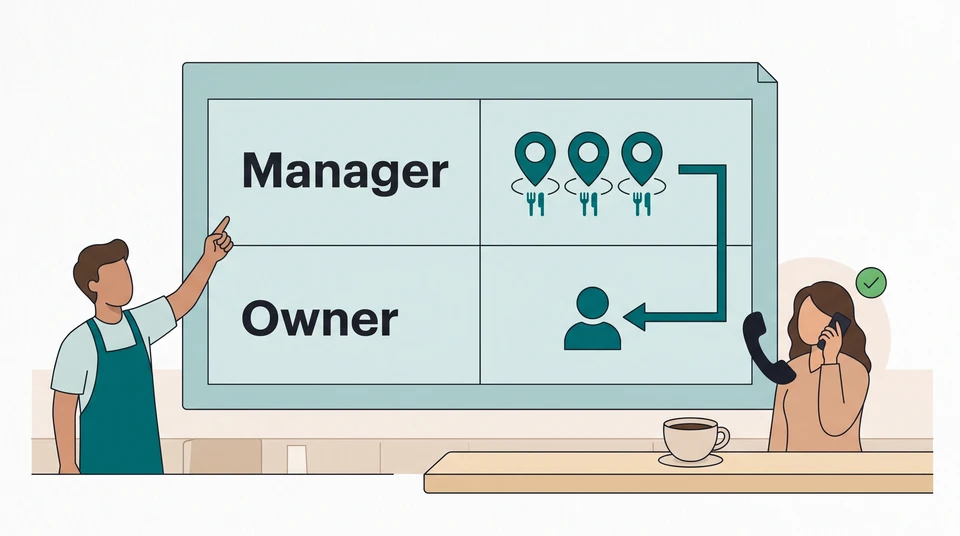
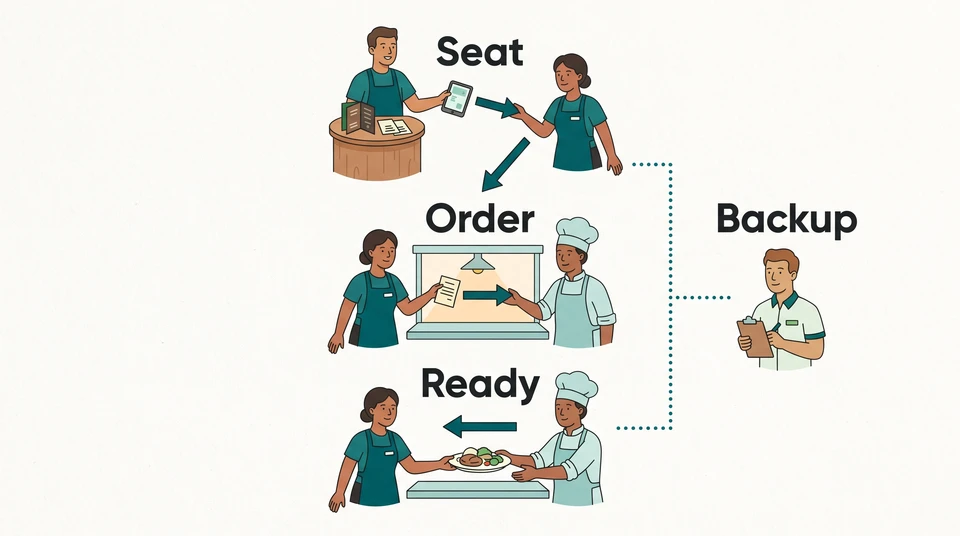
A host job description for a busy restaurant entrance
Make arrivals, seating checks and guest updates clear before you advertise. Adapt a practical host description around your venue's actual entrance work.
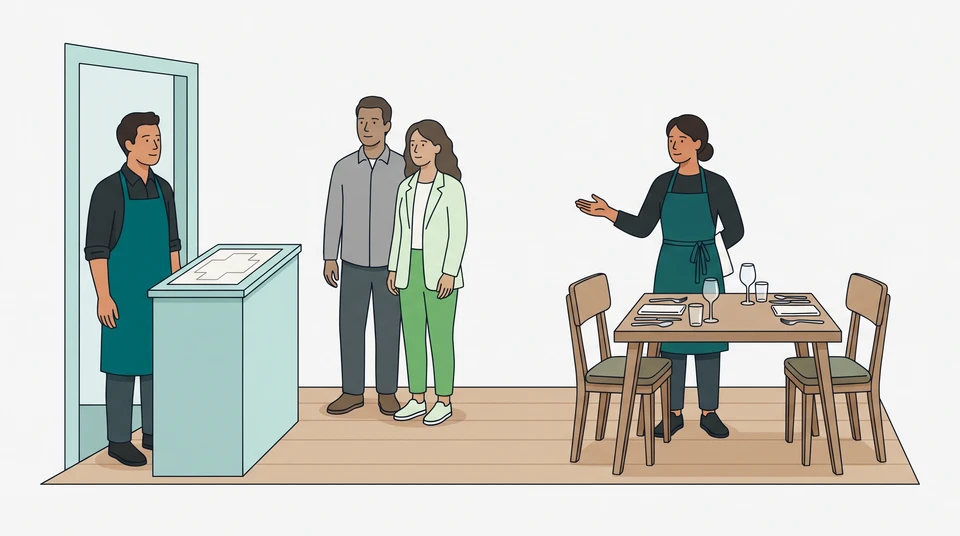
Write the host job description around three things: who welcomes arrivals, who confirms a table is ready and who gives the next wait update. Then name the person who helps when the entrance gets busy.
“Greet and seat guests” is a start. “Check table readiness with the server, keep waiting parties updated and call the floor manager when plans clash” gives applicants a shift they can picture.
Adapt the sample below in a document you already have. You do not need hiring software to make it your own.
Define arrivals and seating responsibilities
Before writing the ad, walk the entrance with the person who runs service. Agree what the host owns before guests arrive, while they wait and when they move into the dining room.
The US O*NET host profile covers welcoming and seating guests, reservations, checking dining areas and communication with service staff. It is a broad occupation catalogue, not a requirement to put every listed duty into your vacancy.
Choose the work that fits your venue. For a table-service restaurant, that might mean checking the reservation list before service, greeting arrivals, confirming party size and seating needs, keeping the wait list current and telling the server when a party is seated. Ask guests what they need rather than deciding from appearances.
Write down the limits too. Does the host answer the phone, take takeaway orders or help reset tables? If so, say who covers arrivals while they do it. Do not give one person several jobs with no backup plan. In a small cafe where the manager also hosts, name who watches the entrance while the manager helps elsewhere.
Use “host” as the job title and describe the work directly. Replace “young, bubbly hostess” with something useful, such as “welcome arrivals, explain the wait clearly and pass accurate seating information to colleagues.”
Make the handoff to servers clear
A cleared table and a ready table are different checks. Before seating a party, have the host confirm that the table is reset and the server can take the arrival. The floor manager should explain the venue’s seating plan before service, including how reservations and walk-ins fit together.
Here is an example to walk through with your manager. Imagine a restaurant with a host at the entrance, servers looking after sections and a floor manager available for backup. A reservation arrives while the walk-in queue grows. One table has just been cleared, but it has not been reset, and the server is helping another table.
- The host acknowledges the new arrival, checks the booking and party’s needs, and keeps the waiting list in view. They do not promise the cleared table yet.
- The host asks the server whether the table is reset and whether they can receive the party. If the server cannot help yet, the host asks the floor manager to confirm the next seating plan.
- The host owns the next update to both waiting parties. If they cannot give a useful estimate, they explain what they are checking instead of inventing a time: “I’m checking which table we can seat you at. I’ll come back with an update once I’ve spoken with the floor manager.”
- If a reservation and a walk-in are expecting the same table, the floor manager resolves the conflict using the venue’s agreed approach. The host explains the decision without making up a new priority rule at the door.
- Once the table and server are ready, the host seats the party and tells the server where they are. If the host escorts them away from the entrance, the named backup covers new arrivals until they return.
If the manager takes over a difficult conversation, agree who will update the other waiting parties. A handoff is not finished while each person thinks the other is coming back.
Put those boundaries in the description: the host owns arrival information and updates, the server confirms readiness to receive a party, and the manager handles exceptions and arranges backup. Adapt that division if your service model is different.
Separate essential from trainable skills
Ask the hiring manager to split the requirements into “needed before starting” and “we will teach.” Keep both lists tied to the entrance work.
Useful starting skills might include listening to a guest’s request, passing an accurate message and asking for help when two requests clash. “Can explain a delay without promising an unconfirmed time” tells a candidate more than “thrives under pressure.”
Your table numbers, reservation process, seating rotation and escalation routine can go in the training section if someone will teach them. Name that person and the support they will provide before you advertise. If you need previous hosting experience, explain which work the person must already handle rather than adding an unexplained years-of-experience filter.
Keep pay, hours, employment terms and any local requirements specific to the actual vacancy. Have the person responsible for hiring check the finished ad for your location before posting. This sample does not set employment rules for either the US or Australia.
Adapt this host job description
This sample uses the restaurant arrangement above. Its manager support and division of duties are example choices, not facts about your venue. Adapt it in your own document. Replace every bracketed field and change any promise you cannot deliver.
This is a read-only sample. Use it as a reference in your own document and replace all square-bracketed fields with confirmed venue details. This page does not edit, save or submit your finished job description.
Host — [venue name], [location]
About the role: You will look after arrivals at our [type of table-service venue], keep waiting guests informed and coordinate seating with servers. You report to [floor manager or other actual supervisor]. [Named role] covers the entrance when you escort guests to a table or take a break.
Working details: [Employment type]. [Days and shift windows, including preparation and closing work]. [Confirmed pay details for this vacancy]. [Benefits actually offered, or remove]. [Application deadline, if any].
What you will do
- Before service, check the reservation and seating information with the manager. Confirm table arrangements, the waiting area and who provides entrance backup.
- Welcome arrivals, check booking details where relevant, and confirm party size and seating needs by asking the guests.
- Keep the wait list current using [the venue’s actual method]. Explain what is known about the wait without promising an unconfirmed table or time. Own the next update unless a named colleague takes over.
- Before seating guests, confirm the table is reset and the server is ready to receive them. Follow the seating plan agreed with the manager and ask before making an exception.
- Escort guests to the agreed table and let the server know they have arrived. Arrange entrance cover before leaving the door unattended.
- Ask the manager for help with disputed queue positions, conflicting table expectations, requests outside your authority or arrivals you cannot cover alone.
- Before finishing, hand over waiting parties, outstanding updates and unresolved seating requests to the colleague named by the manager.
- [Add phone, takeaway or other genuinely assigned work and who covers arrivals during it; otherwise remove].
What you need to bring
- Ability to listen to a guest’s request and pass accurate information to a colleague.
- Ability to keep track of arrivals and updates using an agreed process, and ask for help when requests overlap.
- Willingness to check an uncertain answer rather than promise a table or wait time without confirmation.
- [Specific previous work genuinely needed before starting, or remove].
What we will teach and support
[Trainer or manager role] will show you our table layout, reservation and wait-list method, seating plan, guest-update routine and when to ask for help. [Confirm how supported practice and entrance backup will work before assigning these tasks independently; change any support that is not available].
How to apply
Send [relevant experience or other information actually needed] to [application destination] by [date, or remove]. Tell us which listed shift windows you can consider. Contact [hiring contact and channel] with questions about the work or application process.
After editing, check the description against a real shift. If the host is also expected to clear tables, answer calls and manage takeaway collection, add those duties and the cover arrangement. Do not leave them hidden behind “other duties as needed.”
Turn the duties into interview prompts
Use the reservation-and-walk-in example to discuss the work, not to test whether someone guesses your house policy. Tell candidates what authority and backup the role has, then ask:
- “A table has been cleared, but the server has not confirmed it is ready. What would you check before seating the next party?” Listen for both table setup and the server’s ability to receive them.
- “You need to speak with the manager while two parties wait. Who needs an update, and how would you arrange cover at the entrance?” Look for clear ownership rather than an unsupported wait promise.
- “Two parties expect the same table. What would you handle yourself, and when would you ask the manager to step in?” Use the answer to discuss your escalation boundary.
When you choose someone, carry the agreed role, shift windows and training needs into their first-shift plan. Hiring, onboarding, training and scheduling should describe the same job. A good interview conversation is not a substitute for showing the new starter your actual entrance routine.
You can keep that context in your own documents. If you want it together, CrewCentral Hiring organizes candidates around roles and carries the person you choose into onboarding. Your team reviews candidates and makes the hiring decisions. Hiring, onboarding, training and scheduling share team context; CrewCentral is not the seating or reservation system in this example.
Before you post the ad, ask one final question: if the entrance gets busy, can the applicant tell what they own, what they need to check and who will help?