What to tell a new restaurant employee before their first shift
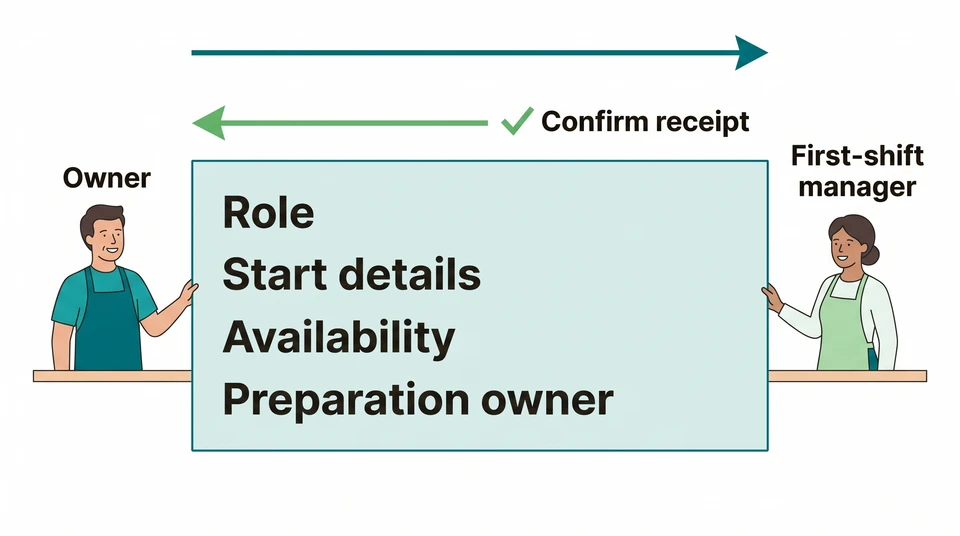
Make the first arrival clear with one short welcome message. Confirm when and where to arrive, who will meet the new starter and what to do if plans change.
Send your new starter one short message with the confirmed shift time, the right entrance, the person meeting them and a contact if something goes wrong. Keep it separate from the full onboarding pack: this message should answer, “What do I do when I get there?”
Use the email address or mobile number they gave you during hiring. Ask them to reply so you know the details reached them.
Confirm the time and the entrance
Check the first shift against the current roster before you write. Include the day, date, start time, expected finish and venue address. If the finish is not confirmed, say so rather than guessing. Don’t add a casual “come early” instruction that conflicts with the agreed start.
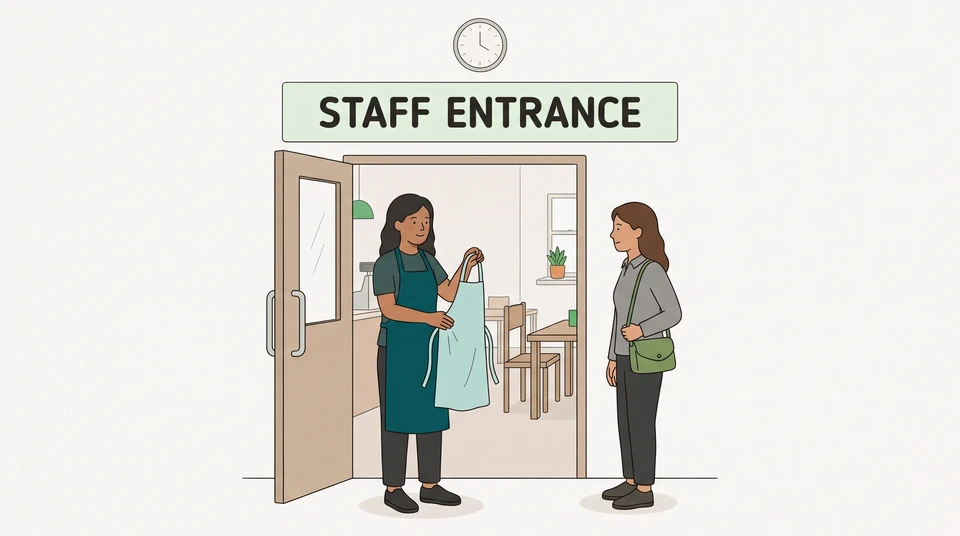
Describe the entrance someone can actually use at that time. A restaurant’s front door may still be locked before lunch. “Use the staff door beside the courtyard” is more useful than “come around the back.” Check that the route is open and safe; don’t send a newcomer through a loading area or an unmarked kitchen door.
Name the person meeting them
Give the starter a name and role: “Ask for Jo, the shift manager.” Confirm with Jo that they will be there and know someone is arriving. If you are both the hiring manager and the person meeting them, say “I’ll meet you” instead of inventing another handoff.
Choose a backup contact if the first person may be busy. Use a work number that someone will answer, or a manager’s contact they have agreed to share. Tell the starter what to do if the door is locked or they are running late.
Explain practical preparation, not a night of homework
State what to wear, what the venue provides and anything genuinely needed on arrival. If you supply an apron, say so. If specific footwear is needed, explain the requirement and ask the starter to contact you if they do not have it. Before telling anyone to buy a uniform, check the relevant Australian award or agreement or US uniform-cost rules, including applicable state requirements.
Keep required work and training out of an unpaid “read this tonight” request. Arrange it within paid time and confirm the plan with the person responsible for pay. For employees in Australia’s national workplace system, job-related training is paid work time. Under the US FLSA, training can be excluded from working time only when all four conditions apply: outside normal hours, voluntary, unrelated to the job and no other work performed. Check the Department of Labor guidance and relevant state labor office.
Keep payroll and identity paperwork in your separate, secure onboarding process. The arrival message does not need bank details, identity scans or a group-chat introduction containing private information. In Australia’s national workplace system, it also does not replace the required employment information statements.
A short welcome message for a pre-lunch arrival
Imagine Sam is starting at a restaurant where the customer entrance stays locked until lunch. The manager has confirmed the shift, checked the courtyard entrance and arranged for Jo to meet Sam. Their message could read:
Hi Sam, we’re looking forward to welcoming you on Monday 19 October. Your first shift is 10am–2pm at our restaurant, 18 Example Street. Use the staff entrance beside the courtyard; the front door will still be locked. Jo, our shift manager, will meet you there at 10am. We’ll provide your apron. Please wear the plain top and enclosed slip-resistant shoes we discussed; let me know if that’s a problem. We’ll cover the introduction and training during your paid shift. If you can’t find the door or you’re delayed, call [venue work number]. Please reply to confirm you’ve received these details, and ask me if anything is unclear. See you then! — Alex
Replace every example detail before sending, including the work number. If the entrance is hard to find, add a simple map or an exterior photo you are allowed to share, with no access codes or people’s private details.
Make it easy to ask a question
End with a named contact and an invitation to ask about arrival or preparation. If you do not receive an acknowledgement, follow up using the contact details the starter provided. A reply confirms receipt; it does not establish agreement to changed hours or show that onboarding is complete.
You can send this message yourself without new software. If setup tasks are getting scattered, explore CrewCentral onboarding for worker details, team checklists and progress in one place. Hiring, onboarding, training and scheduling belong together—but the welcome message still needs a manager’s check before it is sent.
Just need to plan the week first? Start with the free schedule maker. It is a manual tool saved in your browser, with no account or email needed to start—not AI scheduling or a shared team workspace.