Teach closing tasks so staff notice what is missing
Teach what a finished closing task looks like—and what to report when supplies are missing. Start with one task and a supervised cafe example.
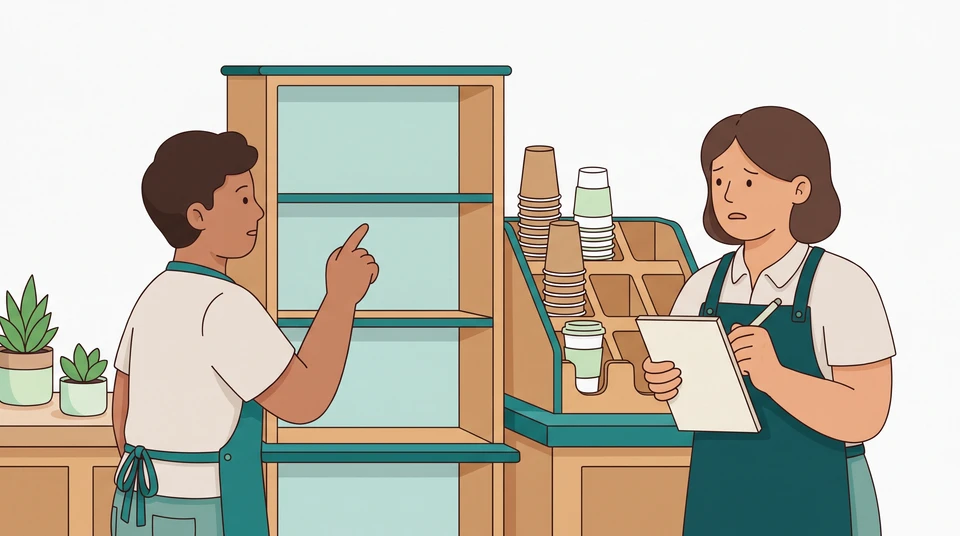
Choose one ordinary closing task and teach two things: what finished looks like, and what to do when it cannot be finished. Keep your venue’s closing checklist beside the learner. Use the practice to explain the task, not to replace the checklist.
Start with something straightforward, such as restocking a takeaway-cup holder. Leave equipment shutdown, food-safety procedures and licensed duties to the venue’s specific instructions and appropriately qualified guidance.
Explain the purpose of each task
Before the close, the manager chooses a task and shows the new starter the expected finish. Point out where supplies belong and where the team normally gets replacements. Ask: “What would you check before calling this ready?”
Explain the purpose in everyday terms. For a cup holder, that might be: “We restock this so the opening team has cups where they need them.” Use your venue’s agreed stock level, not a quantity borrowed from another cafe.
Ask the learner to describe the task back to you. If their answer is unclear, show the location or step again and invite questions. Explanation, demonstration, practice and supportive feedback are part of the Australian hospitality coaching approach.
Demonstrate a normal close
Arrange time during the planned shift for the manager to demonstrate the task and watch the learner try it. Pick a moment when you can stay nearby and answer questions. If service needs your attention, arrange another supervised practice rather than rushing the review.
Show the usual sequence using the venue’s existing instructions. For cup restocking, point to the holder, explain the expected level, show the approved reserve location and demonstrate the normal refill. Then ask the learner to repeat the task and explain what they checked.
Give specific feedback: “You checked the holder and found the reserve cups. Now compare the holder with the level we agreed.” Leave time for another attempt if needed. The coaching guidance pairs practice and questions with constructive feedback and follow-up.
Introduce realistic exceptions
Now ask what the learner would do if the usual step could not be completed. Use a discussion or clearly labelled practice scenario; do not create a real shortage just to test someone.
Example: no reserve cups
For example, imagine a cafe where manager Priya has demonstrated the normal restock to new starter Sam. During a practice discussion, they consider a close where the cup holder is below the venue’s agreed level and the approved reserve location is empty.
Sam’s next action is not to tick “restock cups” as complete. Sam tells Priya what is missing and leaves an unresolved item on the venue’s existing closing note:
“Cup holder below agreed level. Approved reserve location checked; no cups found. Restock unfinished. Priya informed.”
Priya acknowledges the report, decides who will deal with the supply problem and adds the next action to the note. If the opening manager needs to act, Priya contacts that manager through their usual work channel and asks them to acknowledge receipt. The restock stays unresolved until it has actually been completed.
Ask Sam: “What can you finish yourself, and what needs my decision?” Keep the answer tied to this task and the venue’s instructions. A report should tell the manager what remains unfinished, not imply that writing a note has fixed it.
Check the obstacle before repeating the lesson
In this example, Sam knows the sequence; the missing cups need a supply decision. Priya should address that obstacle before arranging another demonstration. For a repeated omission, ask the learner what got in the way and check the expected finish, supply access and opportunity to practise.
The Australian coaching assessment guidance identifies communication, coaching circumstances and limited practice as possible sources of difficulty. Use those questions to investigate, rather than assuming the worker simply forgot.
Observe and discuss a supervised close
At the next suitable close, watch the learner complete the ordinary task. Ask them to explain the checks they made and how they would handle the missing-supply example. Observation, learner explanation and feedback give you concrete points to discuss.
Record a brief manual note: which task you observed, what the learner completed, what you discussed and what needs another practice. Name the manager who will review it next. If you are both trainer and closing manager, keep that responsibility yourself; there is no need for an extra handoff.
Keep your conclusion narrow. “Cup restock observed; missing-supply response discussed” says what happened. It is not a decision that the person is ready for every closing duty. Agree the next practice task and arrange time to observe it.
For your next close, choose one task, show the expected finish and agree who receives an unfinished item. Looking at training for your team? Explore CrewCentral Training.